Lalbagh flower show offers floral tribute to Mahatma

Go visit the Lalbagh Flower Show this weekend, and indulge in Gandhiji's life. Also enjoy different designs and arrangements made using flowers.

Like every year, Lalbagh is hosting flower show this year as well. The theme is Mahatma Gandhi’s 150th Birth Anniversary.

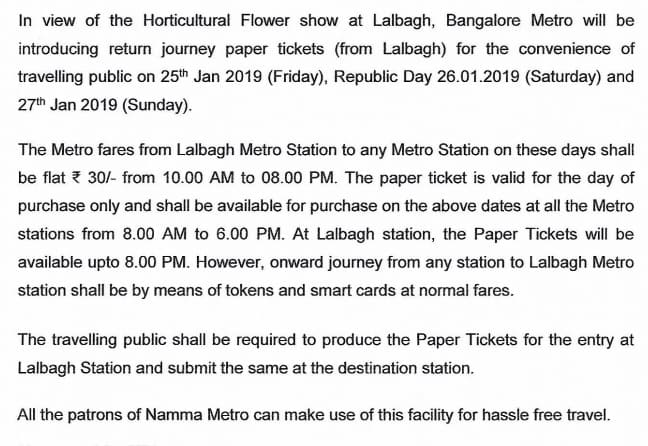
Bengaluru Metro Rail Corporation Ltd has introduced return journey paper tickets for a flat price of Rs 30. One can travel from Lalbagh Metro station to any other stations at this fare, between 10 am to 8 pm, on January 25th, 26th and 27th. The tickets will be available at all metro stations between 8 am to 6 pm.

The press note from BMRCL explains it:
Like every year, our reader Srinivasan Subramaniam has shared the photos from the flower show this year as well.

The show has tried to reconstruct the milestones from Gandhi’s life. Here is a video presentation of more photos.

Leave a Reply

Your email address will not be published. Required fields are marked *

Similar Story

The future of Bengaluru’s lakes: How to ensure effective community-led restoration

Clear bye-laws, neighbourhood participation and NGO accountability can save the city's ecological spaces.

Citizen lake groups have historically played an important role in protecting the city’s lakes. The erstwhile Bruhat Bengaluru Mahanagara Palike (BBMP) has a long history of engaging with citizen groups. Citizen-led lake groups have long played a crucial role in acting as “watchdogs” of Bangalore’s lakes. They are often the “first responders” to problems that emerge in water bodies. They have raised alarm bells around illegal encroachments and often help coordinate between agencies to monitor rejuvenation efforts. They foster community awareness on lakes and are often able to innovate new solutions. The most recent version is the Kere Mitra (Lake‑Friend)…

Similar Story

The city and its lakes: Decoding the decline of Bengaluru’s waterbirds

Analysis of 14 Bengaluru lakes shows migratory waterbirds are disappearing faster than residents due to poor urban lake management.

Lying at an altitude of 920 metres in the rain-shadow area of the Western Ghats, Bengaluru’s geography and climate do not support a perennial natural water source. Instead, a north-south ridge divides the city into three primary valleys: Hebbal, Koramangala-Challagatta, and Vrishabhavathi. Rainwater draining down these slopes feeds a network of small streams — forming a cascading lake system that the city historically relied on for its water supply. During the Open City biodiversity datajam held in December 2025, our group examined the ecological trends around Bengaluru's lakes. Data on insects, spiders and flora on platforms like iNaturalist were insufficient…