“Kasa Muktha Bellandur” campaign (earlier called Clean Bell and renamed to align with city level initiative) has taken off to a very positive start. This campaign aims to achieve responsible, end-to-end solid waste management in the Bellandur ward.
The main objectives of phase-1 of Kasa Muktha Bellandur are as follows:
- Standardise waste segregation process for all residential communities (using colour coded bins) in the ward.
- Accomplish 100% segregation and eliminate usage of plastic bags for garbage disposal.
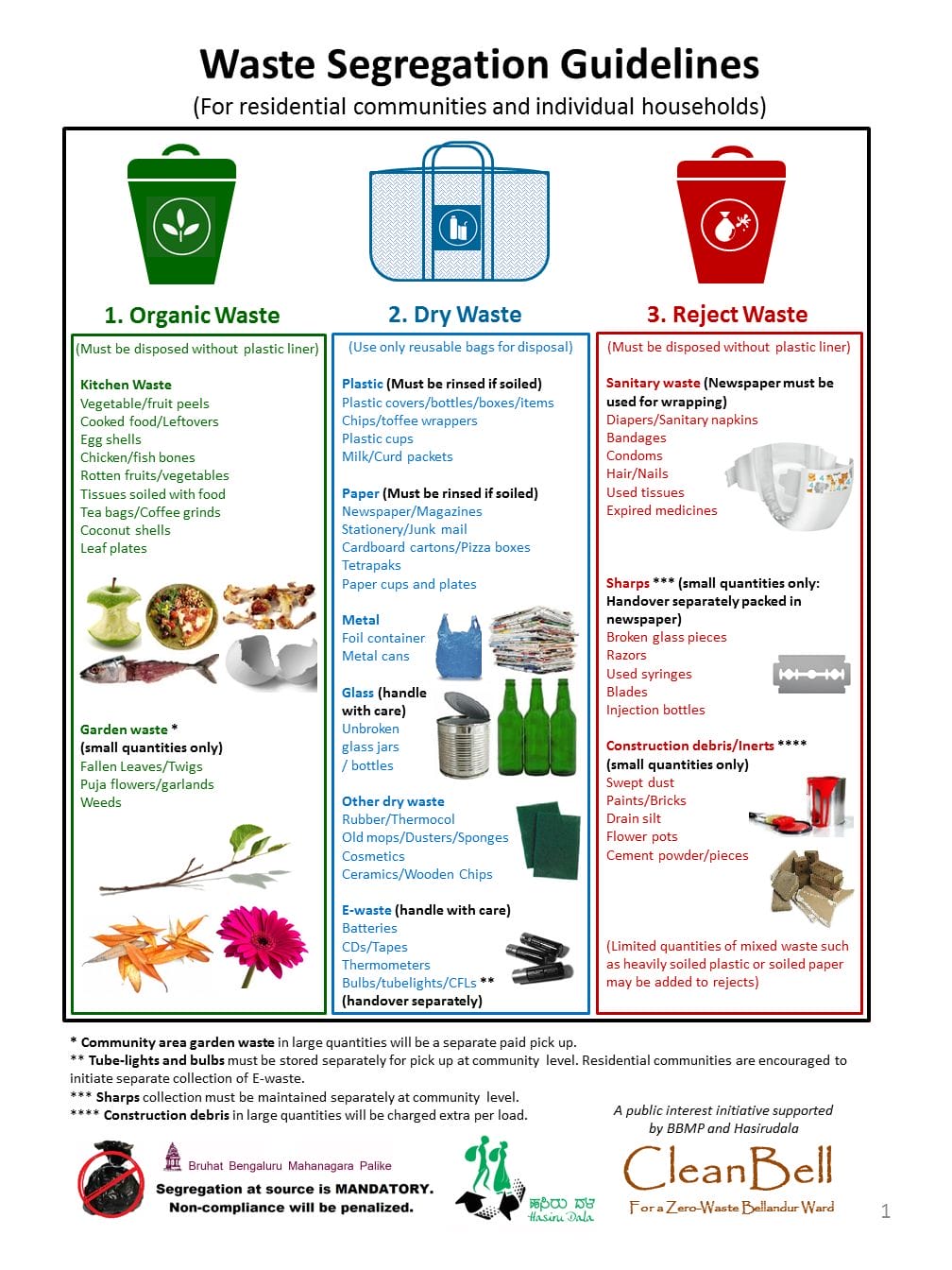
Segregation pamphlet outlining the waste categorisation followed by Kasa Muktha Bellandur.
Key accomplishments in last four weeks:
- Around 30 apartments adopted and implemented this 2-bin-1-bag method.
- Approximately 5 tons of wet waste is being managed responsibly everyday (KCDC and in-site). Managing 60% of waste within the ward, means less garbage vehicles on the roads.
- Dry waste is going only to authorised vendors.
- Reject waste has been reduced to a mere 15% of total waste (vs sending everything as mixed waste).
- The standardised process has helped in reaching out to all the key players – 5000 residents, all the maids and housekeeping staff who are also trained, and to ensure sustainability.
BBMP and SWMRT are working on an empanelling process to have only authorised vendors for bulk generators of waste, so that citizens can follow-up regarding the final destination of garbage disposal.
The SWM team for Kasa Muktha Bellandur is growing stronger by the day, raising the community spirit. There is hope that there will come a day in the future, where no garbage truck carries mixed waste and no garbage gets dumped in an unauthorised sites. It is only when we all become part of the solution, that we will have a cleaner and greener neighbourhood.
Residents of Bellandur, in case your garbage contractor is mixing segregated waste, do insist that he picks it up in a segregated manner or stop his services. You can also bring this to the notice of the Executive Engineer, Mamatha (9632709988).
While the campaign has taken off to a great start, a lot more ground is yet to be covered to achieve the objectives. The campaign needs all the support it can get and would like to see every apartment as a Green Champion. In case you wish to sign up as a volunteer and share your segregation processes and knowledge, you can write in to kasamuktha150@gmail.com.