Waste management has been an issue that the city has grappled with unsuccessfully in the past. But that might soon change with the Chennai Corporation’s blueprint for reduction of the quantum of waste sent to landfills under a new decentralized system to be implemented city-wide in the coming six months.
Corporation Commissioner G Prakash gave us an overview of the changes that can be expected:
What are the ongoing efforts in wet waste management in the city?
The idea is to make the system of waste management as decentralized as possible. It will reduce the quantum of waste being handled centrally through measures such as source segregation, pinning of responsibility with bulk waste generators etc. In the first six months our goal will be to move to 100% decentralissation for wet waste handling by setting up the requisite infrastructure; after that we will look at recyclables and plastic waste handling. The city produces roughly 4500 metric tons of waste per day of which 2000 metric tons is wet waste.
What are the measures in place for handling wet waste in a decentralized manner?
We already handle half the total wet waste generated through decentralization. There is existing capacity to handle 1000 metric tons of wet waste and we plan on expanding that to cover all wet waste produced. There are 200 composting and biogas centres across the city now. Compost generated by these centres is sold at Rs 20 per kg. However, not every ward has one now, but through expansion we want to cover the entire city.
In addition to this, there are mulch pits around 400 in number in most of the parks maintained by the Chennai Corporation. They handle the leaf and grass waste from the parks and from street sweeping. There is thus less pressure on the dumpsite with the diversion of wet waste.
What is the system adopted for decentralized wet waste management?
The mulch pits in the parks produce compost. Gobar solution among others is used in the leaf and grass waste. There are 3 to 4 mulch pits now per ward to handle the waste. In addition, large syntex tanks have been repurposed to increase the handling capacity and placed in all gardens. The compost that is produced in the syntex tanks are used up by the vegetation in the parks as it mixes with the soil.
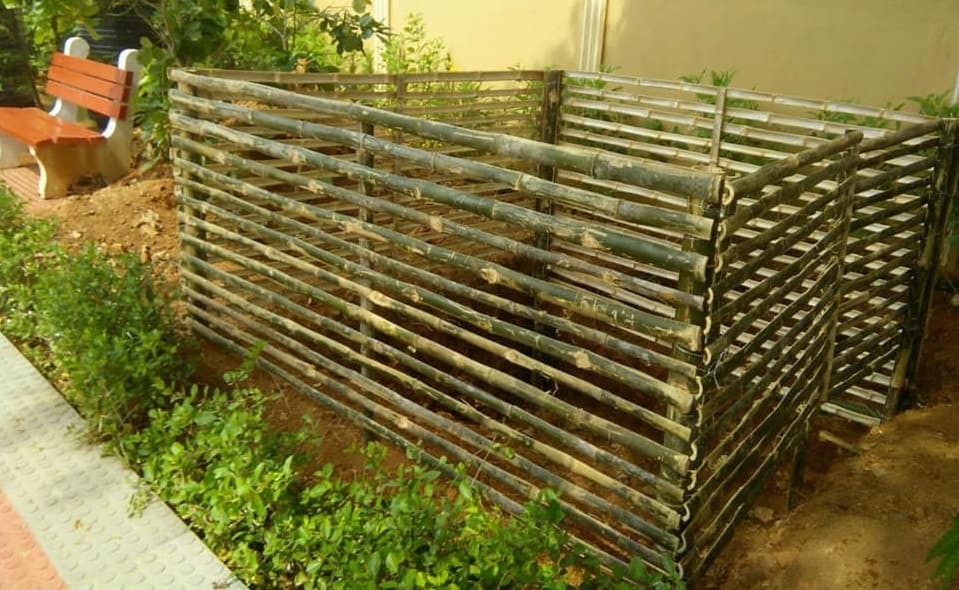
Mulch pits have been set up in parks to collect leaf waste and garden waste from the parks and street sweeping. Pic: Kuppai Matters
What are the sites that have been identified for these efforts?
We want to make all Amma canteens biogas and green centres. There are around 400 Amma canteens that are operational in the city now. The wet waste generated there is around 500 kgs. The waste produced must be composted in the same ward. We have begun mapping anganwadis with the same idea in mind. There are 1806 Anganwadis where the waste produced can be handled in situ through small biodigesters. Noon meal centres of schools run by the Chennai corporation, numbering around 350, are other potential sites that we will be targeting for in situ handling of wet waste produced. There will be a ward level in-charge from the Corporation for each ward, they will maintain a tracker on who is bringing in how much waste.
What is the plan to handle the plastic waste?
Small resource recovery centres will be set up in each ward in order to deal with plastic waste. The waste segregated at source that is collected by the staff will be brought here for secondary segregation. The recyclable waste will be sold. There will be a register to keep track of which employee has brought in how much waste and the income from the sale shall be directly transferred to them. Compost will also be sold in a similar manner. We will be tying up with RWAs, organisations such as the UNDP, British High Commission, enterprises such as Earth Recyclers, Kabadiwala Connect and Paperman and advised by Citizen, consumer and civic Action Group (CAG) for the effort.
In a decentralized system, what will be the waste that goes to the dumpyard?
A centralized waste management system is unsustainable. The idea is to handle a ward’s waste within its boundaries. So minimal waste will only be transported to the dumpyard. There are plans to set up incineration plants in the dump yards to handle the waste that will be diverted to it. The quantity of waste that is sent to the dumpyard will be much less with source segregation and decentralization.
What about bulk waste generators?
The SWM rules clearly state that the bulk waste generators must handle the wet waste within their own premises. We will be looking at strict enforcement of the rules for large apartment complexes, hotels, marriage halls and other bulk waste producers. A punitive framework is being drawn up for the same and violators will face heavy fines once that is in place.
How will the changes affect the staff and the informal waste workers?
There has been structured training for the staff on waste collection and the new decentralized system that will be adopted city-wide. They will be able to gain from the sale of recyclables. There is also the fact of savings made on fuel and transportation, as the waste will no longer have to be transported to the dumpyard. The informal waste workers will be brought into the formal fold in the system. We will be placing them in the resource centres and buy waste from them. There will also be measures taken to ensure that they can operate without any hassle and avoid any conflict of interest.
Hope it is well implemented and fine the violator with high penalty. But there is no mention of garden waste from individual houses , Avenue tree prunings, which contribute considerable. Shredding centres for garden waste besides plastics needs to be installed ward wise.
Sir, It is my humble suggestion that bulk waste producers like hotels can be advised to use biodigesters, which will reduce some burden on the Corporation.
This effort of chennai corporation will end in failure. If corporation cannot handle waste, cannot maintain roads why the hell they should collect property tax? Metro Water collects water tax and surcharge but does not supply water. Corporation cannot maintain roads. They cannot dispose off garbage. The corporation says all apartment complex having more than 30 flats should have compost plant for organic waste. The compost plant gives lot of bad odour. The old apartments built before 2000 do not have any open space for building compost plant. For such apartments the corporation should start such plants in open spaces and such apartments should be asked to gather organic waste every day and deliver to the compost plant. Just like banning of plastic bags has not resulted in the stoppage of use of plastic bags in Chennai, this measure will not give the desired results. It will only increase corruption.
Sir, This method us followed all over the world ..We the common man are the core of this waste management. Without individual contribution the government cannot implement this …Each of us have the responsibility to segregate the waste …
What abt sewage waste being let out of streets? Also, what is the plan to create awareness among people and training them on waste segregation and processing?
What about sustainable were waste management in big communities?A massive Boom/sale of garbage crusher machines,biogas installation plants will be seen?
We are one of.the largest apartment complex in Ambattur Industrial Estate who strive to follow this rule.
But unfortunately Corporation officials not willing to cooperate with us in removal of dumped waste in their bins???.
What punitive measures does Corporation against non working officials
It is really important that Chennai is going for decentralised solid waste management system. It is being implemented successfully for the past 15 years at Gandhi Nagar special Panchayat village, Vellore. If the persons involved get training at that place, the decentralised method can be implemented easily and successfully.