How long does it take you to get to office? 10 to 20 minutes, 45 minutes, a little more than an hour, or two hours?
For those of you who spend long hours on your commute, what do you do? Read? Work on your phone? Listen to music? Read a book?
Well, here’s something else you could do…
Vikas Tripathi, a resident of Whitefield, works in an organisation operating out of M G Road. The present condition of the infrastructure in Whitefield ensures that it takes him around one and a half to two hours everyday, to reach his office. His return journey is less arduous; it only takes him about an hour and fifteen minutes.
On an average, Vikas spends a little less than three hours every day, on his commute alone.
So what would you do if you had so much time to kill (do NOT take this literally!!!)? Vikas has put his long hours on the road to good use and made some very keen observations. He says, “On my way to office, I did a informal study on the road dividers in Whitefield. I clicked few images, added satirical one-liners to them and came up with this series.”
Here you go, the various types of road dividers in Whitefield!
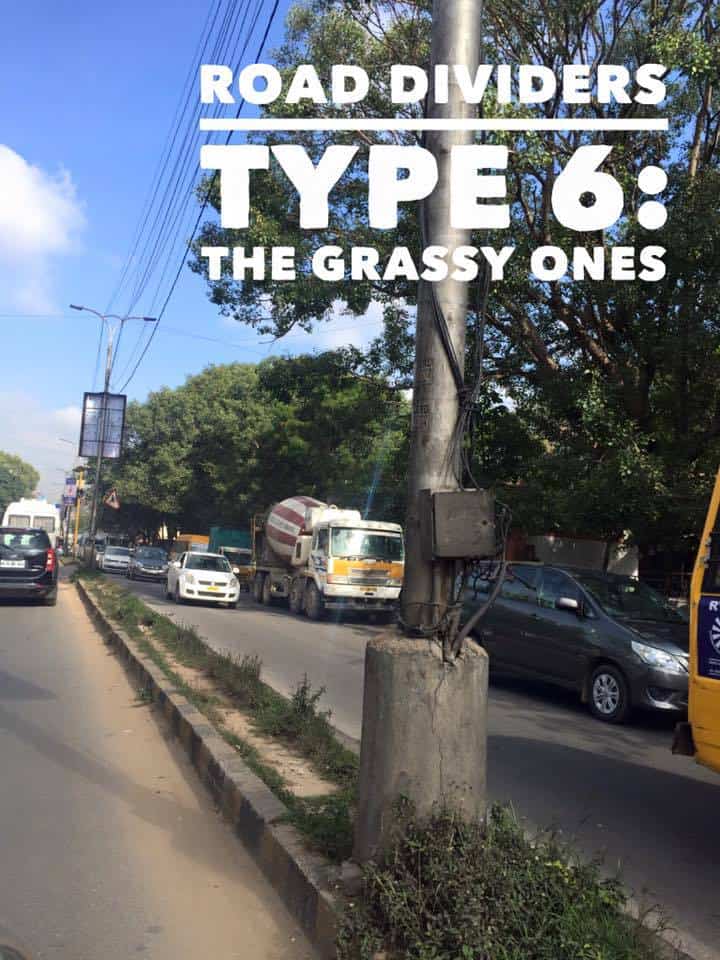
The Grassy Ones. Pic: Vikas Tripathi

The Hooked Ones. Pic: Vikas Tripathi
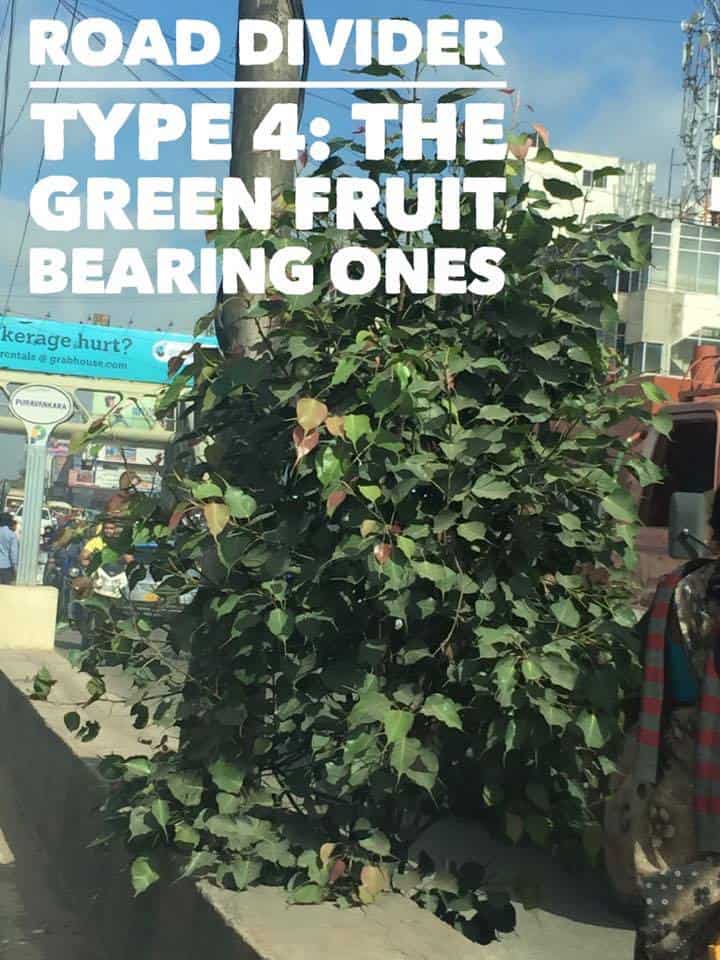
The Green Fruit Bearing Ones. Pic: Vikas Tripathi
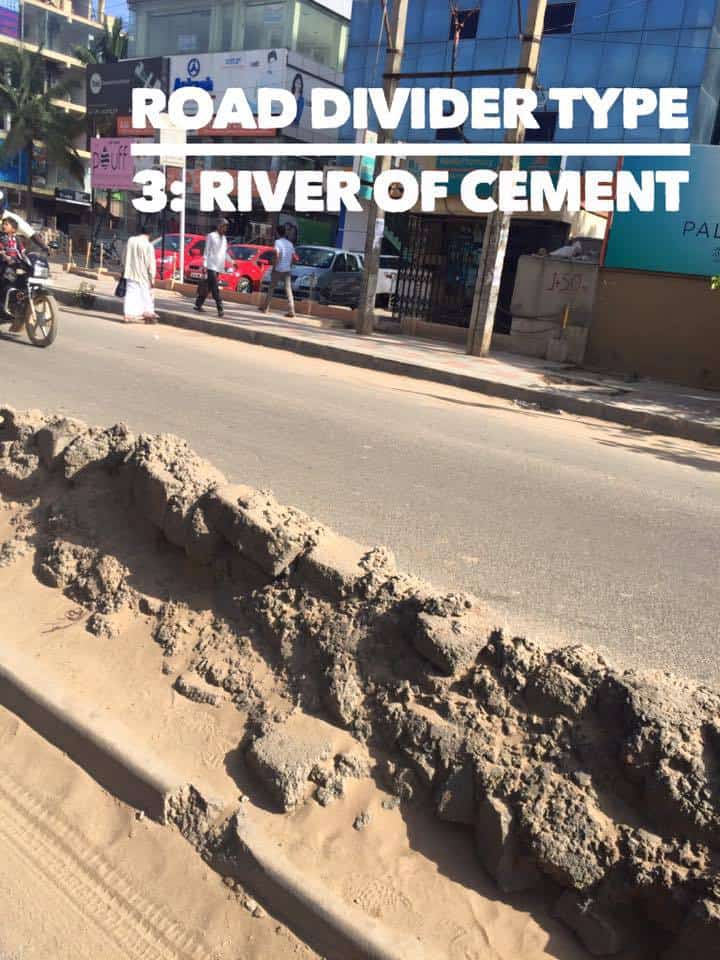
River of Cement. Pic: Vikas Tripathi
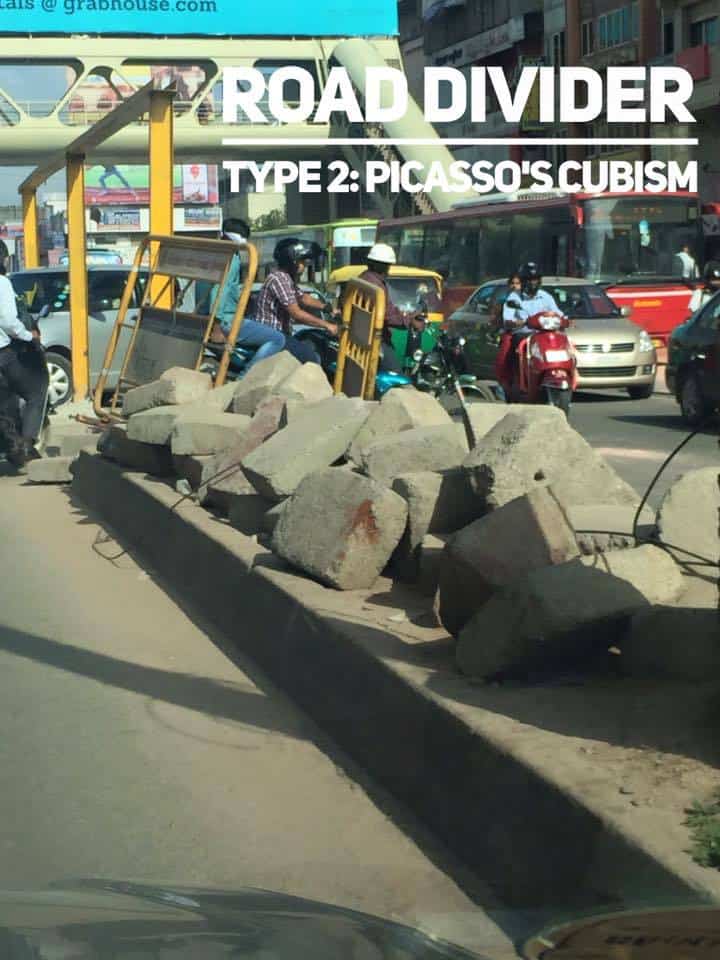
Picasso
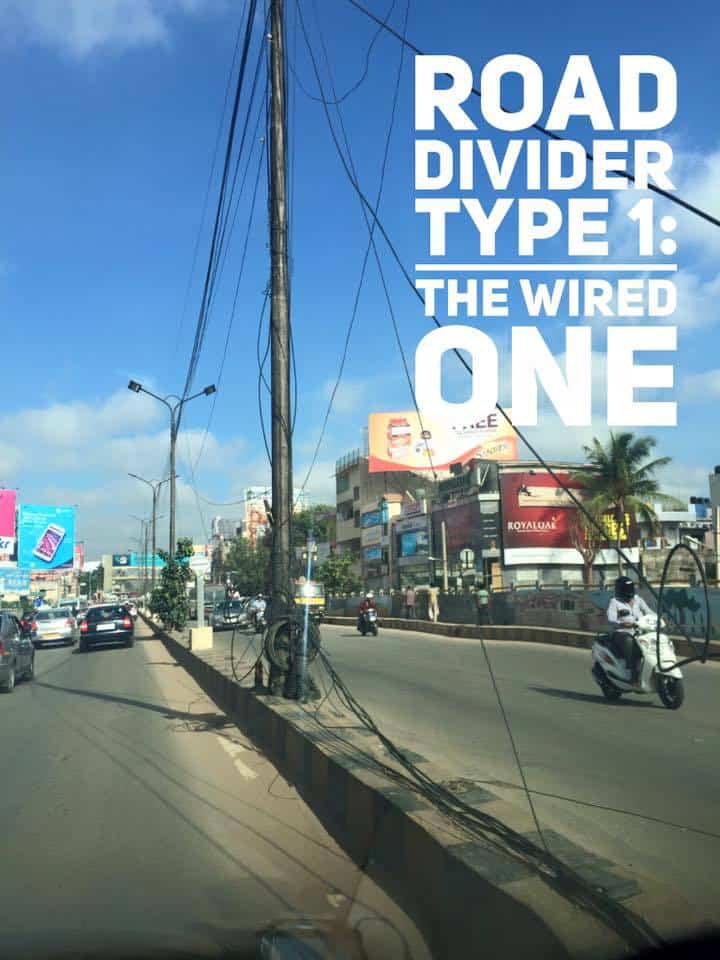
The Wired One. Pic: Vikas Tripathi
Well, we did title this post ‘Seven deadly dividers’ though there are only six pictures. The seventh type is perhaps the deadliest of them all – The non-existent ones!
In case you know of more sub-species of dividers, we invite you to share them.
Related Articles
In pictures: Bangalore’s footpaths – An army grade obstacle course!
Ruminations en route from Whitefield to the heart of Bengaluru
Scenes from the Silk Board Signal