The latest figures from the National Crime Records Bureau show a sharp rise in cyber crimes across India. In 2022, 65,983 cases of cybercrimes were registered, an increase of 13,009 from 52,974 in 2021.
Although Bengaluru, India’s IT capital, has the highest number of cyber crime cases registered in India, every single city and town are seeing increased instances of cyber frauds, cyber bullying, threats – sometimes resulting in tragic suicides of the victims.
Cyber crimes range from a simple financial scam of syphoning money from people’s bank accounts by asking for OTPs on phone to gullible customers to far more elaborate frauds wherein data and privacy of victims are breached, used for financial transactions that are hard to trace. Sometimes victims are threatened with physical violence. In many cases, senior citizens have lost their life’s savings to such scams. On the other hands, youngsters fall into these traps trying to avail loans, jobs or some financial incentives.
Cyber crime police and financial institutions conduct awareness campaigns and issue guidelines. However, the investigation, prosecution and conviction numbers are far from encouraging.
In this citizen clinic, our panel of experts will address questions from the public on the kinds of frauds which are taking place and how to safeguard oneself against them.
- Focus on types of crime
- How to protect ourselves – Do’s and Don’ts
- Redressal – who is responsible – banks, wallet companies?
- Legal recourse – Data privacy
Read more: Cybersafety tips: Before you decide to download that app, read this
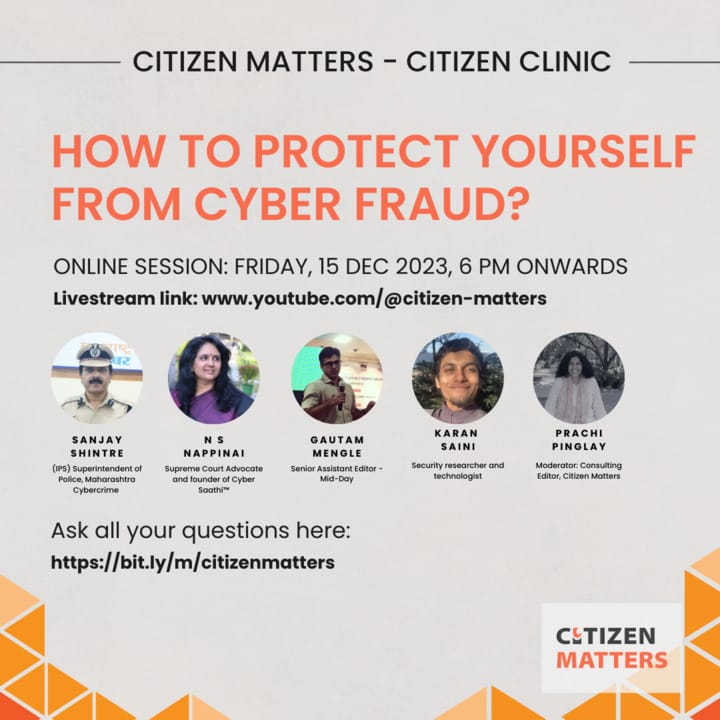
Event details:
- Event Title: How to protect yourself from cyber fraud?
- Date and Time: 15 December 2023, Friday from 6:00 pm onwards
- Survey link: https://bit.ly/cyber_fraud (If you or someone you know has faced a crime, please fill up this form)
- The discussion will be livestreamed on our Youtube channel.
Panellists:
- Sanjay Shintre (IPS) – Superintendent of Police, Maharashtra Cybercrime
- Karan Saini – Cyber security expert
- N S Nappinai – Supreme Court Advocate and founder of Cyber Saathi
- Gautam Mengle – Senior Assistant Editor – Mid-Day
- Moderator: Prachi Pinglay-Plumber – Consulting Editor for Citizen Matters, Mumbai
Also read:
- UPI scams in Chennai: What you need to know to protect your money or get it back
- Cyber crime: A guide to understanding, prevention and redress
- The Digital Data Protection Bill 2023: All you should know about it
- All that you need to know about the new consumer protection law
- Holding your telecom operator accountable
- Keeping your child safe in the age of the Internet