Here’s Navi Mumbai’s first ‘Birdrace’. It’s not what you are thinking

Read how a citizens group in Khargar is actively working to save the neighbourhood wetlands.

The Wetlands in India, Mumbai and Navi Mumbai included, are under severe threat. Time to take action is now.

“According to the environment ministry, 35 per cent of wetlands have disappeared since the 1970s and 87 per cent have been lost since the 1700s. Causes of wetland loss are drainage and infilling for agriculture and construction, pollution, overexploitation of resources (like overfishing), invasive species and climate change.” – Hindustan Times


Read more: How a Navi Mumbai citizens group fought for the flamingos


World Wetlands Day

World Wetlands Day, that is observed on 2nd February every year, was celebrated by several groups all over India. We at Kharghar Wetlands & Hills had already started observing this even before the actual day.

On Republic Day, 26th January, we did a cleanup, calling upon citizens and the fishermen to maintain a safe, clean and beautiful wetland and mangroves ecosystem that Kharghar is endowed with.
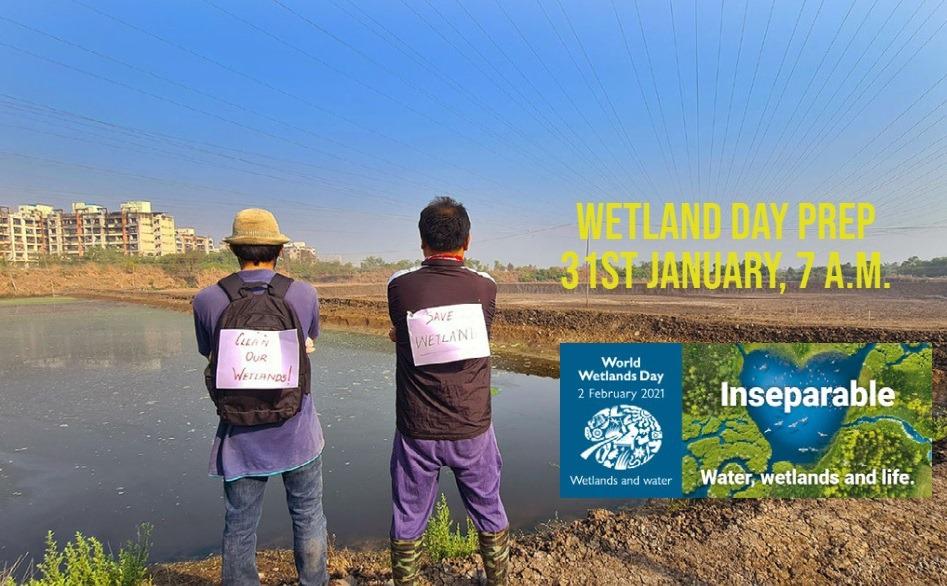
Cleanup at Khargar 31-Jan-2021 (Pic: Nareshchandra Singh)

Then on 31s January, we did a further cleanup to welcome our feathered friends by removing threats like plastics, left over alcohol bottles, discarded nets, etc.
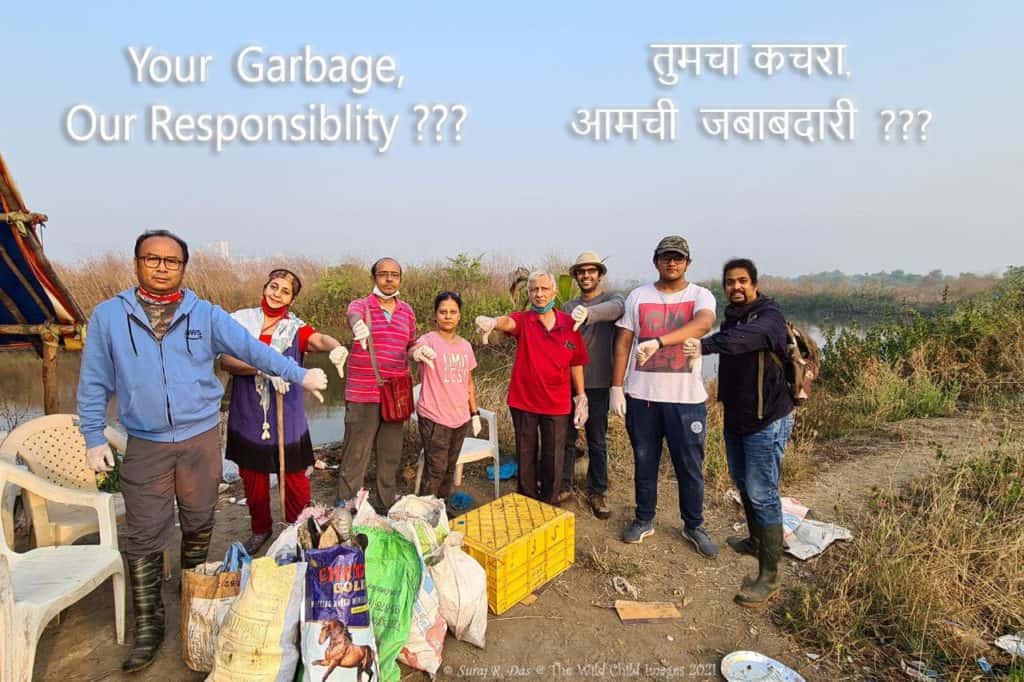
Mangroves cleanup, 31st Jan 2021 (Pic: Suraj R Das)

On D-day, 2nd February, we actively participated in the National Wetlands Tweefest conducted all over the country by dozens of organizations all together in solidarity.
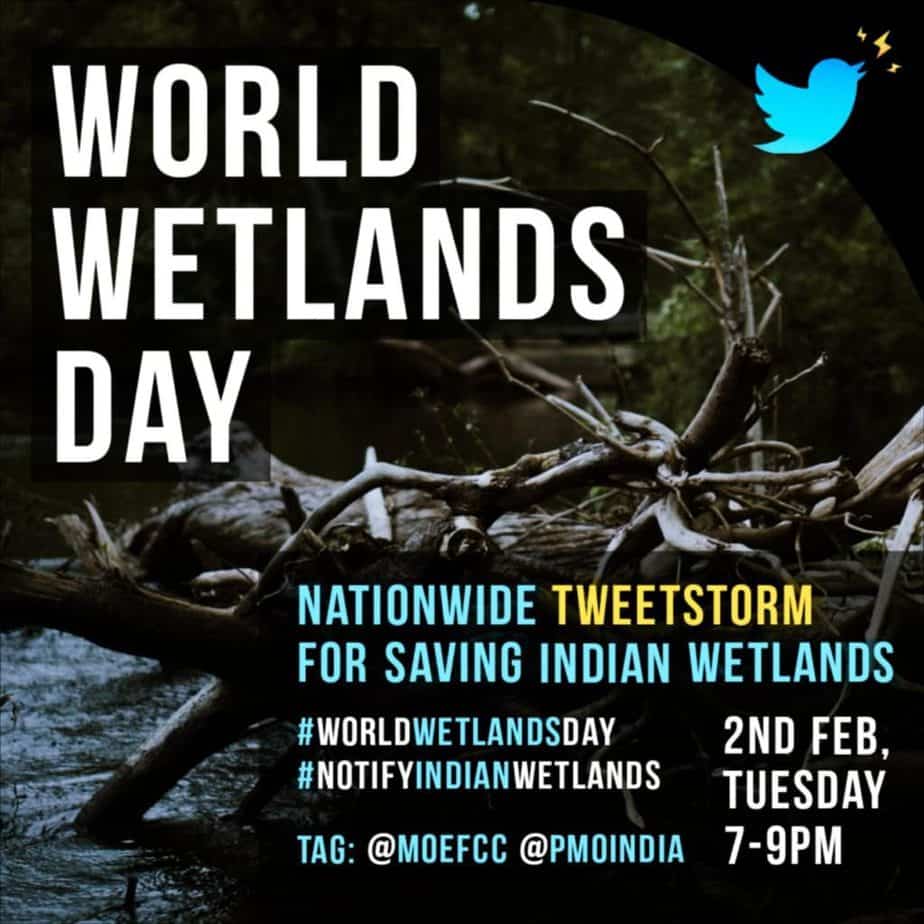
Wetlands Day Tweetstorm flyer. (Pic: Nareshchandra Singh)


Unstoppable

We are not stopping there, on Sunday, 7th February, we are organizing Navi Mumbai’s first “Birdrace” where teams will be competing against each other to record the varieties of birds in the neighborhood. Those interested may register at this link https://fb.me/e/delBFFSi3 or mail khargharwetlands@gmail.com.

Also read:

Leave a Reply

Your email address will not be published. Required fields are marked *

Similar Story

The wild in the city: What citizen scientists tell us about Bengaluru’s biodiversity

Spatial and temporal biodiversity patterns, as observed by citizen scientists in the city during 2016-2025, were studied at a datajam in December 2025.

Imagine you’re out on a morning walk, phone in hand, when you spot a butterfly you’ve never seen before. You snap a photo, log it into a citizen science app, and voila! You’ve just contributed to crucial biodiversity monitoring. This isn’t just a hobby; it’s part of a global movement where ordinary people collect, record, and sometimes analyse data about plants, animals, and ecosystems. Citizen science stretches the reach of ecological research. Every observation adds to unique longitudinal datasets that reveal phenology — periodic events in the life cycle of a species — along with species distribution shifts and population…

Similar Story

Air quality management is a governance problem, not just an environmental one

Despite massive funding, Indian cities face weak governance, poor data, and limited capacity, as air pollution continues to worsen.

Indian cities are struggling to breathe. Air pollution is a year-round governance challenge. In 2024, 35 of the 50 most polluted cities globally were in India, with PM2.5 concentrations above 66.4 μg/m3. This is at least 13 times the World Health Organization (WHO) guidelines and at least 1.6 times the National Ambient Air Quality Standards (NAAQS) in India. Citizens continue to bear the brunt of worsening air quality, and urban local governments (ULGs) are at the forefront of the problem, being primarily accountable for their citizens' first mile. While they do have a role to play in addressing this threat,…