Road crashes kill around 1,50,000 people every year in India and could thus be termed the 7th most important non-communicable disease. The Government of India, in 2019, passed the Motor Vehicles Amendment Act which increased penalties for several violations such as not wearing helmets and seatbelts.
As part of the National Road Safety Month 2021, Citizen consumer and civic Action Group (CAG) surveyed 10 locations in Chennai city to gauge the level of compliance with helmet and seatbelt rules. By law, only two persons are allowed on two-wheelers and both are required to wear a helmet, properly fastened.
In cars, all passengers are required to wear a seatbelt. However, due to constraints in data collection, the survey assessed only car drivers and front-seat passengers. In addition to the survey, CAG carried out a perception survey of 539 two-wheeler riders and 501 car drivers to understand their awareness of the rules and understanding of the importance of helmet and seatbelts.
Read more: Three ways in which the new Motor Vehicles law could make our roads safer
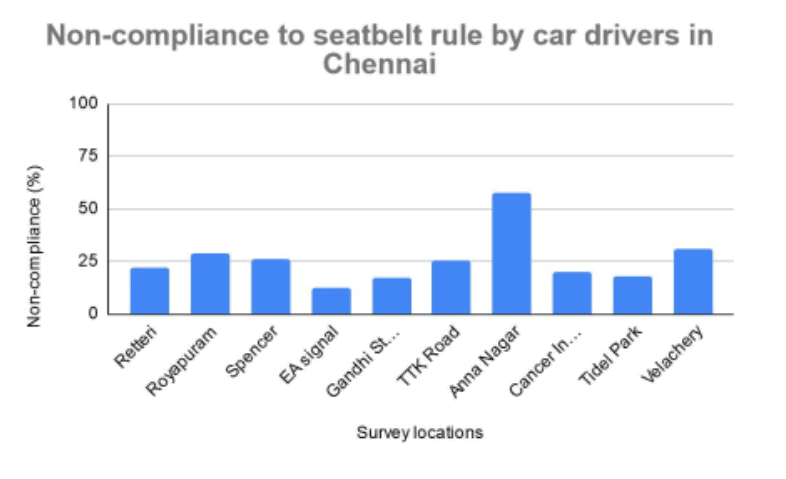
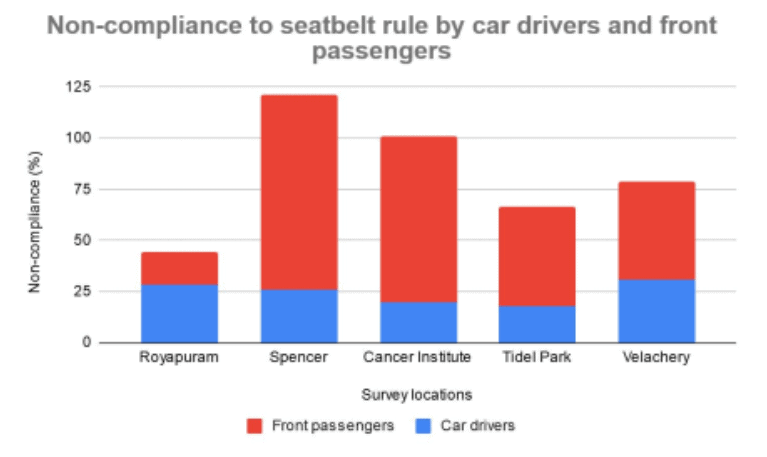
The survey found that rider and driver compliance was quite good but pillion and rear-seat passenger compliance was very poor (1-2%). Although the focus was not on rear-seat passengers, it was observed that no rear seat passenger was seen wearing a seatbelt.
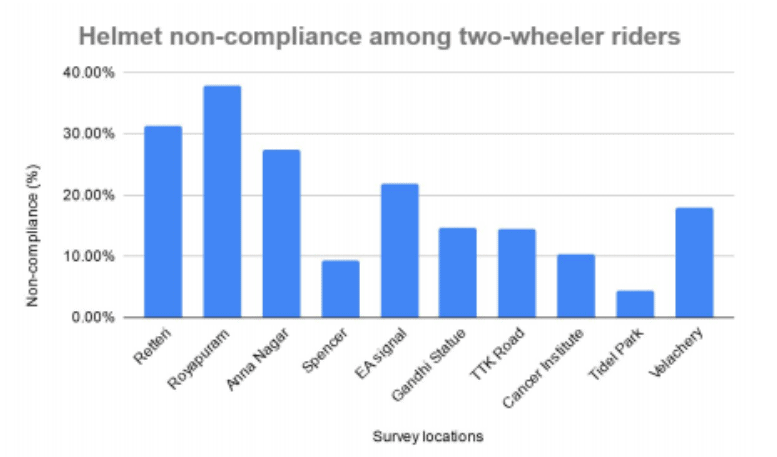
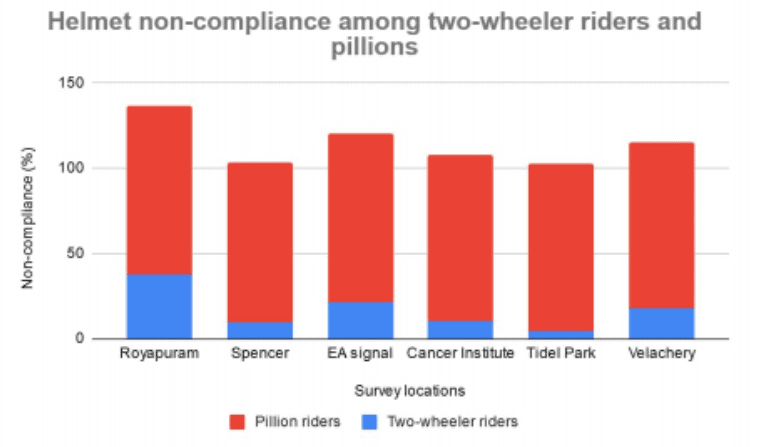
‘Good helmet compliance among riders’
Of the 539 two-wheeler riders interviewed, only 39 (21 women, 18 men) said they did not wear a helmet and their reason for not wearing ranged from concerns over hair fall, discomfort, a reduction in their ‘cool’ quotient, and a belief in their invincibility. One rider felt helmets restrict his vision of vehicles coming behind him. Another felt that since he does not drive on main roads, he did not need to worry.
“Research indicates that residential, quieter roads can also be dangerous and so it is recommended that a helmet must be worn every time one sits on a two-wheeler irrespective of distance or road type. Helmets do not restrict vision and we hope riders will use the rearview mirrors to track other vehicles instead of not wearing a helmet,” points out Sumana Narayanan, Senior Researcher, CAG.
Read more: Why two-wheeler riders hate helmets — and why they should not!
Awareness about using helmets and seatbelts
80% of respondents noted that helmets protect the head from injury. To the question, what would make helmet compliance improve, 97.6% responded – higher penalties or stronger enforcement or both together.
501 car drivers were interviewed and only 25 of them said they did not use a seatbelt and the reasons were because of perceived discomfort, believing they are safe drivers and therefore immune from crashes, or just that they thought it was unnecessary. Except for 3 interviewees, all others felt that a seatbelt protects the wearer and reduces the risk of serious injury.
Read more: The future of road safety in India
How to improve seatbelt and helmet compliance?
98.5% of them said that to improve seatbelt compliance, they believe what will be effective are higher penalties, stricter enforcement, or both.
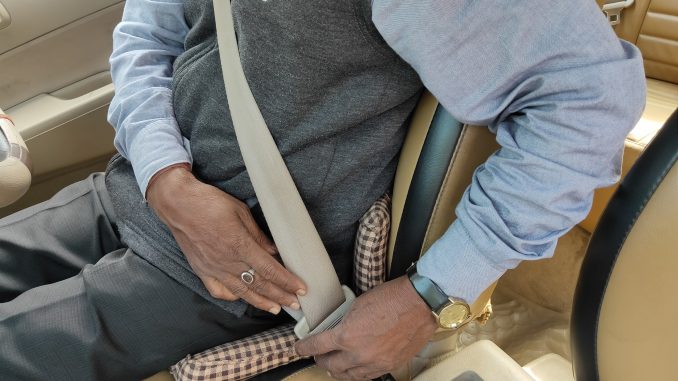
“About 200 of them thought that pillion riders do not need to wear a helmet and over 100 of them thought that all passengers do not need to wear a seatbelt. It is unfortunate that though people know that helmets and seatbelts save lives, they continue to be careless with their own safety and those of the passengers. Legally and to reduce risk of death and serious injury, all passengers must use appropriate safety gear be it helmets, seatbelts, or child restraints,” noted Sumana Narayanan, Senior Researcher, CAG.
She added that it was interesting that almost all respondents noted that stringent enforcement and higher penalties would improve compliance, yet the MVAA 2019 which brings in these factors is yet to be implemented in Tamil Nadu.
Also read:
- Simple tips for citizens to ensure safe journeys
- Here’s why Hosur Road has the most number of fatal accidents
- Road safety in India needs strict law against parents who let minors drive
(This news report is based on a press release from CAG and has been published with minimal edits)