I am Poongothai from Ward No. 194 Gottigere. I took part in the MyCityMyBudget Campaign organised by Janaagraha. BBMP in its Budget book mentioned the campaign and allocated funds for the same.
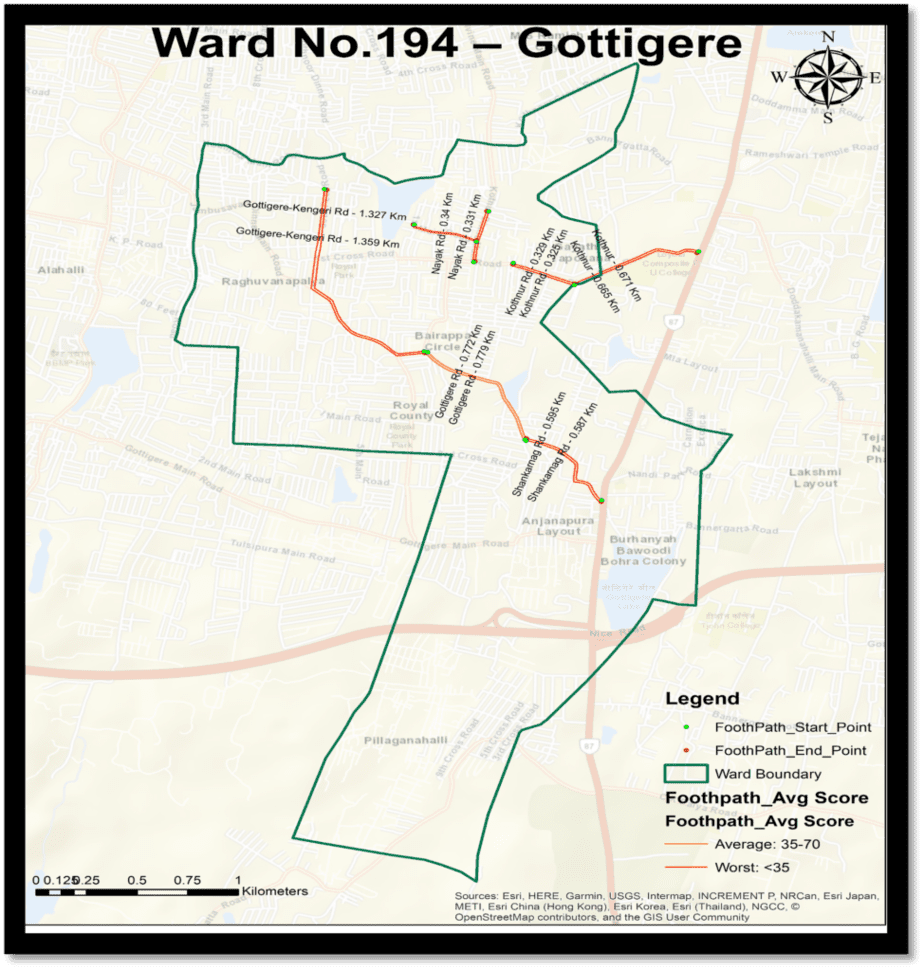
Footpaths might sound like a trivial issue. But it cannot be overlooked. Pedestrian infrastructure plays a vital role in sustainable urban traffic. Footpaths, a sub-aspect of pedestrian infrastructure, should be given priority to make it user friendly, improve walkability, safety and comfort of pedestrians.
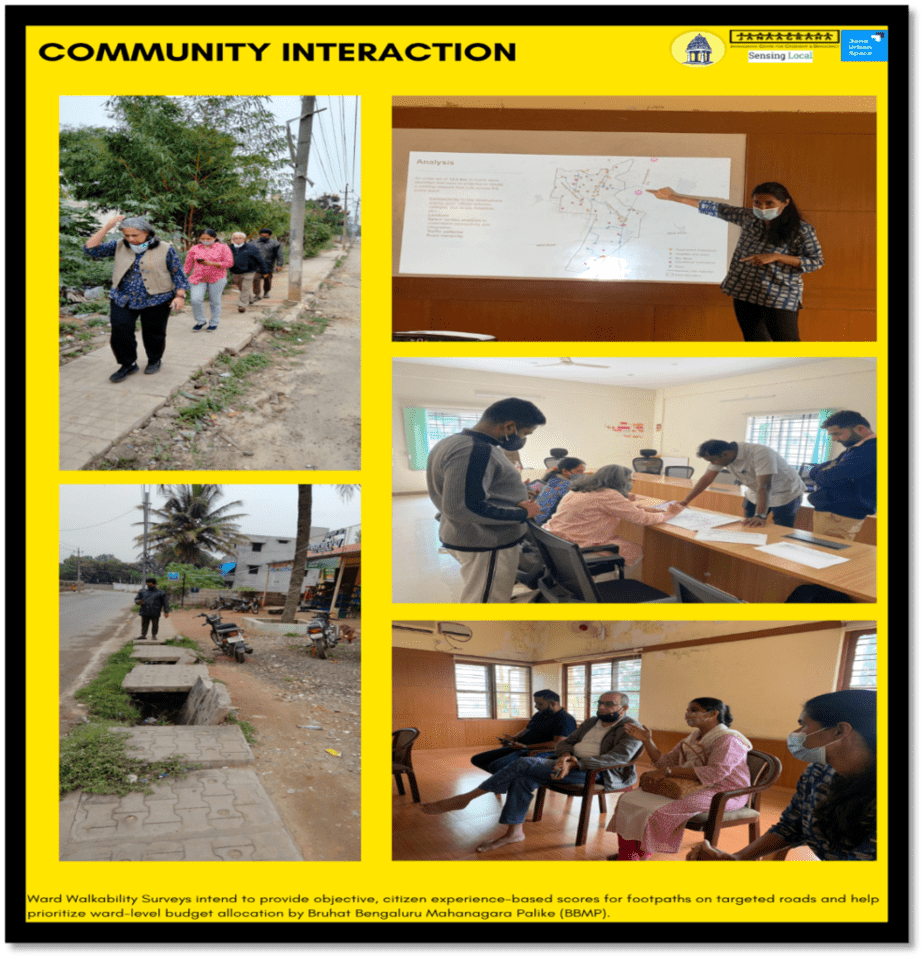
Footpaths are a basic need in road infrastructure. Hence, as demanded by citizens of our ward, we decided to conduct a footpath walkability survey with Janaagraha giving us the necessary tools to conduct the survey.
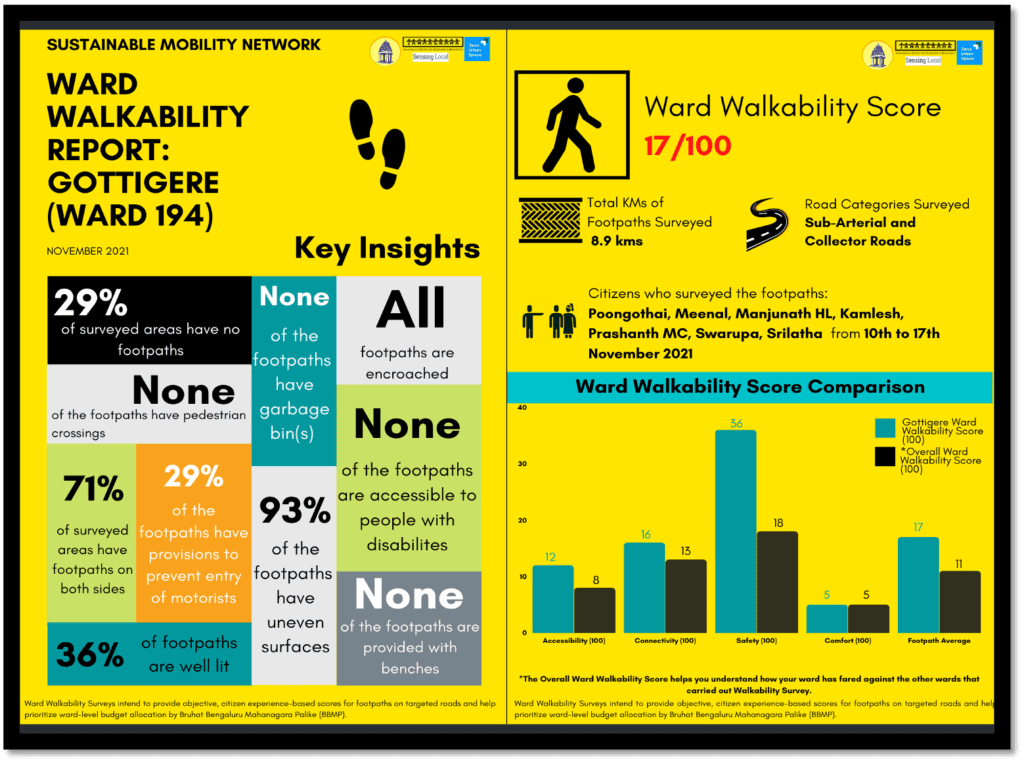
This is the first time a window of opportunity is provided for citizens to address the footpath issue. Some of the things we noticed that hinders the smooth mobility of pedestrians. during the survey were:
- Broken footpaths
- Incomplete footpaths in few areas
- Obstacles – debris, encroachments
- Overgrown trees
Our citizens’ team that took part in the survey listed out these and other defects in pedestrian infrastructure in our ward.
Read more: The reforms needed to make walking in our cities safe, convenient and enjoyable
The follow up
The survey was an eyeopener to us. Post the survey, we requested our BBMP officials and traffic police to remove the obstacles and encroachments by roadside shops. I feel BBMP officials should be involved in the survey, as it would give them a realistic picture of the issues faced by pedestrians.
Next, we contacted our Nodal Officer and Ward Engineers to discuss these issues. We estimated the costs of the footpath repair with our Ward Engineers. They explained about the footpaths that will be covered under the MCMB budget. We spoke to Nodal Officers about the report that was generated by Janagraaha and the team.
The Nodal officers and engineers were indeed understanding and assured that our request to repair the footpath under the MCMB allocated funds will be approved, and additional footpath repairs will be suggested to BBMP in the upcoming budget. Holistically, it was an insightful experience that gave us an idea about the footpath repair costs and re-established confidence in BBMP officials.
Empowering Citizens through Ward committee and Area Sabhas will give more opportunity for citizens to take part actively in local governance. Transparency in budget and accountability in execution will strengthen the local governance process. Citizen participation is the key to improve infrastructure in the ward.
Citizens should be empowered to deliberate the structure and process of spending public money if only the citizens of the respective ward will know their civic and infrastructure needs and ensure that the funds are utilised to address the priority needs of their ward.
Read more: How Sanjay Nagar residents are using a 20 lakh ward grant to improve their footpaths
Some suggestions
I request BBMP to bring transparency in budget making and share the ward infrastructure financial details with citizens, with more focus on citizen participation in ward development activities.
Also, to consider citizens inputs for all budget allocation. The execution too needs to be completed within the stipulated time. BBMP is now focusing on infrastructure development of the city, and according to me, citizen’s participation will be a key to success for local governance.
Lastly, I am pleased to mention that the Janaagraha Team played a prominent role in helping us achieve our goal in an organised way and acting as a bridge between us citizens and the government. Due to their MCMB Campaign, Citizens were able to identify footpath issues in their ward; conduct walkability surveys successfully; generate walkability reports. This gave us a clear understanding of pedestrian issues.
I would like to thank them for setting up meetings with ward engineers to finalise the footpath length and costs; execute the survey process smoothly.
We are happy that BBMP has called a tender for the Rs.20 Lakhs earmarked for footpath repair and our ward Nodal officer has instructed the engineer to begin the work soon. We are on our way to achieving our goal of having user-friendly footpaths. I hope the rest of the wards get on-board and do the same.