Greater Chennai Corporation has kickstarted the vertical gardens project under 14 selected flyovers in Chennai. According to a news report, the spaces under the flyovers at IIT-M traffic junction, North Usman Road flyover, Mint, Doveton, Pantheon Road, Perambur, Mahalingapuram, Usman Road, TTK Road, Kauvery hospital, Royapettah high road, G P Moopanar flyover, LB Road and Gandhi Mandapam will get vertical green cover.
This is a utilitarian move aimed at better use of public spaces in order to mitigate carbon emissions on Chennai roads. GCC is following in the footsteps of developed cities such as Singapore that has made the concept of vertical gardens a success.
However, given the way such projects started by other government departments, including the Southern Railway and Highways department, have gone, the recent GCC initiative does not arouse much hope.
Vertical gardens at Mylapore MRTS and Koyambedu Metro, started two years ago with much fanfare, have become desolate empty spaces. These towering columns of plants that caught the commuters’ attention with their lush green growth in the early days of the project, simply withered away in the absence of proper maintenance.
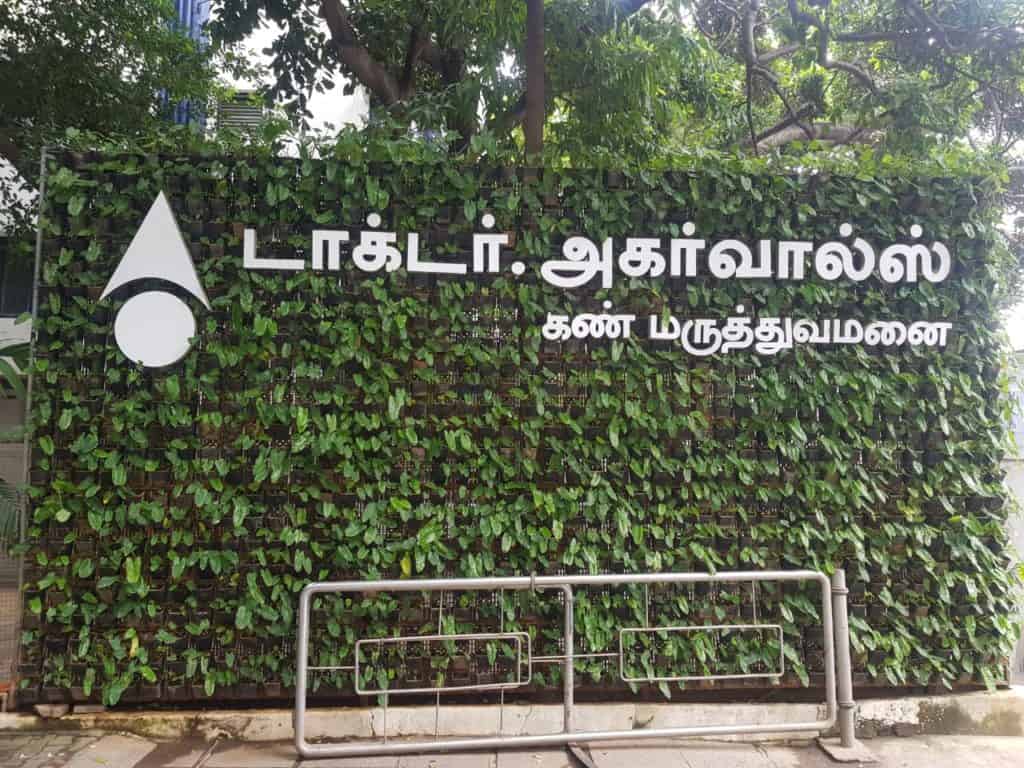
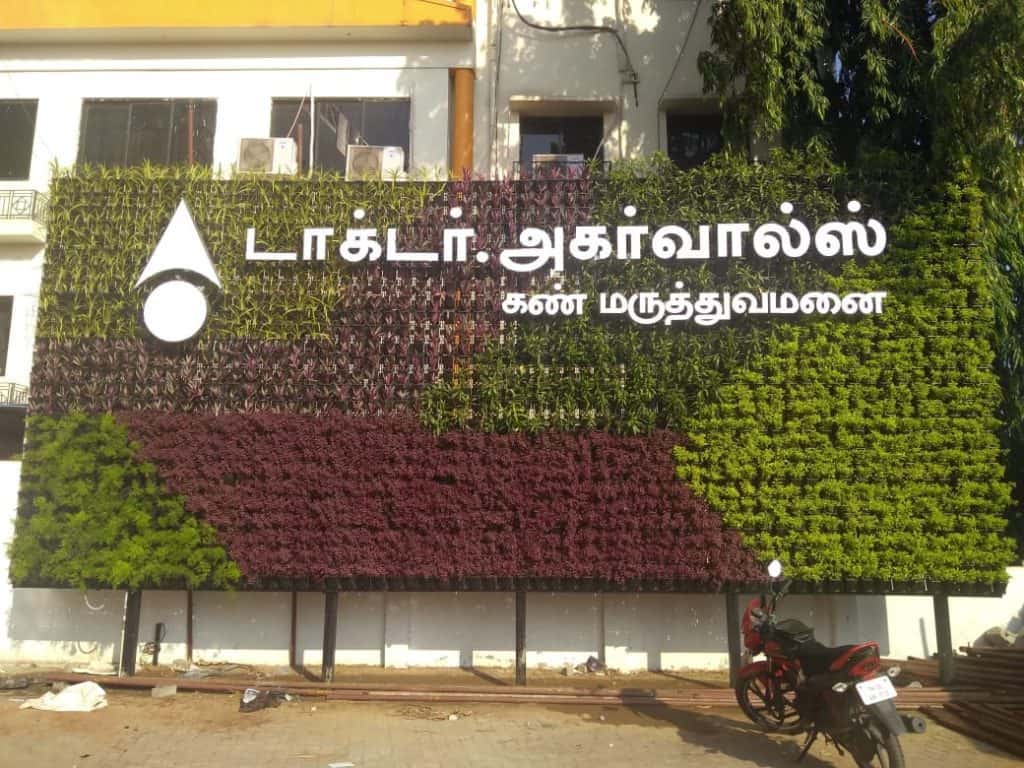
However, there are a few good examples too. Wall gardens/ vertical gardens at Chennai Airport and Agarwal’s Eye Hospital are in good health, a valuable asset to the eco landscape.
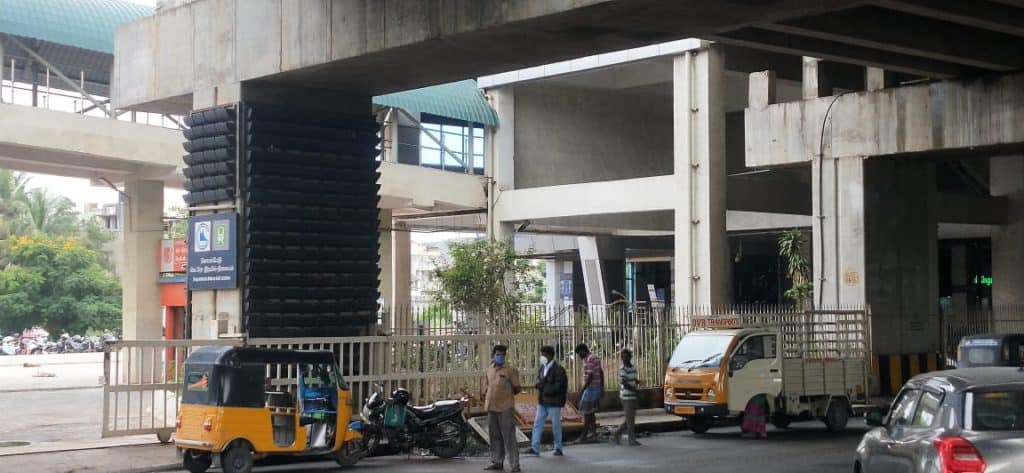
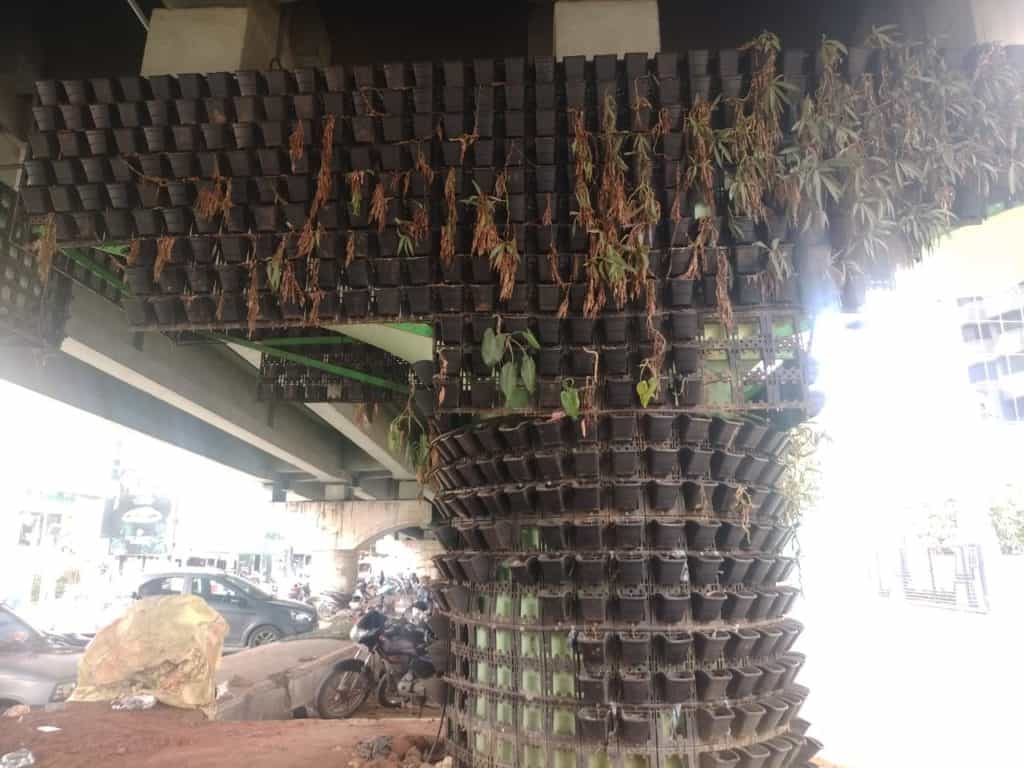
Losing lustre
The concept of vertical gardens emerged as a solution to the greatest challenge in our cities: space. It is nothing but a modification of the garden space in balconies of apartments and is fast evolving as an artform by playing a key role in adding aesthetic value to the public spaces.
“It is more like pots placed in a tiered arrangement, like you see in Navaratri golu. It has slowly advanced into a concept and artform to create privacy or beautify empty walls with flowering creepers,” says Harish Krishnamurthy, a freelance horticulturist.
However, what are the chances of sustenance? What are the challenges involved? And where did authorities in Chennai go wrong in maintaining these gardens? Rainfall in Chennai is spread over just four to five months a year. This challenge makes it mandatory to water these plants frequently to maintain precipitation.
Government departments roped in contractors for the set-up and maintenance of the project. According to officials, funds for the set up and maintenance for a particular period are disbursed at one go. “These contractors who were enthusiastic about the project could not maintain the gardens scientifically. Once they receive the funds, they seem to lose interest,” said an official with Chennai Metro Rail Limited, analysing the failure of the gardens at Koyambedu metro.
Challenges of maintenance
Maintaining these vertical gardens in public spaces require a lot of time and effort due to the constant exposure to pollution and climatic extremes. “There are a few repeated procedures we follow every month,” explained Venkatesh Vaidyanathan, Vice President – Projects & Facilities, Dr. Agarwals Group of Eye Hospital, “We have automated drip irrigation so that the water supply is neither in deficit nor in excess. We treat the green cover with vermicompost, NPK191919 and neem oil spray on rotational basis to prevent pests.”
Lack of infrastructure and ineffective planning were the reasons behind the failure of the project at Mandaveli MRTS. “Maintaining these plants calls for suatained effort. Attending to the highest tier of the garden, changing the plants that die, changing the soil at least once in two years (as it becomes clay due to regular irrigation) and preventing them from the root diseases are a few essential measures, that should have been ensured (but were not) at the Mandaveli MRTS,” said a Southern Railway official.
In most cases, the team that maintains these gardens have no qualified horticulturists. “Only a horticulturist can monitor the health of the plants. They know when to trim the plants, what variety of plants to choose and the nitty-gritty of irrigation and nutrition,” says Venkatesh Vaidyanathan.
The way forward
The solution to having beautiful vertical gardens lies in the clear understanding of the problem itself. As poor maintenance poses the biggest problem to the health of the gardens, government departments should outsource that to a trustworthy agency with knowledge about horticulture. “An official in the department should monitor the maintenance every month,” says the CMRL official.
In a novel initiative, GCC aims to water these plants with treated sewage water from the Sewage Treatment Plants (STPs). Another cost-cutting measure can be to make these gardens edible, say horticulturists.
“It can even be a profit-making venture where one can grow easily cultivable leafy vegetables such as coriander leaves, basil etc. These plants require little root space and can be harvested quickly,” said Harish Krishnamurthy.
It is also advisable to keep the height of these gardens to 15 feet, so that maintenance becomes easy. “There should not be any compromise on maintenance. Watering the plants should be done everyday or at least once in two days, based on climatic conditions,” explained Harish.
Ya possible, because there will be lot of earning in politics.
Any way the plants will die in summer or any cyclone so all money will be shown in loss