Not by a long shot, but I am glad you are willing to hear me out.
Undoubtedly, the Supreme Court judgement was a victory for us all – you and I. We have been declared free of an irrational and arbitrary law that has no place in our society today. Now, we regroup and get to work. The judgement has laid the groundwork for things to come — leading everyday lives of dignity and free of discrimination outside the bedroom. It has left us with a clean slate to write upon a set of binding policies that will truly ensure a life free of discrimination.
The attention paid to the judgement has been overwhelming and inspiring. While more non-male members of the community have made it to the front pages and screens of news media, I continue to be struck by the primacy of gay sex and the kissing gay man. Check the Indian Express coverage in the photo above (bottom left), as well as the screenshot below to get a sense.

Man. Kiss. Man. Pic: Deccan Chronicle
Somewhere under the rainbow
Expression of desire is universal, and the LGBTQIA community could not have been more encouraging of it. However, it is strange to be reduced to just that. We all love to eat potato chips, but a fluttering pile of salty chips do not flash on TV in slow motion every time there is a news piece about engineers in India.
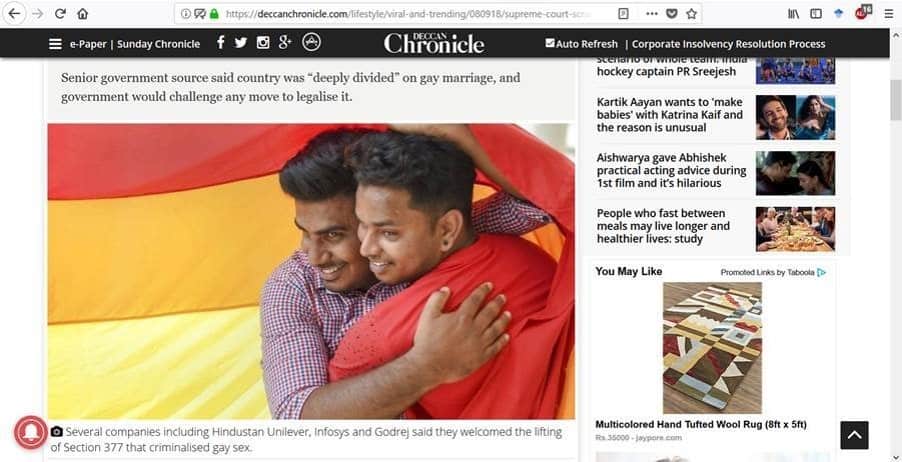
Pic: Deccan Chronicle
One Man. So Rainbow.
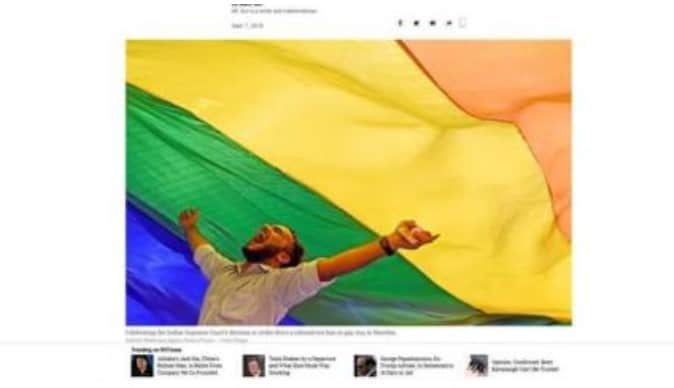
Pic: New York Times
Similarly, the LGBTQIA community is not a monolith of sexually-charged gay men behind rainbow bedsheets. We are a dizzyingly-diverse group of people representing the entire gender-sexuality spectrum. Celebrate us for who we are, do not reduce us to a common denominator.
Gay Sex. Gay Sex. Check-Check.
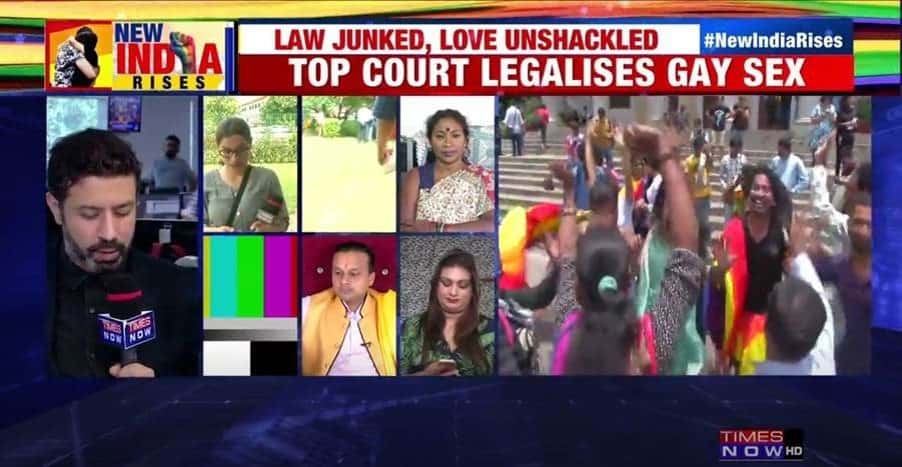
Pic: Times Now
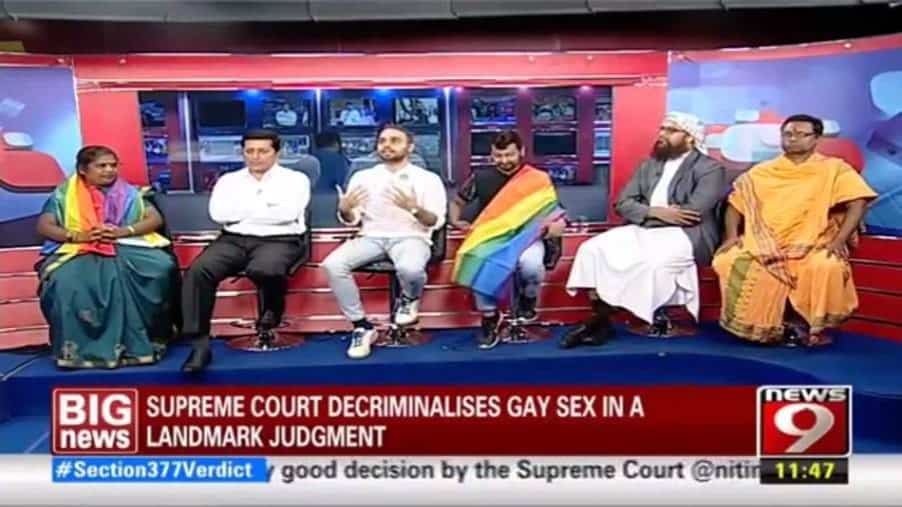
Pic: News 9
This judgement never has – and never will be – about ‘gay sex’. However, this has been repeatedly proclaimed in all domestic and international print and electronic media outlets. It is about sexual expression amongst two – ANY TWO – consenting adults. The more we accept a sweeping ‘gay sex’ liberation story blindly, the more we make sexual expressions of other genders invisible. The LGBTQIA community will always remain linked together, and progress for one will not celebrated at the expense of another.
As we open up our minds, mouths, and airwaves to mainstream sexual expression, this would be a great opportunity to do the same for gender-variance, too.