I am a final year student in one of Bengaluru’s well known colleges and am currently living in a paying guest accommodation. But I have a health condition and have been advised to cook my own food and not eat outside food. Renting a flat would be an ideal option. So I went to look for flats in SG Palya in South Bengaluru.
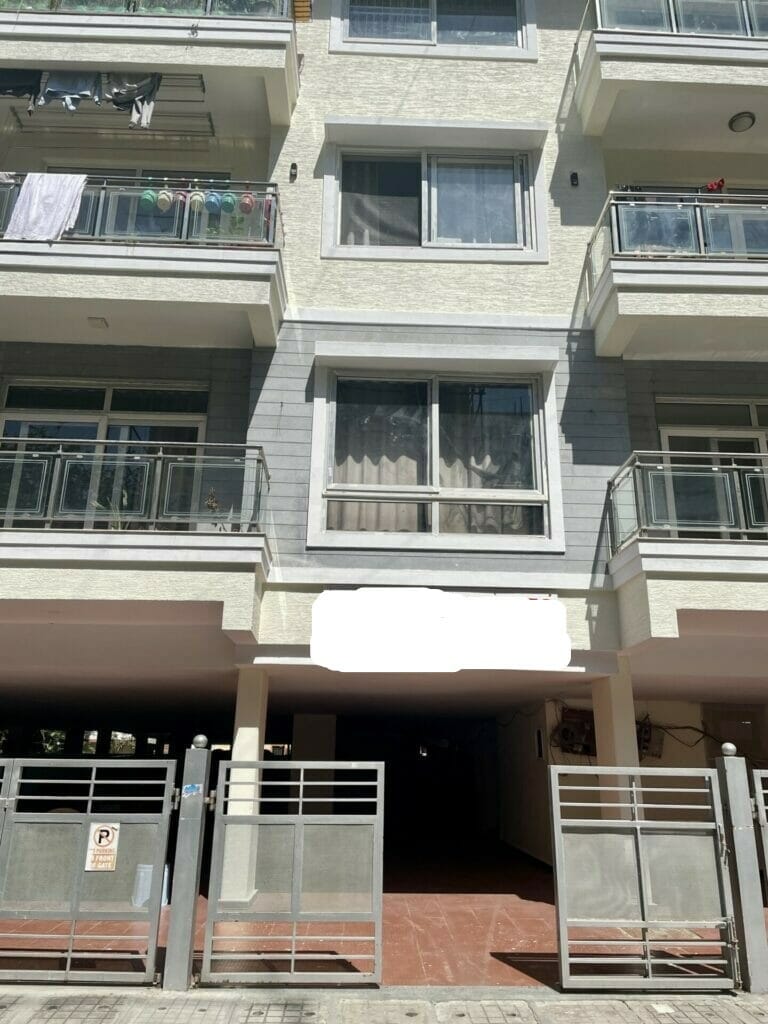
Aurum Inn, a recently completed residential building, was one of the first apartment complexes I walked into. “Madam, we don’t give flats to single women, it is only for families,” said one of the workers as soon as I walked inside the building. I asked him the reason, to which he said families create no nuisance whereas single women call boys over and party all night, which might disturb the neighbourhood.
Bengaluru may be India’s IT hub, but stereotypical ways of thinking, like the one mentioned above, abound in attitudes towards single working women. Especially when it comes to renting out homes to them.
Read more: Women’s representation in apartment managing committees poor: Survey
A process of elimination occurs since supply of flats is scarce and demand high. Owners prefer families as their perception of unmarried women is that they lack stability. You feel uneasy that your broker is “checking you out” when you meet him. People start judging you when you arrive wearing dresses—they assume that you are too modern and independent. Amisha Mansukh, a media student in Christ (deemed to be) University, faced a similar problem.
Although she had no trouble locating a room in a family society, she was subject to several limitations. “I was asked not to invite any men as they assumed that I’ll play loud music and end up having drugs or sex,” says Anusha. “I was also made to sign an agreement in which it was written that I will not create any nuisance by bringing men over and also won’t be seen with any guy friend in the society premises.”
‘Will you be back early?’
This moral evaluation occurs because a single working woman is still viewed as an outlier. The home owners’ outright rejection to rent out their place based on gender, which occurs frequently, is far worse than the intrusive violations of private space their queries create.
Priyanshi Tripathi, an employee with a private firm, was asked if she tends to come home late at night. “I am the only breadwinner of my family,” said Priyanshi. “Recently, I got a night shift. And that has turned into a nightmare for me. I never thought my job would be a reason I won’t be able to find a flat in Bengaluru.”
Apparently, the owners of her apartment complex won’t allow her to come late at night even if the reasons are job related. “I have tried finding a flat but none of them wants a woman that comes home late. If it was a man, there wouldn’t have been any issue. Our society makes it harder for us to even practice our fundamental rights.”
Read more: Time has perhaps come for a separate law for crimes against women: S T Ramesh, ex-DGP
Rejection due to food choices
Shishma Josh, a law student from St. Joseph College, speaks on how she was denied a flat because of her food choices. “If you are a non-vegetarian, you need to find some other flat. It is against our culture and religion,” Shobha, the landlady told Shishma. “I knew she was making an excuse as one of my male friends used to stay here and cook non-veg food,” Shishma said. “She didn’t want to give her flat to a single woman and so she cooked up a whole food story.”
Every single woman looking for an apartment on rent will run into these and other kinds of roadblocks that could turn living in Bengaluru into a nightmare. Most landlords are hesitant to rent their homes to unmarried women. In the unlikely event that someone does offer to rent it out, the woman must face their prying eyes, questioning looks, and some tightly enforced rules.
Empowering women via education and financial independence is supposed to result in their liberty. Ironically, she is still denied her fundamental right of a roof over her head.
Even a movie posed a question about it. You may recall the scene in Alia Bhatt’s ‘Dear Zindagi’ where Kiara is evicted from the flat because the landlord decided only families will dwell in the community. Kiara is right to wonder why society views single women as a problem.