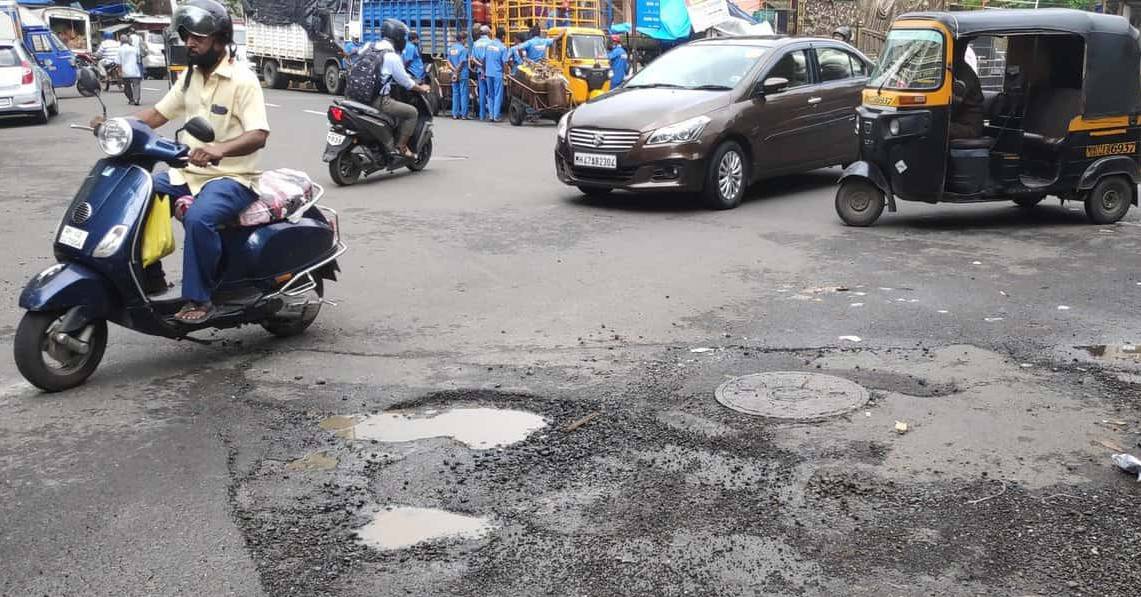
Despite the dangers they pose to life and limb, Indians have learned to live with the potholes that abound in most roads in every city. According to the Ministry of Road Transport and Highways, potholes accounted for 3,564 road accidents in 2020, though the the exact number of deaths from these accidents is not known. But despite these appalling numbers, there is a complete lack of explicit or specific legislation dealing with accountability for deaths or injuries caused by potholes that are the result of poor quality work and lack of maintenance by the municipal authorities concerned.
Can government or its agencies be sued for compensation?
The liability of the state for work done by its servants is known as Tortious Liability. According to this concept, the state is liable for the acts of omission and commission, voluntary or involuntary and brought before a Court of Law in a claim for unliquidated damages (damages claimed for losses unforeseeable) for such acts. This is also known as Vicarious Liability or Liability of a person for an act committed by another person, with such liability arising due to the nature of the relation between the two. Relationships such as principal agent, master-servant, owner-independent contractor etc. can be sued for damages under this principle.
Read more: Bengaluru’s potholes cost lives and money, but here’s how you can hold BBMP accountable
Under the Indian Constitution, two Articles, Article 294 and Article 300 contain explicit and implicit provisions regarding Tortious Liability of the State and suits filed against the state under these articles. In the State of Rajasthan vs. Mrs. Vidyawati, a vehicle owned by the state of Rajasthan met with an accident causing the death of one person due to negligence of the driver. And the state was held liable as the said accident could not be associated with the state’s sovereign powers, which are making laws and implementing them.
The Court further held that there can be no difficulty in holding that the State should be as much liable for tort in respect of a tortious act committed by its servant within the scope of his employment, and wholly dissociated from the exercise of sovereign powers of the state. It was thus made clear that the ambit of Article 300 included tortious liability of the state and its scope is not limited to contractual liability only.
In 1996, the Supreme Court in Achutrao Haribhau Kodwa and another v. State of Maharashtra and others, held that running of hospitals not being an exclusive function of the government, maintaining a hospital by the government would not be an exercise of sovereign power so as to enable it to claim immunity from liability for the tortious acts of its hospital employees. In the case, a government doctor and the state were held liable, because of the negligence of the said doctor in the hospital resulting in the death of the patient.
The liability of the state has gone beyond the traditional principles in view of changing laws and the Constitutional mandates. In fact, legally, the state would be liable to pay compensation to aggrieved persons because of negligent and careless acts done by its employees during the course of their employment. In fact, according to the law and the courts, the master would be liable even for acts which he has not authorized if he can be connected with the acts themselves.
Municipal Corporation can be held liable for pothole related accidents
Maintenance of roads is the duty of the city’s municipal corporation and accidents because of poor road conditions, resulting in deaths or injuries, can be considered to have occurred due to their negligence. These corporations act as agents of the government, wherein it can be sued under the principle of Vicarious Liability. The argument being that such accidents could have been controlled if the municipal corporation exercised more vigilance.
Negligence, in layman terms, means carelessness. Various laws, doctrines, and principles could be evoked to prove negligence and the lack of care by the public authorities responsible for maintaining these roads, thus making them liable for the occurrence of these accidents.
According to Law of Torts, negligence is the breach of duty caused by any one of the following:
(a) the omission to do something which a reasonable man, guided by those considerations which ordinarily regulate the conduct of human affairs, would do, or
(b) The commission of (act of doing) something which a prudent and reasonable man would not do.
This implies the existence of a legal duty to take care of roads, for instance, owed to the complainer. Torts is a civil wrong wherein an act or omission, other than breach of contract, gives rise to injury or harm to another, and amounts to a civil wrong for which courts impose liability.
Read more: Why did it take a death for GCC to focus on potholes in Chennai?
The question of liability arises when there is presence of carelessness by the defendants, if the damage caused could have been foreseen. However, this principle can be taken into consideration only if the defendant owes a duty of care to the plaintiff or if it is a clear breach of duty. When the damage caused is recognized and explicit, then the right to claim damages from the defendant is legally available.
To bring suit under negligence, in Klaus Mittelbachert v. East India Hotels Ltd., in 1997 the Delhi High Court considered the question of liability of a five star hotel to a visitor who got seriously injured when he took a dive in the swimming pool. The Court established three conditions, which once proved to have occurred, established negligence. The defendant was in exclusive control of the situation that caused the injury, the injury would not have occurred if the defendant was not negligent, and the plaintiff’s injury was not even partially due to his own negligence /action.
Applying the Court’s conditions to ‘accidents caused by potholes’, once the victim of the accident states that the injuries sustained were due to a pothole owing to the negligence of the concerned public authorities, then general damages or compensation could be demanded.
For instance, in Sh. Debayan Mitra V. The Municipal Corporation of Delhi, the Court held that general damages of Rs 10,000, special damages of Rs 1240 and costs of the suit was to be awarded to the plaintiff by the municipal corporation. It was further stated that victims can and must demand damages when there’s a failure in the performance of its duty by any public authority/government/public works department. In the above case, the plaintiff had stumbled upon a pothole filled with water while returning home and had sustained severe injuries.
In Madhu Kaur v. govt of NCT of Delhi & another, the Court held that damages can be awarded to persons who have suffered the loss of a near and dear one, due to negligence and failure to maintain roads.
In Raj Kumar versus Union of India and Another, MCD and Delhi Jal Board were held guilty as they were required to maintain and repair manholes. The compensation was awarded to the victim who fell and died because of a manhole which was three inches below the road surface.
In another case, negligence was brought in holding the public authority responsible, when a person had fallen into a manhole, which was unfinished by the authority concerned, and had lost his life. It was held that he was deprived of his fundamental right under Article 21 of the Constitution as the state or its instrumentality failed to discharge its duty of care cast upon it. Thus the Court held that Article 21 could be attracted and monetary compensation could be claimed under Article 226 of the constitution as a compensation/penalty for deprivation of a fundamental right.
Conclusion
Thus, through precedents, it has been properly laid down that the authority and the government responsible for maintaining roads and highways can be held liable for any breach of duty from their side. There have been several tests for determining the relation of master and servant and the Courts have also applied their discretion according to the facts of the case to determine such a relationship.
Legal precedent clearly holds that the relevant governments and authorities responsible for maintaining roads/highways are always obligated to ensure care and safety towards the citizens and commuters. Unfortunately, however, when it comes to compensation for injury caused due to potholes, no legal provisions or steps related to seeking compensation for the said injury are mentioned in any law.
There also exists a court judgment under the Consumer Protection Act, holding the corporation liable for deficiency in road maintenance.
In the case of a major incidence where the deaths/injuries/loss of proprrty has occured, government voluntary and promptly announces compensation and free treatment of the injured.But in case where individuals are sufferer for the lac of proper services (like repairing roads and potholes etc., one is again face the apathy of snail services. one has to knock the doors of the courts and years pass on getting the compensation. even people are not aware of any such right or provision in law.