On a gruelling hot Monday afternoon, Abdul S wakes up from a nap on his rickshaw parked on the Wall Tax Road. A few yards away, the Chennai Central Railway Station is abuzz with passengers. As scores of people walk in and out of the station, Abdul observes them expectantly, and hopes that at least one person from the crowd will approach him for a ride.
Abdul belongs to the dying community of rickshaw drivers who bring back memories of the good old days in the Madras that was. The present, however, hardly brings any cheer for them, as they return home with empty pockets on most days. The uncertainty of business is especially disturbing.
“We may earn just about enough on a certain day, but there is absolutely no guarantee that the next day will also bring business,” says Abdul, who has been in the profession for more than four decades now. Enforcing the point, he shares that he had had a good run and generous customers the week before. But with the mercury levels rising and most preferring the comfort of an auto, his pockets have now run dry. Now, he has to worry even about being able to manage a square meal for the day.
Remembering the heydays
Things were not always like this, of course. “Wall Tax Road itself had about 300 rickshaws 15 to 20 years ago,” says Abdul, “but you will now spot just three or four.” One of the turning points was when autos started to become popular. “School savaaris used to be our primary livelihood and there was a steady flow of income every month. Now, parents feel autos are more convenient and comfortable for their children,” he shares. Some of them still ferry school children, but the numbers have dropped sharply.
Kothavalchavadi, Triplicane and Sowcarpet are the neighbourhoods in Chennai where one can still take a rickshaw ride. According to Abdul, across Chennai, there are only a few hundreds of them who are still keeping the legacy alive.
Interestingly, many among Chennai’s migrant population are regular customers for the members of this community. “It brings back memories of my hometown when I take a rickshaw. Although they charge more than the auto, it is because of habit that I still prefer rickshaws,” says Harshitha Debnath, who relocated to Chennai from Kolkata, as she settles down on the modest red seat of Abdul’s rickshaw.
A quarter a day to keep the pain away
As Abdul counts his blessings and begins to pedal with his first customer for the day, 54-year-old G Lokanathan, a fellow rickshaw driver, hopes he will be the next to find a customer. He is visibly frail, though, as is evident from the lack of energy to pedal the rickshaw. Lokanathan speaks about how autos have taken over the rickshaws. “It is not easy pedalling a rickshaw, we literally sweat it out. But the advantage for customers is that they don’t have to wait for others to start the journey, as in the case of a share-auto,” says the rickshaw puller, as he stretches out his limbs.
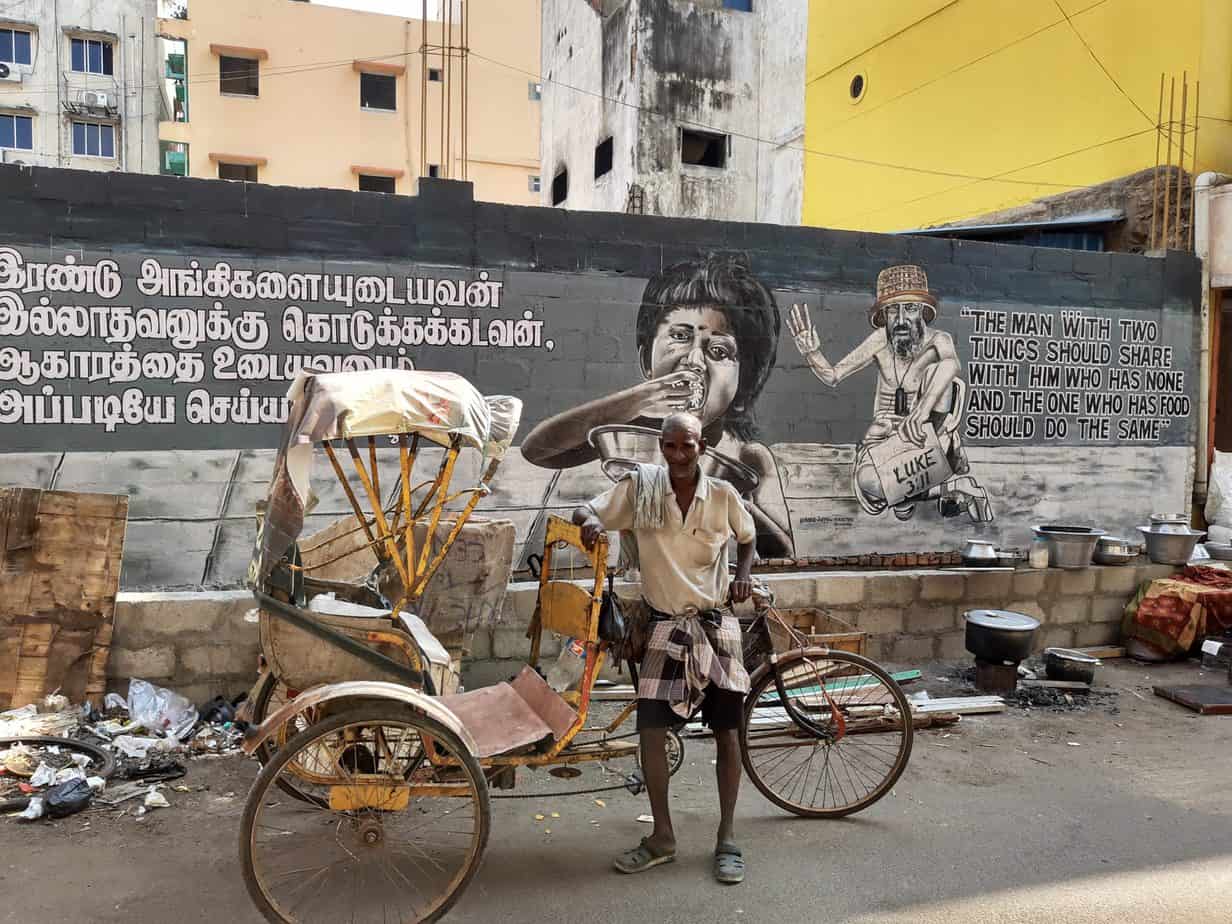
Rickshaw pullers such as Lokanathanan earn less than Rs 300 a day. Pic: Laasya Shekhar
All these rickshaw pullers have recurrent health issues and suffer chronic pain. “We live with body pain and so, we drink to distract ourselves. Without alcohol, it’s impossible to keep the wheels running,” says Lokanathanan, adding that he might skip brushing his teeth, but not consuming alcohol.
Making ends meet
The biggest problem that the community faces today is dwindling ridership. Adding to that are normal seasonal woes. They earn money from commuters only during the dry seasons and have to switch to odd jobs during monsoon.
“We take up other odd jobs, in tea stalls or as coolies or something similar. A few rickshaw drivers work as labourers in the agricultural fields of Tiruvallur and Kancheepuram. I work in a tea shop on some days where I am paid Rs 200 a day,” says Adal Alagan, a 57-year-old rickshaw driver, “on some occasions, I earn Rs 100 a day by cutting and cleaning the meat. At least this helps in keeping up a hand-to-mouth existence.” Age makes it difficult for Alagan to pedal, but he is too fond of his rickshaw to give it up.
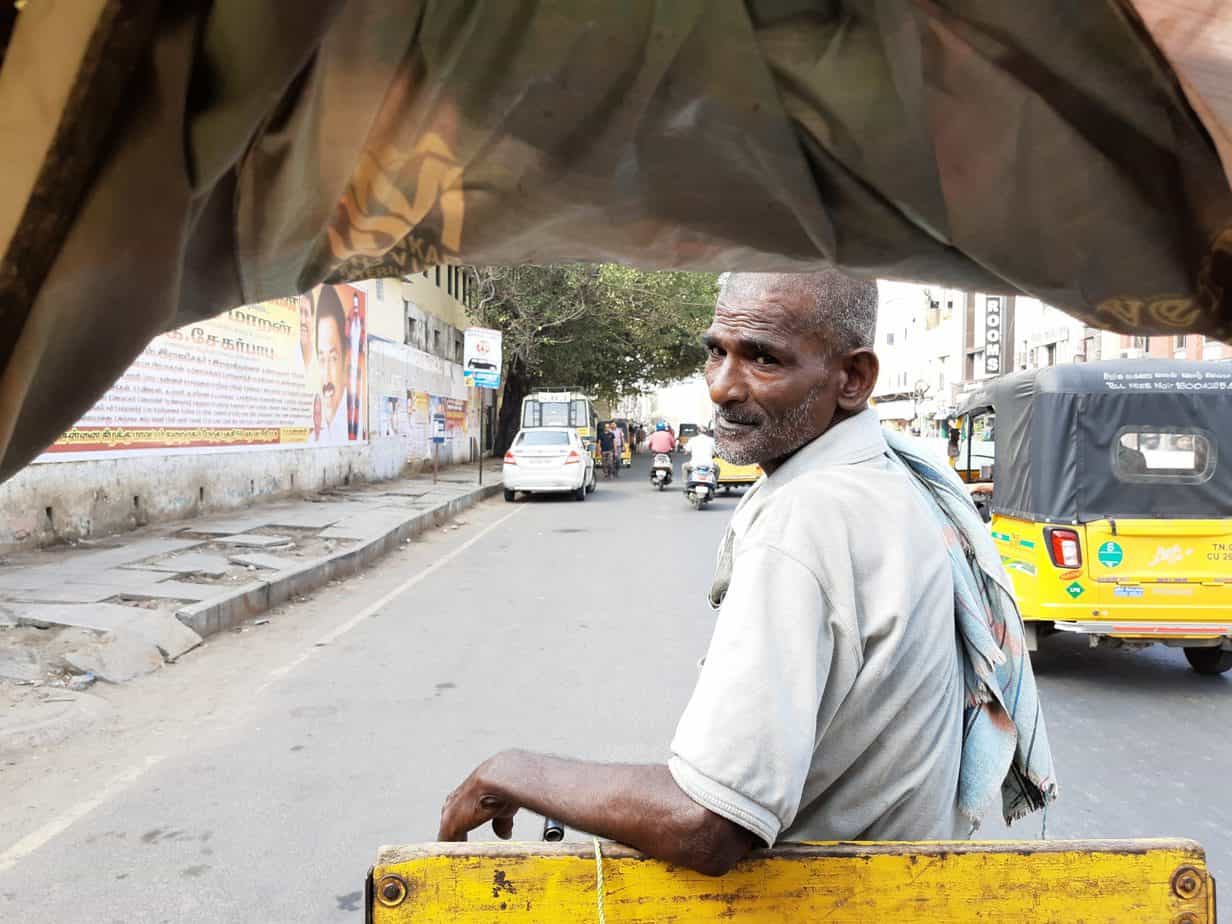
Lokanathanan G, rickshaw puller. Pic: Laasya Shekhar
MGR’s Rickshawkaaran is a movie that perhaps depicts the hard work of rickshaw pullers and the story of their lives most aptly. Most of them, however, are candid in their admission that this was not a profession of choice for them but that it helped them to subsist. While their own children have taken to driving autos in the city, the senior citizens stick to the profession. “I don’t know any other trade or skill. At this age, I’m not interested in learning things to start a new profession,” adds Lokanathanan, as fellow puller Adal Alagan nods in agreement.
It is very sad to write that most of the rickshaw pullers drink liquor even before they start the day. I am a 74 year old person and have had very bad experience in last two years. Also very bad language comes out if you talk to them and bargain over the rate for the ride.
Can the government or the NGO arrange for pension in their old age days?
Feel sad and sorry for these rickshaw pullers ,my work takes me to the area where these guys are still available,and only these rickshaws can manoeuvre the congestion and narrow streets of north Madras , yes to me its still MADRAS ,these guys will cost you more than the auto’s but i don’t mind patronising a person who has to put in sheer hard work to pedal , i dont know how long this dying form of transport will last , till then lets encourage and patronize them .
Government should support by finance these hard working to change into Electric rickshaw and make there living
For a matter of fact,this green mode of transport should ideally be propagated and facilitated by our government.A simple way of doing it is to create a green corridor and allow only Rickshaws to move around this specified radius. Very strange and sad to see government/authorities not encouraging wonderful history which is environmental friendly instead marketing so called green vahan on the pretext of Battery operated vehicles. I call it, Battery wise and Rickshawala foolish.
The government should these hard working cycle guys guys use their services and encourage them,
Is it not possible to fit a motor on their rickshaws so we get the rickshaw experience and also they don’t feel the strain?