When was the last time you saw a disability inclusive flash mob event? Can’t remember? Neither can I.
On the evening of 13th august, in the spirit of Independence Day, people gathered in forum mall, Koramangala, beheld the awe-inspiring performances led by OSAAT-One Step At A Time, constituting of people from all walks of disabilities along with able bodied individuals, dancing their hearts out, to show the world that they’re danceabled.
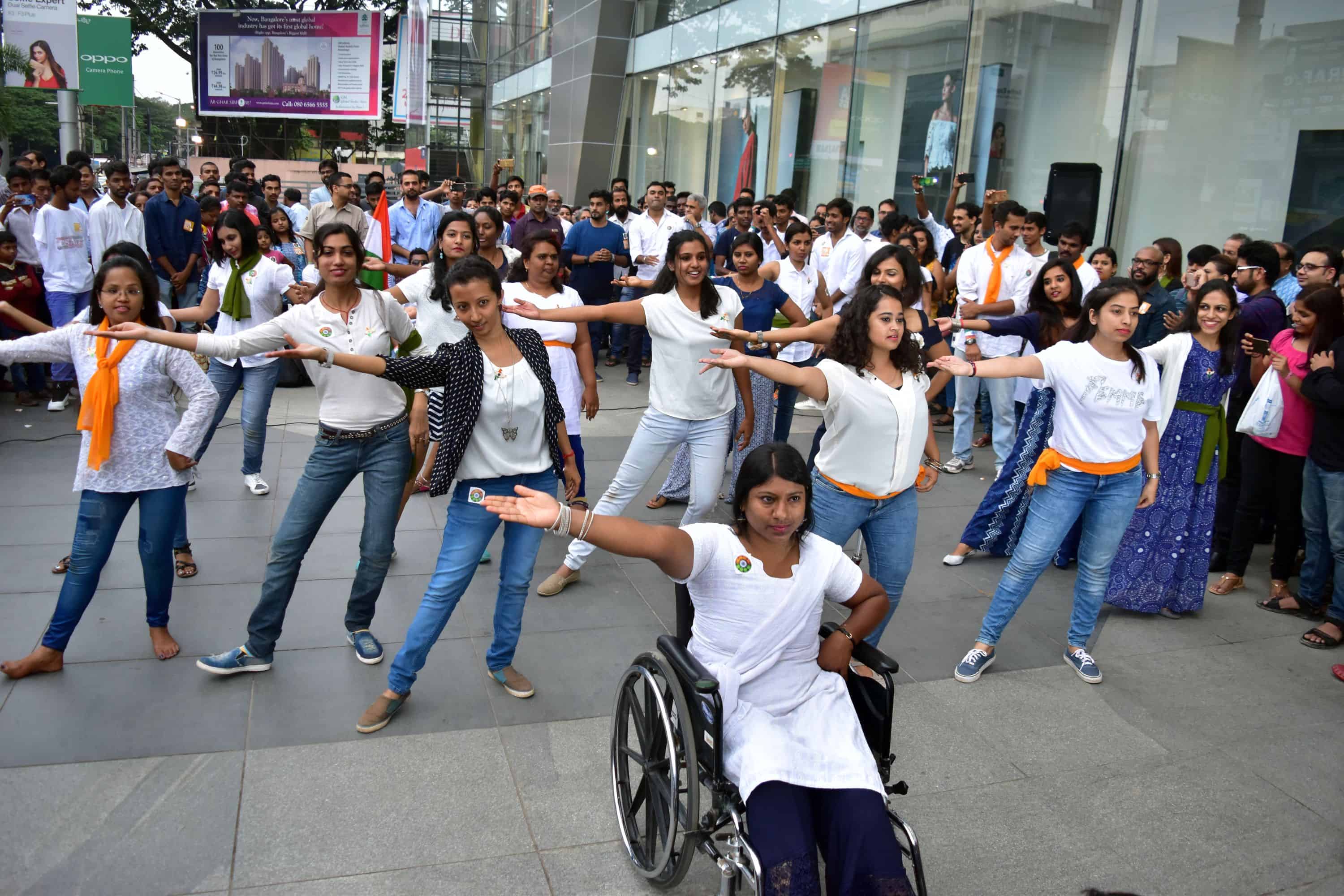
Kathak performance by OSAAT
OSAAT is a nonprofit organisation striving to increase awareness on disability and build communities/ support groups for people with disabilities. They conduct programs encircling adaptive dance, theater and fitness, for the differently-abled.
Hours before the event had begun, the volunteers of OSAAT piqued the public’s interest with enticing photo booths, and thought-provoking posters, promoting the Persons-with-disabilities freedom campaign on social media (#PWDFreedomCampaign), by encouraging a multitude of people to snag photographs with the props.
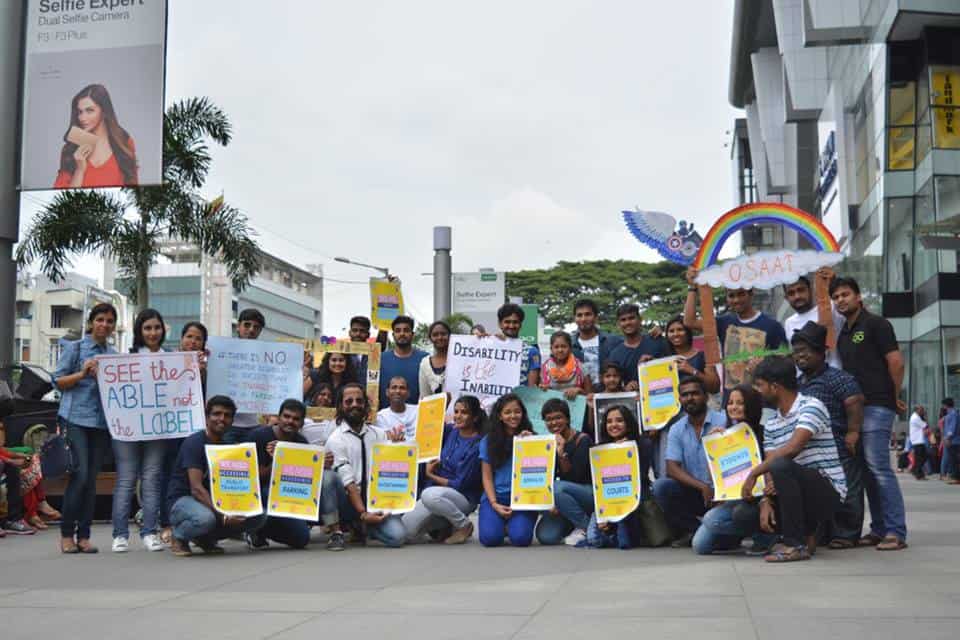
The team
A Bollywood number, a Kathak and a salsa dance- was the whole enchilada of the flash mob. The event swiftly proceeded into a rather serious note when members of OSAAT, including Hema Subhash- the director and founder of OSAAT, who’d recently lost her leg in a tragic accident, Dhanya Ravi- a motivational speaker and a brittle bone survivor, and Vishwas KS- an international Para-swimmer, who’d lost both his arms in a childhood electrical accident, shared their experiences and expressed their concerns on lack of accessibility and opportunities to accommodate the community of differently abled in the society, today.
With the current infrastructure designs, the question of a person with a physical or a visual disability boarding a train or a local bus without another person’s aid, is out the window. Office spaces, schools and residential buildings without operational lifts present a similar challenge.
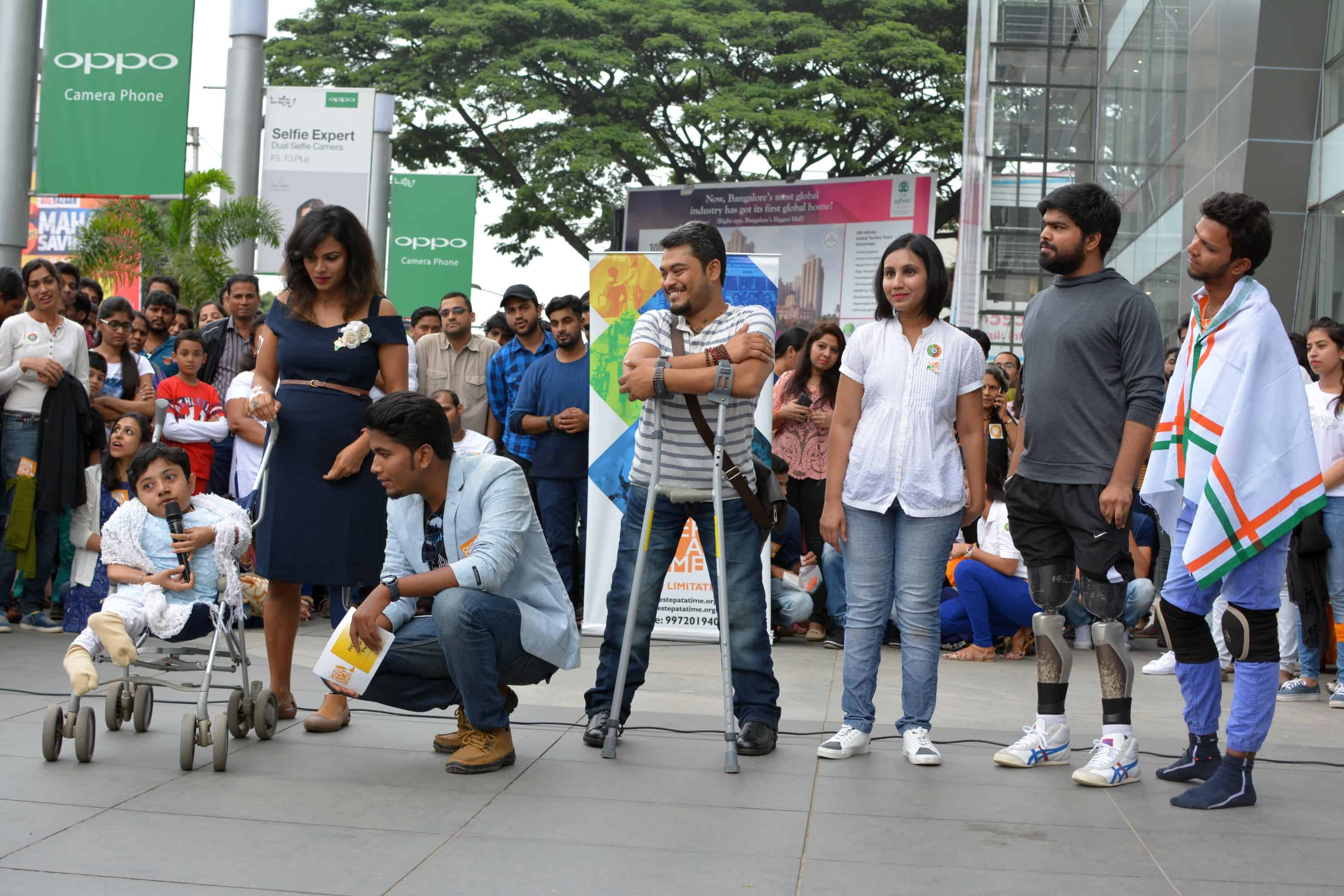
Dhanya Ravi expressing her thoughts on the need for accessible transport, education and opportunities
“My life has been a struggle. I had no proper schooling, since none of the prestigious schools or government schools accepted me as their student, hence I had to be home-schooled. At a railway station, when I reach the train, it’s the same to me, as nearing an ocean. I have to stop, and can’t go further, without someone lifting me up.” shares Dhanya Ravi, on the challenges she had to face on a day to day basis.
A solo dance performance by Vishwas, on a patriotic song vibrant with powerful stunts and moves, left the audience speechless. Who needs words, when the roars of your actions reverberate into the depths of one’s heart?
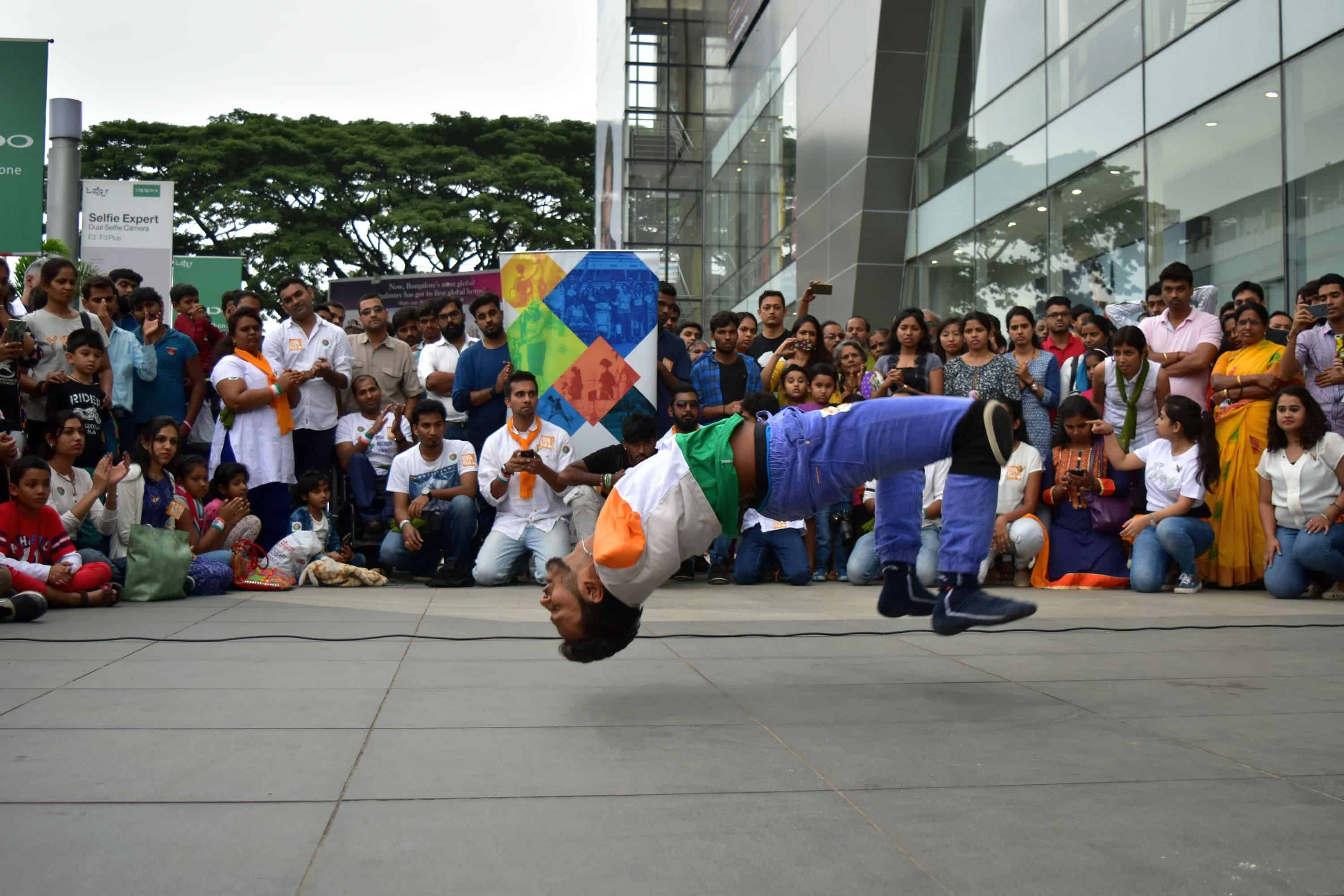
Vishwas, caught mid-action in a back-flip
In a brief sensitisation event that followed, volunteers from the audience experienced five minutes in the shoes of a person with disability, by challenging themselves to the trials of day-to-day hassles faced by the differently abled. Whether it was interpreting directions from strangers to get to a destination, whilst being blindfolded, or shutting out every sound in order to adapt oneself to lip read and learn sign language as a means to converse, or traversing across uneven surfaces with the help of a crutch and dance-hopping on one leg to a Bollywood number- the audience was willfully curious to get a glimpse into the lives of the differently abled.
The theme song of IIS- Indian inclusion summit was unveiled, infused with a dance performance focusing on the inclusion of people with disabilities and able bodied individuals to break the barriers of stigma in order to advance towards transformation. The event concluded with an energetic rendition of the song Vande mataram.
The music simmers down, the crowd goes home, but the final question remains: Moving towards the 70th year of Independence, How far along have we come to enable/support the independence of people with disabilities?
Thank you Srushti for this well written article.