Day-Long Cleaning Drive and Tree Planting at Horamavu Agara Kere

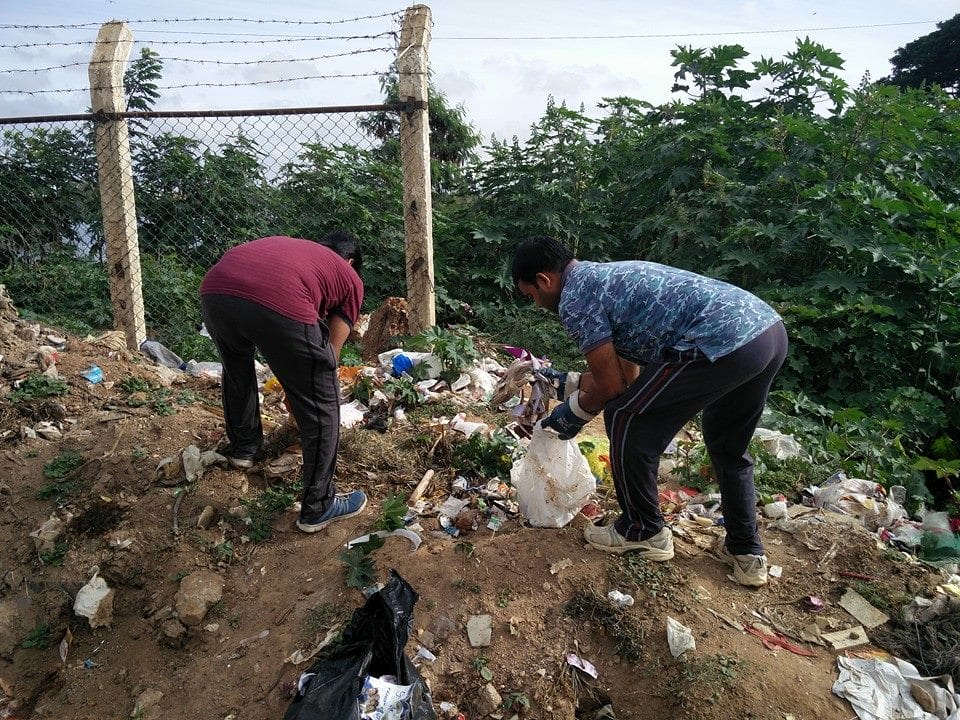
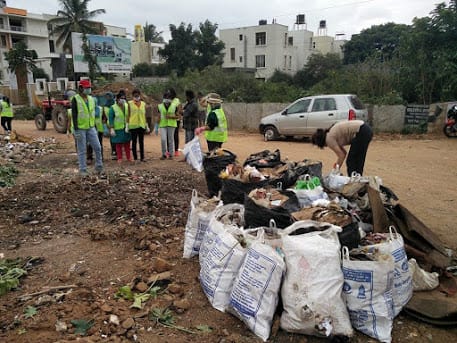
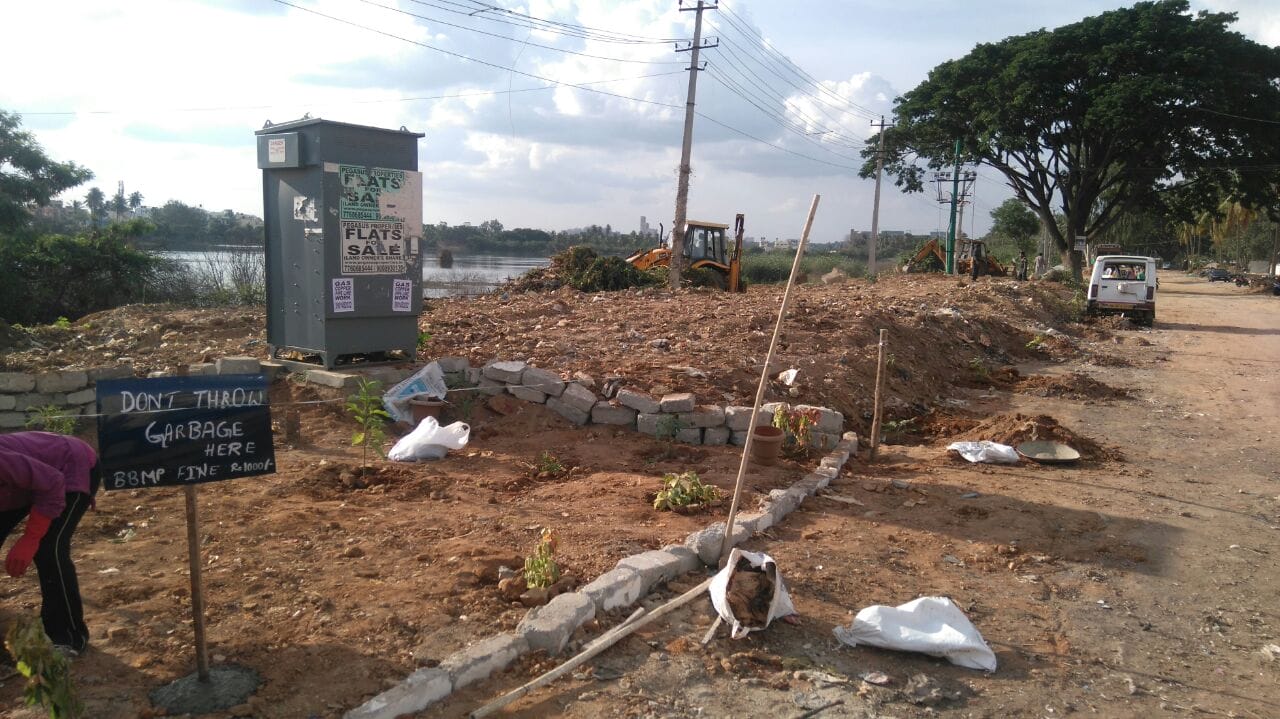
On Saturday, 16-July-2016, Horamavu Parisara Abhivruddhi Samiti (HPAS) organised an intensive day-long lake cleaning and beautification event at the Horamavu Agara Kere. More than 100 people participated in the event. In addition to local residents, students from Mount Carmel College’s Eco Club enthusiastically joined in picking up litter strewn around the lake, segregating waste, removing weeds from the lake’s fence, levelling the ground where needed, planting tree saplings, and making the place aesthetically pleasing enough to dissuade people from littering and dirtying the place in future.

This 50-acre lake in north-east Bengaluru has been a prime location for local residents to toss their unsegregated garbage in plastic bags, for the local BBMP contractors to transfer garbage from tempos into trash compactor trucks, and for people eager to encroach upon lake land by dumping construction debris. In addition, raw, untreated sewage flowing into the lake via two rajakaluves creates a perfect cocktail for disease causing vectors and for the unbearable stench that hangs in the air.

Dr. Ted K. Dass, HPAS managing trustee, said on the occasion that “The government must take very seriously the implementation of orders and rulings by various courts, including the recent orders on Bengaluru’s lakes by the National Green Tribunal. Further, the newly formed KLCDA must be well funded and provided with adequate staff to undertake lake rejuvenation activities on a war footing. People will fall in line when consequences for damaging or destroying lakes and their catchment areas are severe and predictable.

More photos of the cleaning event can be accessed here.

For more information on Horamavu Lakes, please contact Ted K. Dass, Managing Trustee, HPAS Trust

[+91-9900-56-9955 | hpas.trust@gmail.com | www.facebook.com/SaveHoramavuLakes]

Leave a Reply

Your email address will not be published. Required fields are marked *

Similar Story

Reviving the Cooum: Need for innovation, enforcement and shared responsibility

An analysis reveals how this Chennai river is affected by sewage dumping, encroachment of buffer zones and unchecked urban growth.

The Cooum River, once a sacred river that shaped the history of Madras, has now become a sad sign of urban degradation. For the millions of residents in Chennai, it has transformed into a malodorous, polluted, and stagnant channel, burdened with solid waste accumulation and extensive encroachments along its banks. During a recent datajam organised by Oorvani Foundation and OpenCity, we used Geographical Information System (GIS) datasets and population analytics to investigate the underlying causes contributing to this crisis. The results show that rapid urbanisation, inadequate provision of essential civic infrastructure, and the absence of coherent policy frameworks, along with…

Similar Story

Pallikaranai at a crossroads: Expert warns of irreversible damage to Chennai’s last great marshland

In an interview, naturalist Deepak V says the government must publish ecological maps marking wetlands and waterbodies to boost public awareness.

The Pallikaranai Marshland, one of Chennai’s last remaining natural wetlands, has long been a site of ecological tension. Its designation as a Ramsar site brought national and international recognition, along with renewed expectations for strong conservation measures. Yet the marshland continues to face intense pressure from urban development, infrastructure projects and real estate expansion.  Recently, Arappor Iyakkam, an anti-corruption organisation, alleged that state agencies illegally cleared environmental and construction approvals for a large high-value housing project within the Ramsar boundary. As the matter unfolds, it reveals how regulatory gaps and political inaction make the marsh vulnerable. Meanwhile, residents of Tansi…