Damsels dancing in nature!

These colourful 'flying needles' are a pleasure to watch - next time you go out to a nature outing, take care to notice them and enjoy!

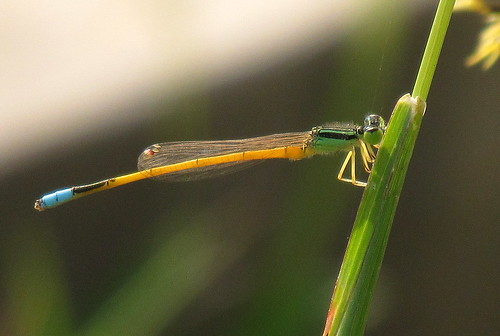
One of the very beautiful tiny insects that will often catch your attention is a needle-like creature that you see close to the edge of ponds and lakes, which seem to float magically in the air before settling, lightly, on a blade of grass.
IMG_8395

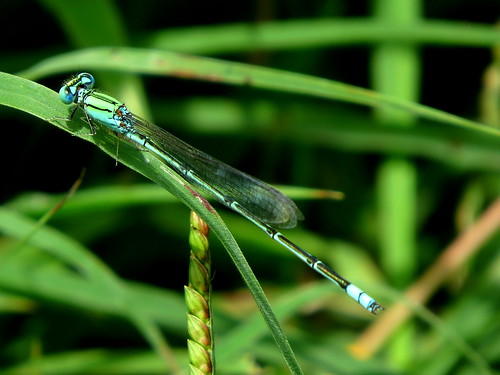
This slelnder, exquisite creature is the Damselfly. Damselflies, like Dragonflies, belong to the order Odonata, and are technically called Odonates. If you are interested in a more detailed name, they belong to the sub-order called Zygoptera.

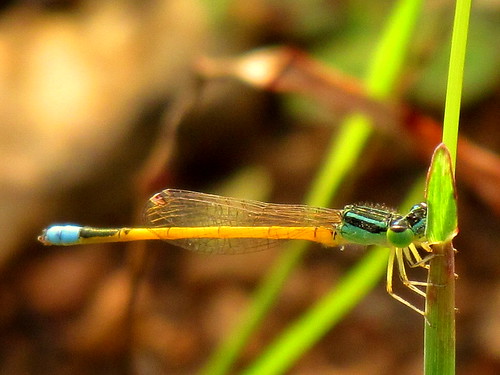
How does one distinguish between Dragonflies and Damselflies? The former have their wings open at right angles to their bodies when they are at rest. With Damselflies, the bodies are even more slender, and most species fold the wings along the body when at rest.
IMG_8396

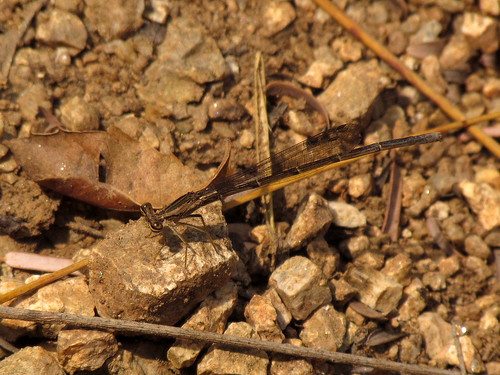
Some damselflies can be a little duller-looking, too:IMG_8424
All damselflies eat other insects, in fact, they are rather ferocious predators (That is indeed why dragonflies are so named!)

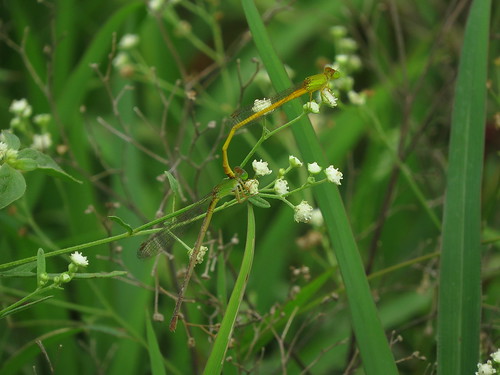
A mating pair form a shape known as a “heart” or “wheel”, the male clasping the female at the back of the head, the female curling her abdomen down to pick up sperm from secondary genitalia at the base of the male’s abdomen. In this picture I took at Jigani kere, they are just about form the heart.
IMG_7165

Adult damselflies catch and eat flies, mosquitoes, and other small insects. Often they hover among grasses and low vegetation, picking prey off stems and leaves with their spiny legs. Amazing to know that Damselflies are an ancient group, with fossils known from at least 250 million years ago. Damselflies are found on all the continents except Antarctica. Though most of them spend their lives close to where they hatch, some of them do migrate, as well.
IMG_4732

How have they impacted our culture? Damselflies have formed subjects for personal jewellery such as brooches since at least 1880. There is also the movie, Damselfly, a 2005 short film directed by Ben O’Connor. So the next time you are walking near water, do keep a lookout for these “flying needles”, and enjoy seeing and observing them!

Leave a Reply

Your email address will not be published. Required fields are marked *

Similar Story

Uthandi’s ₹91-crore ‘flood drain’: Is Chennai solving one problem by creating another?

The WRD's flood fix puts Uthandi at risk. Residents flag pollution, CRZ violations, aquifer damage, and threats to nearby fishing livelihoods.

The Straight-cut Flood Escape Channel project at Uthandi in the southern part of Chennai along East Coast Road was conceived by the Water Resources Department (WRD) as a flood mitigation measure, with a budget of ₹91 crores. The plan proposes a cut-and-cover drain through the VGP Layout in Uthandi, to connect the Buckingham Canal to the Bay of Bengal. The drain is supposedly meant to divert excess floodwater in Buckingham Canal during heavy rains, when areas around the Pallikaranai marsh and Okkiyam Madavu face flooding.  Work on the project started immediately after its inauguration in August 2025. However, residents of…

Similar Story

CIDCO’s new flamingo study raises questions on Navi Mumbai airport safety, wetland future

The Bombay Natural History Society had earlier pointed out that protecting wetlands and ensuring aviation safety should go hand in hand.

The City and Industrial Development Corporation of Maharashtra (CIDCO)'s decision to appoint Australian aviation consultancy Avisure to study bird movement around the Navi Mumbai International Airport has raised fresh questions about the future of Navi Mumbai's wetlands. The agency has cited the ongoing study as grounds to defer legal protection for DPS Flamingo Lake, arguing that no irreversible decision should be taken until the assessment of bird-related aviation risks is complete. But bird movement around the airport is not being studied for the first time. Findings of BNHS More than a decade ago, the Bombay Natural History Society (BNHS) was…