Since 2012, I’ve been working towards building a strong culture of cycling in Mumbai, way before I was appointed bicycle mayor of Mumbai. I’m not a transport planner, architect or urban planner. My work does not lie in an area where I can bring infrastructural change. But, my years of experience in advocating for non-motorised vehicles has helped me build a dialogue with authorities.
The work of bicycle mayors is multifold. We work in different areas. Either you’re building a cycling culture, or you’re in transport planning and infrastructure (installing cycling stands, for example). There is also policy intervention, where we have to communicate with the authorities and environment ministers to convince them to accommodate a budget for non-motorised transportation, as well as road safety, so citizens have a safe cycling environment in the city.
After a long time with advocacy work, I finally started a bicycle store during the COVID-19 pandemic. It was an opportunity to connect with fellow cyclists and introduce more people to the community of cycling in Mumbai that we had spent years cultivating.
Community work
One of my biggest initiatives since my appointment to bicycle mayor was Cycle To Work, an exercise to encourage Mumbaikars to cycle to work. A majority of people that cycle to work everyday are milkmen, newspaper distributors, etc, for whom, cycling in Mumbai is either an affordable means of transport, or a part of the job. Other citizens spoke about cycling to work but it was rarely executed.
It was challenging in the beginning. Companies hesitated to fully adopt this initiative, stating lack of cycling in Mumbai, bad road infrastructure and weather uncertainties (extreme heat, humidity, rains) as some reasons. But, that didn’t deter us. We even held award functions as a way to increase ridership.
Read more: With the Yulu bike, is Public Bike Sharing in Mumbai picking up?
Challenges with cycling in Mumbai
The major challenges we faced pre-pandemic were people’s hesitance towards cycling in Mumbai due to the poor conditions of roads. There are no designated space for cyclists in the city. The humidity, too, along with traffic, contributes to a generally poor environment for cycling freely.
Fatalities among cyclists are not uncommon and can happen during hours when traffic is the least. In 2019, a 37-year-old cyclist was killed in a hit-and-run on Eastern Express Highway.
Cyclists tend to go at a higher speed when the road is empty, a risky undertaking for them.
During my conversations with cyclists in Mumbai, who cycle to-and-fro work, or as part of their work, a common pattern was the lack of respect for cycling tracks. With very little open space in the city, building cycling tracks as part of infrastructure could invite criticism. There is little space for pedestrians who struggle to navigate amid moving traffic, and are at risk with collisions with cyclists who are struggling with navigation as well. Most cyclists ask for uninterrupted routes.
As the bicycle mayor, my job is to focus on increasing cycling in Mumbai. Eventually, as the culture grows, the Brihanmumbai Municipal Corporation (BMC) will be forced to build suitable infrastructure.
Ray of hope
Mumbai noticed an increase in the number of cyclists since 2019. Traffic reduced and more people took to the streets as a form of exercise. There was a massive increase in the number of cyclists across India and globally. The pandemic especially increased the number of cyclists in the city. But, for many, this practice is still unaccessible.
Among poorer settlements in the city, where most transport facilities are often unaffordable, commuting via cycles could bring effective change and increase their mobility. To facilitate this, we started a campaign titled ‘Mi Cycle Rider’ or ‘I’m a cycle rider’.
We take used bicycles and refurbish them to donate to those who probably need them more. We also ride along with them, include them in our initiatives and get their voices heard from the BMC. We help them become disciplined cyclists.
I plan on training 50 women from each ward of Mumbai in cycling. Currently, I have funding for 50 bicycles in K-West Ward, Andheri, where I am training 35 women so far, and more will be added with time.
My most recent initiative that I started with Smart Commute Foundation is called ‘Cycle chala city bacha’ or ‘ride a cycle, and save the city’, which we started as a way to sustain the momentum the pandemic brought us. As lockdown restrictions ease up, and people return to work, we’re afraid ridership numbers will go down.
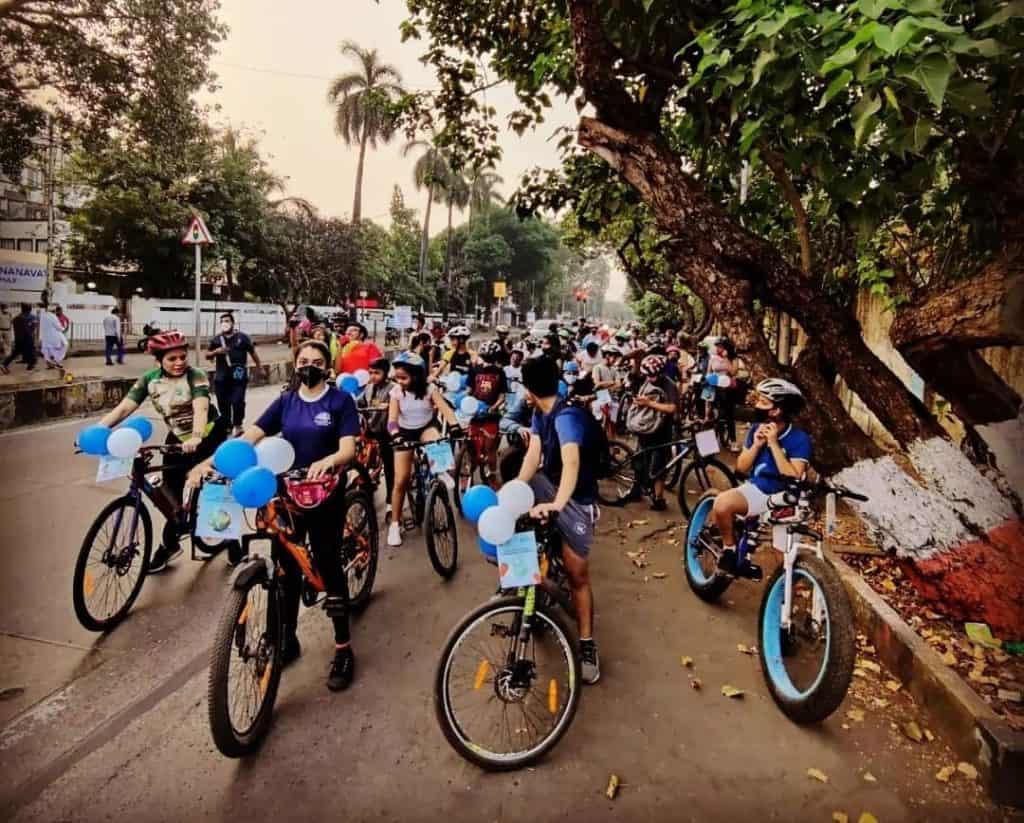
Over the years, we have built strong networks for cycling across Mumbai. Now, each ward has its own Bicycle Marshal, who is executing micro level work. They have formed cyclist groups in their own wards and they organise up to 3 rides every week. This also helps us create a larger impact in Mumbai.