“The lockdown may end sooner or later but not our troubles”. Arijit Khan, 32, a wedding photographer by profession, is one of many such people in Kolkata who used to earn their livelihoods from social gatherings and events, which are now banned to contain the COVID pandemic. “Photographers could be eliminated from the curtailed guest lists during wedding and other occasions,” worries Arijit. ““Even payment for completed work is not being cleared, besides cancellation of around 10-12 bookings made prior to lockdown. It is becoming difficult to run the expenses of my family that includes two minor twin sons.”
Alternative livelihoods are not easy to come by in these times. “The lockdown has proved to be the final nail in our coffins,” added Samir Verma, 34, also a wedding photographer. “We have no other profession to switch to.”
Not only photographers, but wedding bands, without which no grand Indian wedding was once considered complete, are another group who have been badly hit by the ban on social gatherings. Around 25 shops of these bands still line the Central Avenue crossing off Burrabazar in central Kolkata. Mohammad Ahmed, owner of one these shops, Bharat Band, virtually broke down while describing the huge hit that people like him have suffered in the present crisis.
“We had recently invested around Rs 10 lakh in purchasing new dresses and musical instruments for four band groups comprising around 20 people each,” said Ahmad. “The pandemic struck at the worst time as the three-month long wedding season starts from April. We had 20 bookings and our biggest headache now is how to return the money we took from clients. We have stopped taking calls for return of cash, as it is difficult to survive in this financial crunch.”
The outbreak has dealt a deadly blow to the business that was already facing stiff competition from Disc Jockeys (DJs) and the reduction in the number of days for immersion of Durga Puja idols. “People consider us relics of a bygone era,” said Md Abdul Hafiz, owner of Punjab Band located a few shops away from Bharat Band. “Bookings have dropped significantly. Earlier, puja organizers considered it a status symbol to have bands playing at their processions for idol immersion. But things have changed now. We are blamed for noise pollution though nobody points fingers at the blaring DJs. The band units are on the verge of extinction and might soon only be found only in history books.”
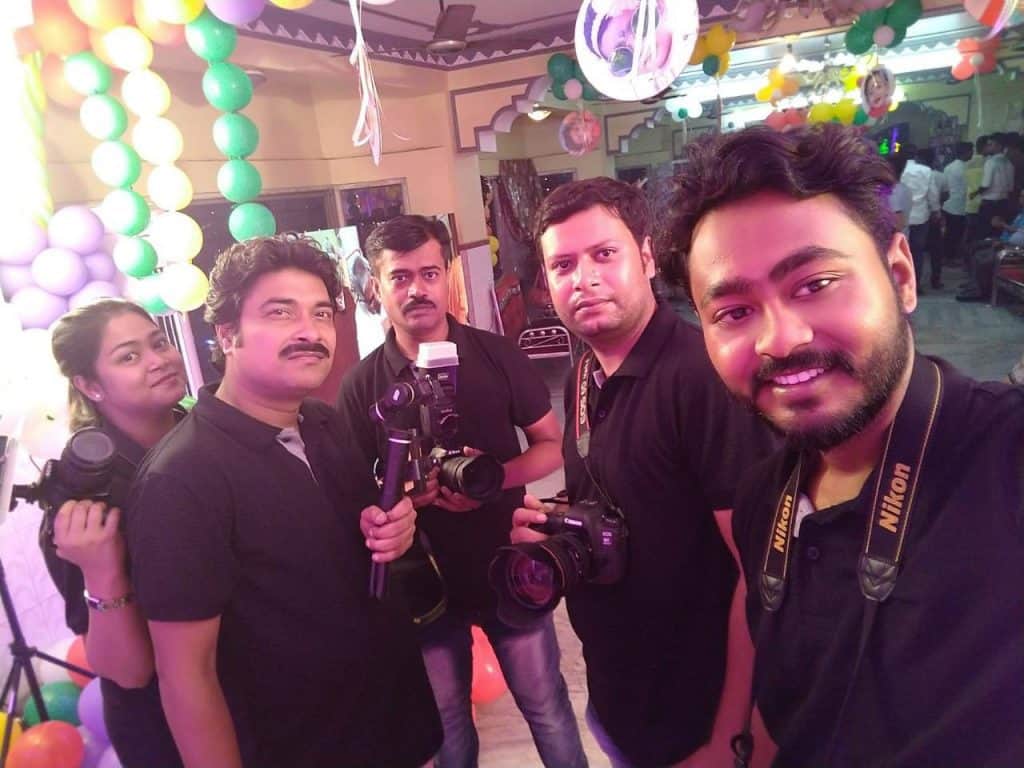
“The lockdown may end sooner or later but not our troubles”
– Arijit Khan, Wedding Photographer (second from right)
Businesses across the spectrum suffer
Similar is the plight of small caterers who fear that their business will never be the same anymore, “The lockdown might end but fear will continue to rule our minds for at least 2-3 years,” said Dwarak Dutta, owner of Diamond Caterers in north Kolkata, who has been in the business for over three decades.“People will invite only a bare minimum of guests to weddings and other social events.We have already lost around 85 percent of our business due to lockdown”.

Bivek Singh, production manager of Calcutta Boating & Hotel Resorts, pegs his losses at over Rs 40 lakh, “Our season lasts from April to July where we get both wedding and corporate bookings. We have six properties in Kolkata and normally charge around Rs 4 lakh for each booking. Around 10 bookings have been cancelled. But we have to incur power costs, staff salaries and other day-to-day expenses. It is likely that even the winter season from November to March would be bad due to pandemic fears. People will stay away from crowded places.”
Waiters in small food outlets and others earning a living doing odd jobs also lament that the pandemic will change their lives forever, “Restaurants will resort to cost cutting by retrenching employees and we will soon be left to fend for ourselves,” feared Sujay Singh, 40, who has been working as a waiter at a prominent restaurant in central Kolkata.
Change in societal pattern
“The physical distancing requirement has started to change our lives and thought patterns,” says Dr Susmita Bhattacharyya, Assistant Professor, Department of Sociology, University of Calcutta. “It is certainly going to impact those who depend on large social gatherings to earn their livelihood. They have to innovate and change their traditional modes of business to survive. We have to acclimatise to a new world post lockdown.”