Waste management is a hot topic in Bengaluru these days. With so many ways to compost, reuse and recycle, the possibilities are endless. But where do you start? You have a bucket of kitchen waste and an area perfect for a small garden just waiting to be utilised. How do you get from discarded eggshells and browning banana peels to nutrient-packed soil and eventually a thriving vegetable garden?
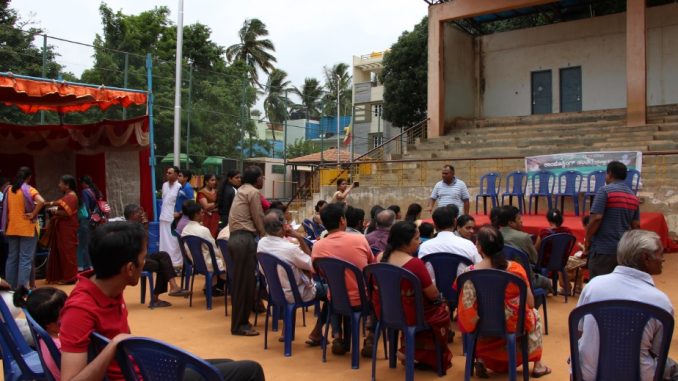
Basavanagudi in Bengaluru hosted a Composting Santhe (fair) on June 25, Sunday, to answer questions on composting and promote home gardening. The five-hour event saw a crowd of all ages interested in learning how they can live sustainably.
Education was the main purpose of this fair. Visitors learned not only the benefits of composting and growing their own food but how to live sustainably in many aspects of their life. Water conservation, natural products, recycling and large-scale biogas generation were other themes at the fair. Visitors could also buy an array of eco-friendly products that ranged anywhere from terrarium air purifiers, to all-natural soaps and shampoos.
Vendors, start-ups and nonprofits set up camp with one common goal: to promote sustainable, urban living in Bengaluru. By selling recycled products produced by women and children in rural areas, tabling for a startup that produces eco-friendly soap and gardening supplies or demonstrating the ecological and financial benefits of a menstrual cup, each booth was accompanied by experts passionate about saving Bengaluru and the planet.
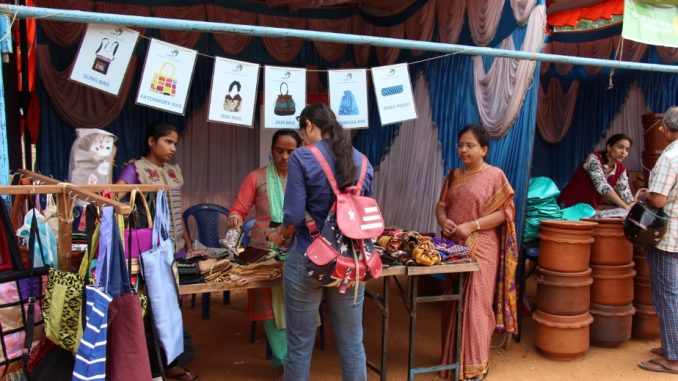
People checking out the stalls in composting fair at Basavanagudi. Pic: Kennedy Wirth
Basavanagudi’s composting fair included a children’s activity center: an area set aside for children to learn to garden and sending them away with their own potted plants. The activity center is geared towards teaching children the importance of composting and how to do it at home.
“Not many of us have a garden at home so by teaching the kids that you can grow your own plant easily at home we’re teaching them how to compost at home and completing that circle,” said Basavanagudi santhe organiser Vaijayanth K M. She estimated about 100 children went home with their own plant.
Bengaluru’s composting craze
What started as a citizen initiative to promote waste separation and home composting has since been adopted by the BBMP. The santhe was organised by SwacchaGraha, a citywide campaign dedicated to promoting efficient waste management and a cleaner city. SwacchaGraha translates to “clean planet.” They strive to create a cleaner planet for everyone starting in Bengaluru.
“When your waste starts not leaving your house, automatically the city will be clean,” said a SwachaGraha team member, Lalitha Mondreti. “The minute you start sending out your waste you’ll never know where it’s going to end up.”
The goal is to eventually hold a santhe in each one of Bangalore’s wards. Basavanagudi marks the 19th ward to hold a santhe. Organisers hope to reach all 198 wards in the next six months.
Pic: Kennedy Wirth
Why is composting a big deal?
Why is Bengaluru waking upto composting and other green initiatives? Solid Waste Management Expert Committee member, N S Ramakanth talks to us on the topic:
Composting can seem like a daunting or mysterious concept. It’s simpler to throw your kitchen waste into a green container that is eventually picked up by garbage collectors. But the benefits of in-home composting reach far beyond the do-good feeling of correctly segregating your waste. In fact composting on your own can create rich soil for gardening and growing your own food. Aside from the health and economical benefits of homegrown vegetables, less waste is thrown into the already dangerously full landfills. Reusing your compost saves it from ending up in a landfill and more food ends up on your plate.
Compost can also be made into biogas, which is a form of methane used to generate electricity. Biogas is typically made on a large scale, as it requires far more machinery. Everyone can help with biogas production by segregating compost that is not used for home gardening, such a cooked food waste.
However you choose to responsibly manage your compost remember that is starts with waste separation at source. Visiting a composting fair will help you understand what you can do with your waste.
Thanks Kennedy for covering the Basavanagudi Composting Santhe!