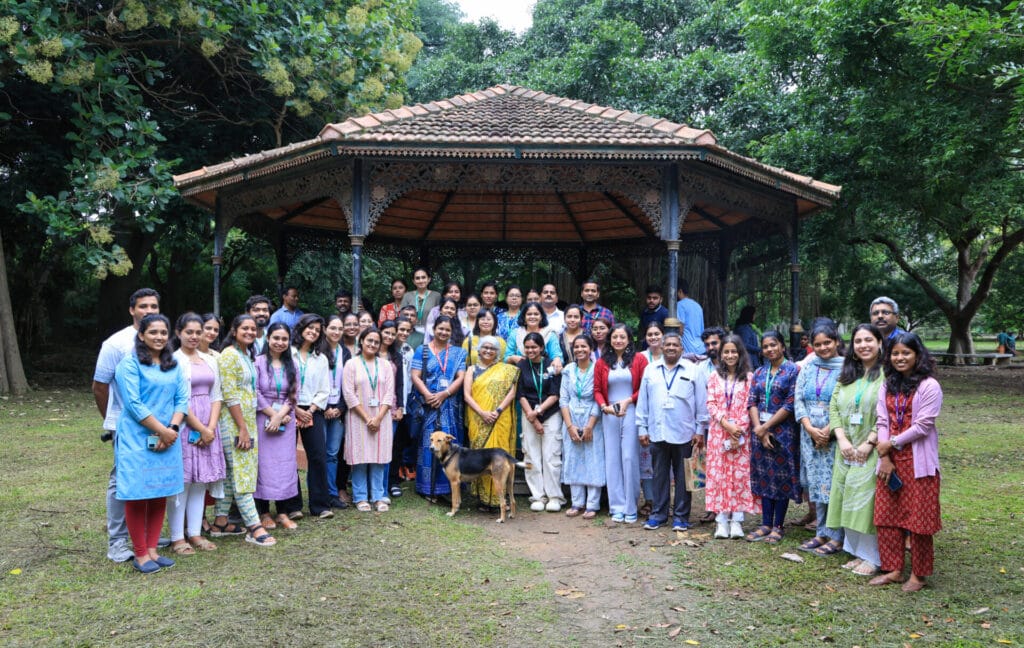
Amidst the green hues of the Lalbagh Botanical Gardens in Bengaluru, conversations on mental health are getting a new shade. On one Saturday morning each month, beneath the majestic trees, people from different backgrounds gather to interact with mental health professionals. The discussions span a wide variety of themes such as emotional well-being, suicide prevention, digital overuse and much more, creating an open forum where dialogue replaces one-way information.
This initiative, called Community Connect, envisioned by the National Institute of Mental Health and Neurosciences (NIMHANS), converts a public park into a space for shared learning and support.
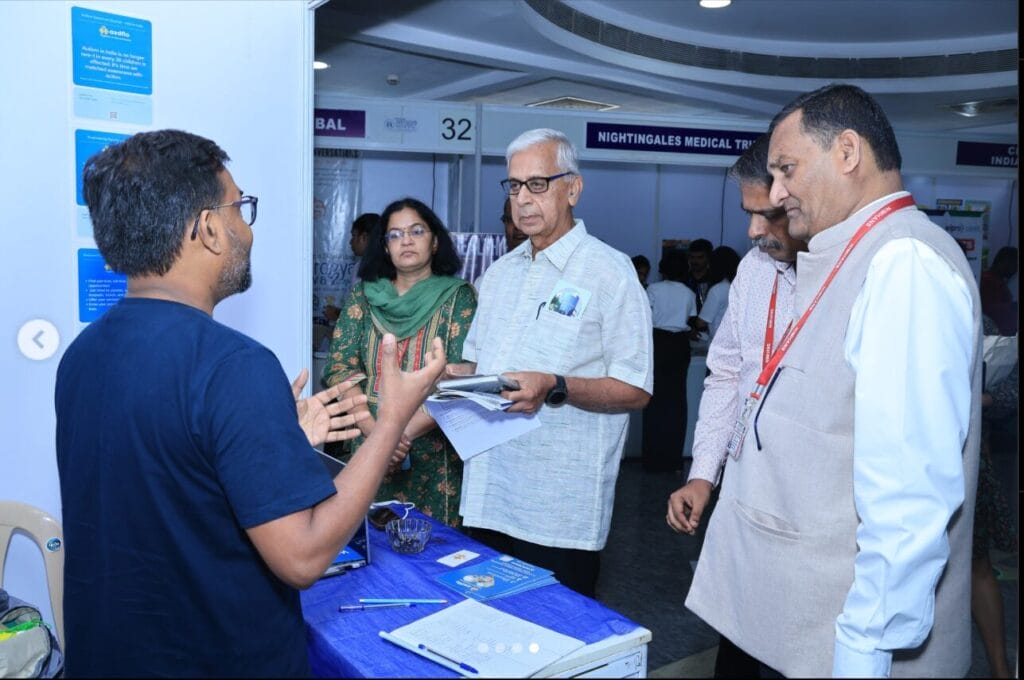
The Mental Health Santhe, an annual event by NIMHANS, is another such programme that brings together mental health professionals, caregivers and the public to promote mental health. Beyond workshops and panel discussions, it features interactive stalls, board games, film screenings, information booths and even a ‘poetry pharmacy’ where visitors get to read healing poems.
Diverse voices
For mental health professional Shubra Varma, the diversity of voices and experiences at the event is striking. “From professionals to individuals sharing personal struggles, it is incredible to see people from different walks of life come together to talk about mental health,” she says. The engaging stalls offer insights from experts in her field. “They are pushing the boundaries of mental health care and advocacy,” she adds. This reflects the vision behind programmes like Community Connect and Mental Health Santhe that offer more than just conventional support.
In an interaction with Citizen Matters, Dr Meena K S, Professor and Head of the Department and Dr Latha K, Associate Professor in the Department of Mental Health Education at NIMHANS, give insights on these unique initiatives.
On choosing a public space for mental health conversations
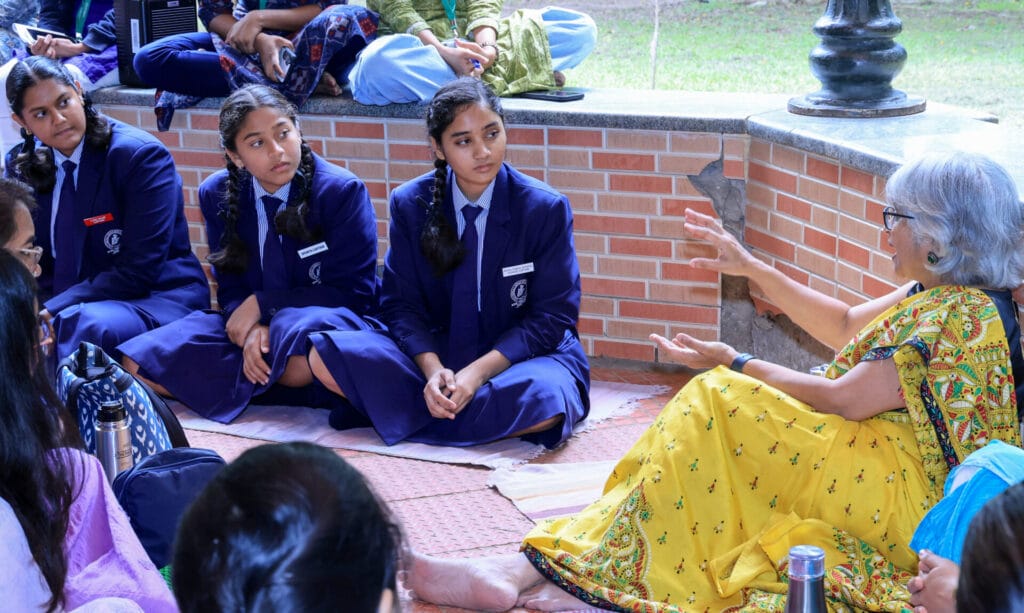
Launched in July 2025, Community Connect’s idea of taking mental health conversations to public places is fairly new; it is simple yet meaningful. Since it is held in familiar settings, the programme builds trust, reduces stigma, and empowers participants, believes Dr Meena. Community engagement sessions offer several advantages over traditional seminars or workshops. “Instead of gathering in an academic or clinical setting, we take the conversation to the public and engage with them in public spaces like gardens. These sessions also promote inclusivity, reaching individuals who may not attend formal events,” she adds.
On ensuring inclusivity
Access to mental health has been increasingly difficult for individuals with disability or chronic illnesses, older adults and marginalised groups like the queer community. A study published in the journal Frontiers in Psychology recognises the dearth of literature regarding the psychological issues faced by LGBTQ youth in India.
Community Connect aims to bridge this gap. Individuals with various health needs and identities have attended the programme since its launch. “To ensure that the sessions are inclusive and responsive to participants’ needs, we invite people from all backgrounds to share their lived experiences with mental health. This approach allows us to interact with a truly representative microcosm of the community,” adds Dr Meena.
On participants’ response
The programmes have received overwhelmingly positive reviews. Participants have described Community Connect as a thoughtful initiative that provides a welcoming and inclusive space to discuss mental health. The open, outdoor setting in a garden helps people feel more relaxed and connected with nature, reducing stigma and encouraging open dialogue.
According to Dr Meena and Dr Latha, many participants have shared that the sessions allowed them to engage with others, express their thoughts freely, and listen to diverse perspectives on mental health. They appreciated how these conversations brought together people of different ages and backgrounds, creating a sense of community and shared understanding.
The initiative has also sparked new collaborations, drawn in new audiences, and generated strong requests for continuity, showing that people value and want more of such safe, open platforms for meaningful discussions on mental health.
Read more: Explained: How Tele MANAS is shaping tele-mental healthcare in India
On conversations based on different themes
‘A sound mind in a sound body: Well-being starts within’ — this was the theme of the latest Community Connect that was organised on October 31st. Every month, the team comes up with a new theme. ‘Choose life, choose hope — Let’s talk about suicide prevention’ was the theme for suicide prevention month.
The organisers curate different themes for Community Connect, keeping in mind the well-being of the participants who attend the event. The aim is to address concerns about common mental health diagnoses and share tips to develop skills to help regulate oneself, identify when to seek help, and support others in the community.
“Some of the topics covered so far were focused on encouraging open conversations around mental health and promoting help-seeking,” Dr Meena says. “Future events will continue to motivate people of all ages and from all backgrounds to learn more about mental health and well-being through these dialogues.” Exam stress, parenting, resilience building, and building and maintaining relationships are some of the few themes that may be covered, based on the needs of the community.
On how this approach breaks stigma around mental health
Why does such a unique approach matter? At NIMHANS, programmes like these go beyond conventional therapy — they represent innovative, community-driven ways of addressing mental health, with the potential for an even wider impact.
Dr Latha recognises that there remain several critical gaps in India’s mental health landscape — including persistent stigma, limited accessibility of services, inadequate integration of mental health within primary care, and a lack of mental health literacy at the community level. Initiatives like Community Connect and Mental Health Santhe create informal, stigma-free environments where people can speak openly about mental health, gain awareness, and access resources. “By normalising these discussions and allowing people to meet and interact in their own spaces, these initiatives help shift perceptions and encourage help-seeking behaviour,” she adds.
There are ongoing efforts to strengthen and expand these initiatives by collaborating with local organisations and educational institutions. The goal is to replicate the Community Connect model in different neighbourhoods and cities, tailoring it to local contexts while maintaining its open, participatory spirit.
About Mental Health Santhe
Mental Health Santhe is a flagship initiative of the Department of Mental Health Education, NIMHANS, aimed at bringing together organisations, professionals, and individuals working in the fields of mental health and suicide prevention. Organised annually as part of the month-long activities marking World Mental Health Day, it serves as a vibrant public platform to promote awareness, collaboration, and community participation in mental health promotion.
In addition to the Santhe, the department conducts several other outreach and educational initiatives. These include the Immediate Care Workshop for first responders, Walking Tours within the NIMHANS campus designed to reduce stigma, and upcoming Women’s and Men’s Wellness Programmes. The department recently launched an audio podcast series on suicide prevention, developed a range of Information, Education, and Communication (IEC) materials, and offers certificate courses in mental health promotion to build community and professional capacity in this area.
Read more: SCARF’s 40-year journey in Chennai shows how mental healthcare has evolved
On working with community health workers
Training community health workers to deliver mental health support to people who are unable to access such services is an intrinsic part of the work at NIMHANS, according to Dr Naveen Kumar C, Professor and Dr Madan, Assistant Professor at the Department of Psychiatry, NIMHANS. They are a part of the NIMHANS–AHT Comprehensive Mental Health Action Program for Rural Communities (NAMAN).
“NAMAN has created a structured and community-based model for early identification of mental health problems in rural areas such as Belur (Karnataka) and Munsiyari (Uttarakhand),” says Dr Madan. The initiative demonstrates how community health workers (CHWs), guided and mentored by specialists from NIMHANS and AIIMS Rishikesh, can bridge the mental health treatment gap in underserved regions. The training sessions cover:
- Identification of common and severe mental disorders using the MERIT screening tool
- Basic counselling and psychological first aid
- Data collection and digital entry using the NAMAN CRM app
- Referral systems and confidentiality practices
Beyond screening, CHWs also drive mental health awareness and stigma reduction through local engagement:
- Organising talks and street plays at schools, panchayats, and women’s self-help groups
- Distributing educational booklets, posters, and short videos developed by NIMHANS
- Collaborating with the community to normalise conversations about mental health.
Those interested in participating in or knowing more about the Community Connect programme can contact NIMHANS on phone: 080-26995156 or email: mheducation.nimhans@gmail.com