Post Diwali, air quality worsens in Delhi-NCR
On the night of Diwali (14th November 2020), pollution levels in the national capital rose up to eight times above the safe limit and further worsened on Sunday morning. Air quality in the NCR area was in the ‘severe’ category due to Diwali celebrations.
On Sunday morning at 6 AM, the level of PM 2.5 (particles that are directly inhalable and as small as 2.5 micrometers) in Delhi was 469.3 ug/m3 against the safe limit of 60 ug/m3 as per Indian standards. As of 9 AM on Sunday, AQI (Air Quality Index) for Delhi was at 465, Gurugram 424 and Noida 468.
AQI between 0 and 50 is considered safe, 51-100 satisfactory, 101-200 moderate, 201-300 poor. At 301-400, it’s considered very poor and 401-500 falls in the severe category. The above 500 is severe as well as the emergency category.
Source: The Hindu
Kolkata police keeps firework ban in check
Kolkata police posted a photo of clear skyline in the middle of the night on 14th November, highlighting the impact of the ban. Kolkata police seized a thousand kilos worth of illegal crackers and arrested 294 people who were found to be violating the norms. Barring some sporadic incidents in a few pockets, Diwali celebrations were peaceful, sans the usual sound and air pollution across the city at large.
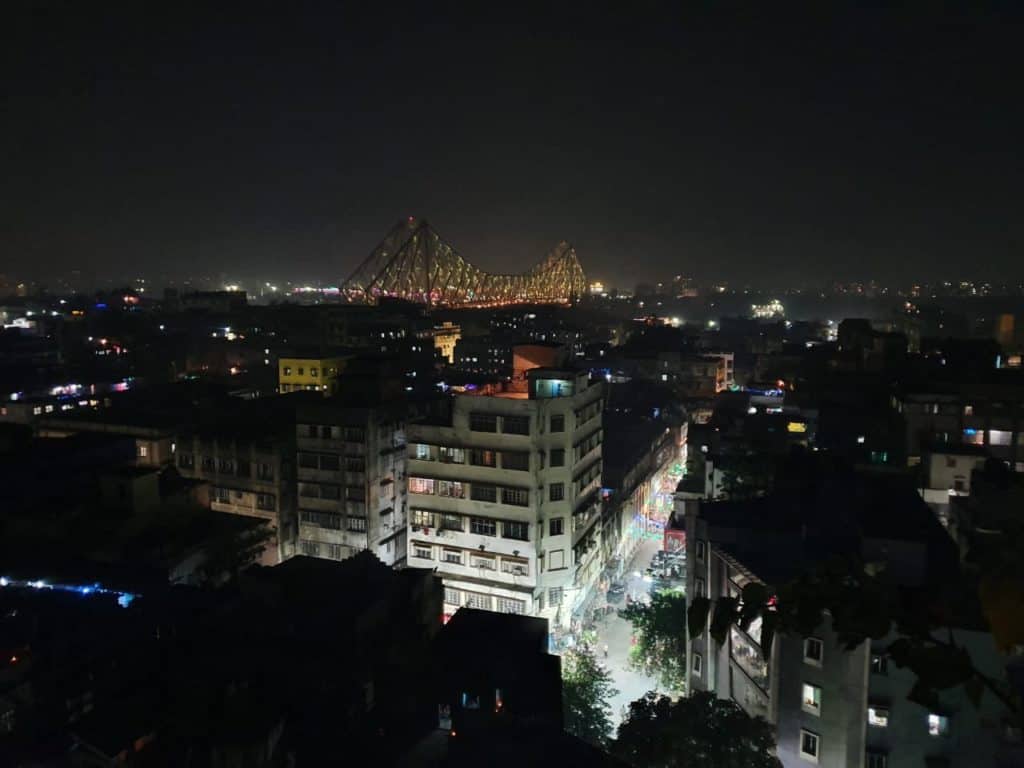
100 special patrolling vehicles were deployed to check the implementation of the ban in the city. The city police also used motorbike squads and autos to book the violators. The police also identified certain locations like Tollygunge, Lake Gardens, Jadavpur, Phoolbagan, where the patrolling teams were told to be more vigilant.
Source: Hindustan Times | The Times of India
Nationwide COVID-19 shows a decline; 10 states unable to control
At a national level, new cases of coronavirus disease have shown a decline, as the country reported less than 50,000 cases for the eighth consecutive day. However, there are 10 states and union territories which have shown a spike in daily cases.
Delhi, Kerala, Maharashtra, West Bengal, Haryana, Uttar Pradesh, Rajasthan, Karnataka, Tamil Nadu and Andhra Pradesh are still reporting the maximum number of cases for a single day.
Delhi reported 7519 new cases on 14th November while Kerala reported 6357 cases. India’s worst affected state Maharashtra reported 4237 cases on 14th November whereas West Bengal reported 3823 more new cases. Haryana reported 2118 cases and UP reported 2361 cases. Rajasthan reported 2162 new cases and 2154 new cases were reported in Karnataka on 14th November. Tamil Nadu and Andhra Pradesh reported 1912 and 1657 new cases respectively.
Source: Hindustan Times
Serum Institute to produce 10 crore doses of Oxford Vaccine
On 12th November, Serum Institute of India’s (SII) Chief Executive Officer (CEO) Adar Poonawalla informed that the company is planning to manufacture 10 crore doses of Oxford University and Astra Zeneca’s vaccine by December 2020. Under its agreement with Astra Zeneca, the SII will produce 100 crore doses of the COVID-19 vaccine.
Poonawalla also informed that SII may get emergency authorization from New Delhi if the results of the final stage trial are encouraging. SII has promised that initial doses of vaccine will only be delivered to India. However, after full approval, SII will distribute the vaccine on a 50-50 basis to India and COVAX, a WHO-backed initiative for equitable access to COVID-19 vaccination.
Source: Scroll.in
Home ministry to review COVID-19 situation in Delhi
After a continued surge in COVID-19 cases in the national capital, Delhi CM Arvind Kejriwal will meet Union Home Minister Amit Shah on Sunday to discuss the COVID-19 situation in the national capital. On 11th November, Delhi reported the highest single-day spike with 8593 cases. On 12th, the national capital recorded the highest single day deaths – 104.
On 14th November, Delhi reported 7340 cases and 96 new deaths. with total cases going over 4 lakh 80 thousand mark. As on 14th November, the national capital had 44456 active cases and 7519 deaths.
Delhi CM has also cited bad air quality as a major factor contributing to the rise in COVID-19 cases. He also said that the situation will come under control within the next seven to ten days. The administration has asked the Delhi Disaster Management Authority to conduct a review meeting regarding the issue, latest by 17th November 2020.
As on 15th November, India had crossed the 88 lakh mark with 41,100 new cases adding to the tally in last 24 hours.
Source: Hindustan Times | India TV
Critical patients increase in Pune’s jumbo COVID-19 facility
The jumbo COVID-19 facility set up at the College of Engineering Pune (CoEP) by Pune Municipal Corporation has witnessed a slight increase in the number of critical patients. As per the data available, on 6th November, 19 patients were put on ventilator support but on 11th November, 22 patients required ventilator support.
PMC’s additional commissioner has said that people have not been adhering to prescribed norms and are flooding the market places, as a reason for which COVID-19 incidence continues to increase.
As per the new policy by PMC, all COVID-19 patients are required to be kept at one place only. Facility operators have cited this as a reason for the increase in number of patients requiring critical support.
As per the contract, PMC will pay the private agency for providing manpower and services to the COVID-19 patients, whereas the facility will be operated by PMC. Also, as per the contract, PMC will have to pay for at least 50% of the beds, irrespective of the fact whether they are occupied or not.
Source: Hindustan Times
Compiled by Rishabh Shrivastava