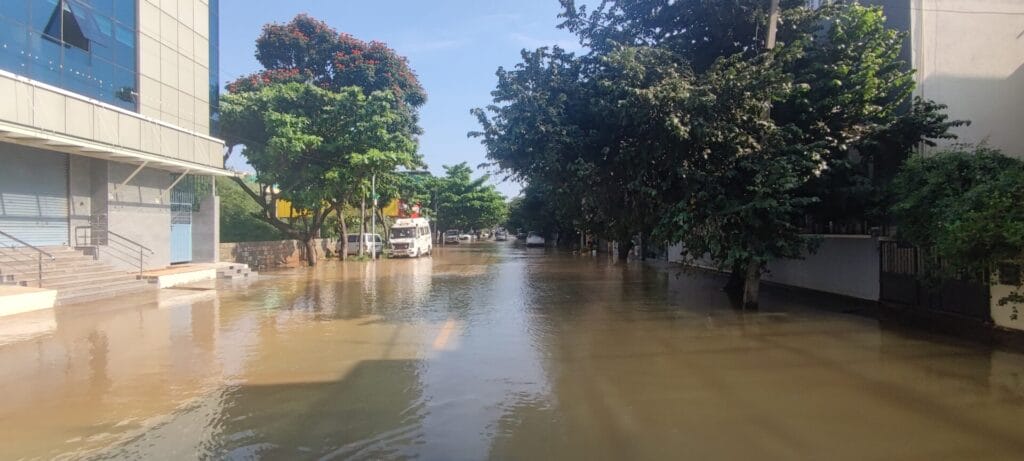
The monsoon is just settling in to Bengaluru, however, the city is already under water, and residents are blaming the crumbling infrastructure and haphazard development in the city for the widespread waterlogging. Tractors and boats were engaged to rescue people stranded in flood-hit areas. Many companies have asked their employees to work from home, as many parts of the IT corridor were inundated. Meanwhile, the Karnataka Lokayukta has said that official negligence and poor inter-agency coordination were the key factors behind Bengaluru’s flooding.
Read more: Lack of stormwater drain planning in Bengaluru is a risk factor for future floods
Why does Bengaluru flood so often? And what are residents demanding of the government? Here are five key highlights about the Bengaluru floods and the aftermath.
Flood situation and forecast
- On May 18, Bengaluru experienced 130 mm of rainfall within 12 hours, causing widespread flooding. Heavy rainfall continued, with many areas reporting property damage.
- The India Meteorological Department (IMD) has issued an Orange alert, warning of extreme weather conditions, including thunderstorms and lightning, until May 26.
- Flash flood warnings have been issued across seven districts of Karnataka, as overflowing lakes continue to inundate residential areas.
Causes of flooding
- Neglected infrastructure has resulted in poor drainage systems and widespread encroachments on stormwater drains.
- Unplanned urban expansion has led to waterlogging and an increased risk of flooding in multiple neighborhoods.
- Rapid population growth and unchecked construction have further strained drainage systems, contributing to recurring floods.
Government measures
- Bengaluru Development Minister D K Shivakumar conducted surveys and assured that solutions were being implemented. Chief Minister Siddaramaiah also visited flood-hit areas where residents confronted him about the government’s inaction to address long-pending problems.
- The government has allocated ₹2,000 crore for stormwater drain infrastructure, with 197 km of drains constructed so far.
- Officials claim problems in 70% of flood-prone areas have been addressed, while work is ongoing in other vulnerable locations.
- Traffic police identified 132 problematic areas, of which 82 have been fixed, while work remains pending in 41 locations.
What residents are saying
- Homeowners in Geddalahalli say their houses have flooded every year since 2018 due to encroachments on stormwater drains.
- Residents living in and around Manyata Tech Park, Manpho Convention Centre and surrounding areas have alleged encroachments on stormwater drains by a private company the reason for flooding there. They are frustrated that the BBMP has only pumped out water but hasn’t implemented lasting solutions.
- Flood-hit residents in Sai Layout confronted Chief Minister Siddaramaiah and Deputy CM DK Shivakumar, demanding compensation for rain damage. Every year, around 100 homes in the area get inundated. Residents have called for the widening of a railway vent, which is the main cause for the flooding.
BBMP’s response
- BBMP officials said that the Manyata Tech Park floods due to a blocked stormwater drain, and that a court case is pending on this issue.
- Regarding flooding in Sri Sai Layout, BBMP officials stated that the Railway authorities must cooperate to widen a narrow stormwater drain.
[Compiled by Revathi Siva Kumar]