Chennai Corporation zones to increase to 22
The 15 zones in the city demarcating Greater Chennai area will be increased to 22 zones in order to align with the assembly constituency boundaries. According to the Commissioner of the Greater Chennai Corporation, Gangadeep Singh Bedi, the aim of increasing the number of zones is to ensure that civic issues be addressed faster and in a uniform manner. In addition, the move aims to boost political representation in different areas.
According to Bedi, since zones span over a large area, it has been challenging for city officials to address civic issues uniformly. Kodambakkam, for example, stretches from Saidapet to Koyambedu, Royapuram starts from Royapuram and ends at Egmore.
In addition to this, the DMK government on Thursday announced that Area Sabhas and Ward Committees will be set up in all wards, in accordance with the Tamil Nadu (Municipalities) Act, 2010 introduced 12 years ago by the then Karunanidhi led DMK Government.
Source: The Times of India
Read More: What you must note while digging a borewell in Chennai
Five more bridges to come up in the city
The Greater Chennai Corporation (GCC) is set to construct bridges in five locations with a view to ease traffic congestion. The bridges will be constructed at Korukkupet, Chinna Nolambur, Jeevan Nagar, Valluvarkottam and Kilpauk Garden.
The project at Valluvarkottam is estimated to cost Rs 98 crore. The need for a bridge at the junction came about as the Chennai Metro Rail Limited came up with a new proposal for stations along Valluvarkottam High Road. A study also highlighted the the number of passenger car units had surpassed the 10000 mark at the junction.
The 2B level crossing at Manali Road in Korukkupet will be replaced by a bridge that is estimated to cost Rs 105 crore. The bridge at Chinna Nolambur would cost Rs 120 crore and the ones at Jeevan Nagar and Aspiran Garden will cost Rs 4 crore and Rs 7 crore respectively. The space beneath the flyovers will be beautified at the cost of Rs 25 crores.
Source: The Hindu
Read More: Meet the men who satisfy your midnight hunger pangs
Chennai Police register 978 cases against delivery workers for traffic violations
The Chennai police registered 978 cases against delivery workers, and other service workers for various app-based services. The cases were all related to flouting of traffic rules. Fines amounting to Rs.1,35,400 were imposed on the workers. Most of the cases were registered against delivery workers of Zomato, Swiggy and Dunzo apps. Some of these traffic violations included driving on the wrong side of the road or not wearing a helmet and speeding.
It is important to consider that the gig system or time slot booking system of deliveries in food delivery apps often pushes workers to book more ‘gigs’ which adds pressure for faster delivery. Fast delivery is also an important aspect of the rating scale provided to customers. Workers are therefore pushed to flout traffic norms so that they can earn a proper amount, exposing them to injuries and penalties.
Source: The NewsMinute
150 Locations in Chennai to get public toilets
The Greater Chennai Corporation (GCC) has proposed the construction of toilets in at least 150 locations, approximated at a cost of Rs 13-22 lakh each. As per the proposal the toilets will have a spacious design and will also focus on ease of usability. The new toilets will also have separate seats for persons with disabilities. Many of the toilets in the city currently lack wash basins and urinals discouraging many from using public toilets. The GCC also aims to demolish and reconstruct existing toilets that are in a bad state.
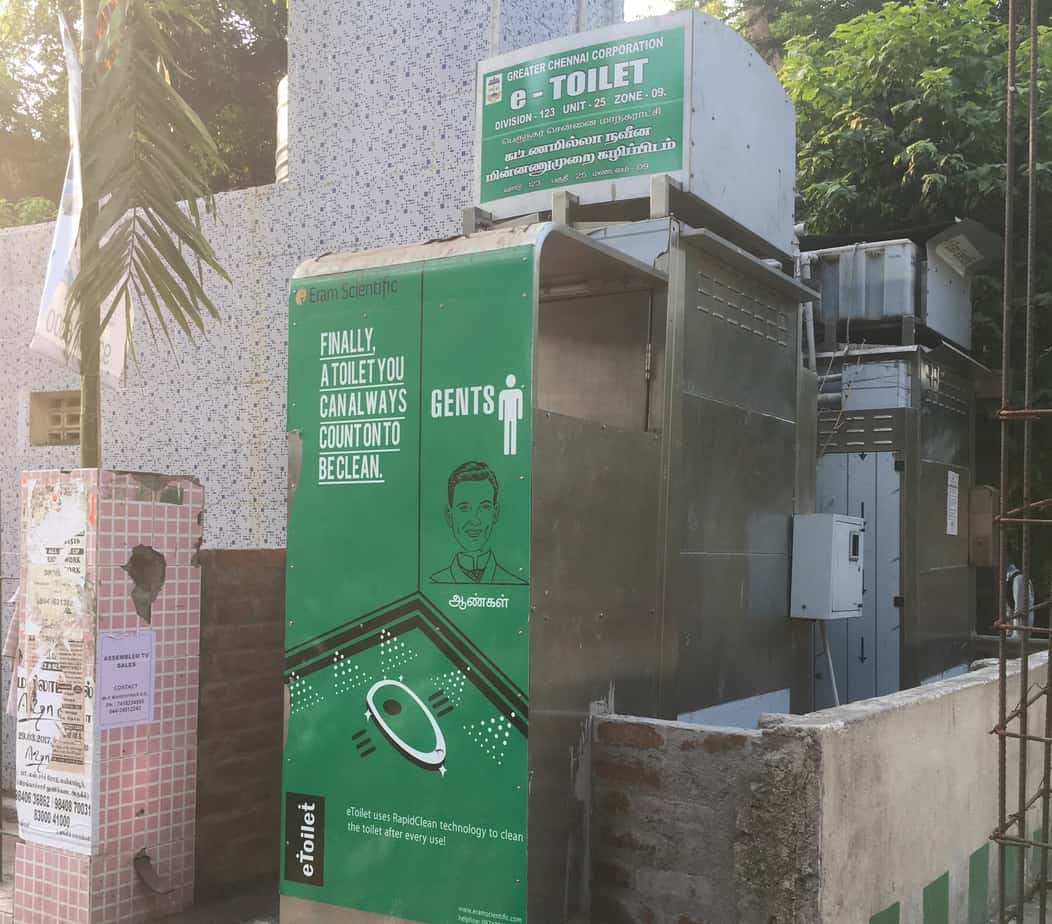
The identification of the localities for the toilets was carried out by zone-wise teams. The areas were identified based on two factors: where many tend to congregate (often these areas will be close to bus stands and railway stations) and the nearest availability of land. The toilets are proposed to be constructed at Jawaharlal Nehru street in Koyambedu, Railway Border Salai at Mambalam, Vadapalani Bus Depot, Sardar Patel Road,100 Feet Road in Ashok Nagar, among others.
In addition, the operation and maintenance of toilets will be privatized in three zones: Royapuram, Thiru Vi Ka Nagar and parts of Teynampet. Senior corporation officials said that an announcement will be made soon.
Source: The New Indian Express
[Compiled by Savitha Ganesh]