|
For our English readers: A few days ago, scores of dead fish washed up onto the beaches of Adyar, and it is believed that the contamination of sea water with untreated sewage, was the primary reason for this. |
நம் வீட்டின் முன் கழிவுநீர் தேங்கினாலோ, மழை காலங்களில் கழிவு நீர் ஆங்காங்கே தேங்கிக்கிடந்தாலோ முகம் சுளிக்கும் நாம், நம் வீட்டிலிருந்து கழிவு நீர் எப்படி எங்கே செல்கிறது என்று சிந்திப்பது மிக அரிது. பெருகி வரும் மக்கள் தொகை, எங்கு திரும்பினாலும் அடுக்கு மாடி குடியிருப்புகள் என சென்னையின் நெரிசல் கூடி வரும் வேகத்திற்கு இணையாக, என்றோ நிறுவப்பட்ட நம் கழிவுநீர் சுத்திகரிப்பு நிலையங்கள் போதுமானதா?
சமீபத்தில் அடையாறு ஆற்றில் ஆயிரக்கணக்கில் மீன்கள் செத்து மிதந்ததற்கு அதிக கழிவு கலந்ததும் காரணியாக இருக்குமோ என்றும் விவாதிக்கபட்டது. இத்தகைய சூழலில் கழிவு நீர் மேளான்மை பற்றி எந்த அளவிற்கு நாம் அறிந்து வைத்துள்ளோம் என்ற கேள்வி எழுந்ததால், இதைப் பற்றிய அடிப்படையை மக்களுக்கு பகிர வேண்டும் என்ற எண்ணத்தின் பிரதிபலிப்பே இந்தக் கட்டுரை.
வீட்டிலிருந்து…
நம் வீட்டில் நாற்றம் இல்லாதவரை, நம் கழிவுகள் வீட்டிலிருக்கும் கழிவுநீர் தொட்டியிலிருந்து எவ்வாறு பயணிக்கிறது என்பதை பற்றி சிந்திக்க நமக்கு நேரமில்லை. சென்னை வீடுகளிலிருந்து வெளியேரும் அனைத்து கழிவுகளும் சுத்திகரிப்பு செய்யப்படுகிறதா, இல்லையெனில் மீதம் எங்கே எப்படி கலக்கிறது என்று அறிந்தால், ஒரு வித கலக்கம் அடைவோம் என்பதே உண்மை.
நகரவாசிகளின் வீட்டிலிருந்து கழிவு கலந்த சாக்கடை நீர் வீட்டின் அருகிலுள்ள சாக்கடை வடிகாலில் சென்றடைகிறது, இதுவே புறநகரெனில் கழிவு நீர் ஊர்திகளில் எடுத்துச் செல்லப்படுகிறது.. அதன் பின் கழிவு நீர் பைப் மூலமாக சென்னையில் உள்ள 13 கழிவு நீர் சுத்திகரிப்பு நிலையங்களுக்கு செல்கின்றன. அதிகாரிகளின் கூற்றின் படி ஒவ்வொரு நூறு அடிக்கு ஒரு சாக்கடை வாயிற்புழை (மேன்-ஹோல்) உள்ளதென்றும் இதன் கொள்ளளவு அந்தந்த பகுதிகேற்ப அமைக்கப்பட்டுள்ளதாகவும் தெரிவிக்கின்றனர்.
உதாரணத்திற்கு நீங்கள் தி.நகரில் வசிப்பவராக இருந்தால், உங்கள் வீட்டின் கழிவு பாண்டி பஜாரிலுள்ள சுத்திகரிப்பு நிலையத்திற்கு செல்லும். 24 மணி நேரமும் செயல்படும் இந்த கழிவு நிலையங்களில் சேகரிப்பு, திரையிடல், உறிஞ்சுதல் என மூன்று தனி கிணறுகள் உள்ளது.
அனைத்து கழிவுகளும் சேகரிப்பு கிணற்றை வந்தடைந்த பின், திரையிடல் கிணற்றில் திட கழிவுகள் பிரிக்கப்படுகிறது. மீதமுள்ள நீர் உறிஞ்சுதல் கிணற்றின் மூலம் சுத்திகரிப்பு நிலையத்திற்கு எடுத்துச் செல்லப்படுகிறது.
சுத்திகரிப்பு நிலையத்தில் என்ன நடக்கிறது?
கொடுங்கையூரில் இரண்டு, கோயம்பேடு, நெசபாக்கம், பெருங்குடி என சென்னை நகரம் ஐந்து மண்டலங்களாக பிரிக்கப்பட்டுள்ளது. கொடுங்கையூரில் மூன்று மற்ற ம்ண்டலம் ஒவ்வொன்றிலும் தலா 3 சுத்திகரிப்பு நிலையங்கள் என மொத்தம் 12 சுத்திகரிப்பு நிலையங்கள் உள்ளன. இராசயன எதிர்வினை, மையவிலக்கு விளைவு மூலம் தேவையற்ற பொருட்கள் நீக்கப்படுகின்றன. திடகழிவு மீத்தேன் மாறுகிறது.சுத்திகரிப்பு நிலையத்தின் சக்தி தேவைக்கும் இந்த மீத்தேன் எரிவாயு பயன்படுத்தப்படுவதாக அதிகாரிகள் கூறுகின்றனர். எல்லா நிலையங்களிலும் திட கழிவு மீத்தேன் வாயுவாக மாற்றப்படுவத்தில்லை.
மீதமாகும் நீர் க்ளோரின் கலந்து சுத்தப்படுத்தப்படுகிறது. நகரத்தில் உள்ள கூவம், அடையாறு ஆறு மற்றும் பக்கிங்காம் கால்வாயில் இந்த நீர் விடப்படுகிறது.
சென்னையின் பாதாள சாக்கடை இல்லாத பகுதிகளில் கழிவு நீர் செப்டிக் டாங்க்கில் சேர்ந்து பின்னர் வண்டிகள் மூலம் அருகில் உள்ள நிலையங்களுக்கு கொண்டு செல்லப்படுகிறது.
நம் வீட்டிலிருந்து கழிவு நீர் இவ்வாறு தான் பயணிக்கிறது. இவ்வளவு செயல்முறை நடைமுறையில் தினந்தோறும் நடக்கிறதா என்பது கேள்விக்குறியதே! பெருகி வரும் மக்கள் தொகைக்கு ஈடு கொடுக்கக் கூடியதாக கட்டமைப்பு இல்லாதது மற்றும், சரிவர இந்த வழிமுறைகளை பின்பற்றாதது ஆகியவையே இதற்கு காரணம்..
சென்னையின் கழிவுநீர் அளவு?
கழிவு நீர் மேளான்மையை நிர்வகிக்கும் சென்னை குடிநீர் மற்றும் கழிவுநீர் வாரியம் தகவலின் படி 550 MLD அளவு கழிவுநீர் மட்டுமே சென்னையில் வருகிறதென்றும், இவை அனைத்தும் 727 MLD கொள்ளளவு கொண்ட சுத்திகரிப்பு நிலையங்களில் முழுவதுமாக பதனிடப்படுகிறது என்றும் தெரிவிக்கின்றனர். இங்கு தான் நெருடலே. வாரியம் இவ்வாறு தெரிவித்தாலும், அவர்களின் தகவல் குறிப்புகள் வேறுபட்டே இருக்கிறது. அதன் படி 604 MLD கழிவில் 552 MLD பதினடப்படுவதாக உள்ளது. (மேலும் விவரங்கள் அறிய https://citizenmatters.in/chennai-rivers-wetlands-marsh-environment-heritage-1577 )
அறப்போரின் ஆய்வின் படி நகரத்தில் நாள்தோறும் 1500 MLD கழிவு வெளியேறுகிறது என்றும், இதில் 605 MLD மட்டுமே சுத்திகரிப்பு நிலையங்களுக்கு செல்வதாகவும், இதிலும் 427 MLD மட்டுமே பதனிடப்படுவதாகவும் கண்டறியப்பட்டுள்ளது. இதன் படி மீதம் (1500-427) 1073 MLD கழிவு நேரடியாக நமது நீர் நிலைகளில் கலக்கிறது.
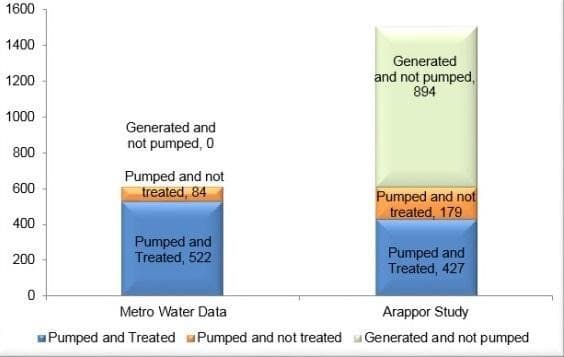
மூலாதாரம்: அறப்போர் இயக்கத்தின் கழிவு நீர் ஆய்வு (click on image to view in larger frame)
ஆய்வுறிக்கை சொல்வதென்ன?
அறப்போர் இயக்கம் ஆறு மாத காலமாக 27 பம்ப் நிலையங்களிலும் 5 சுத்திகரிப்பு நிலையங்களிலும் ஆய்வு மேற்கொண்டது. இதன் படி
- குறைந்தது 10 நிலையங்களிலாவது சுத்திகரிக்கப்படாத கழிவு, நேரடியாக நீர் நிலைகளில் விடப்படுகிறது.
- போதிய தகுதியில்லாத ஊழியர்களுக்கு இந்த கழிவுகள் எங்கே கலக்கிறது என்ற அடிப்படை புரிதல் இல்லமால் உள்ளார்கள்
- எவ்வளவு கழிவு உள்வருகிறது எவ்வளவு வெளியேறுகிறது என்பதை கணக்கிட அடிப்படை கண்காணிப்பு வசதியோ மற்றும் ஃப்ளோ மீட்டர் கூட இல்லை.
- முதன்மை, இரண்டாம்நிலை தெளிவுபடுத்திகள் (clarifiers) என முக்கியமான உபகரணங்கள் வசதியின்மை
- சரியான சுத்திகரிப்பு இல்லாததால், நீர் பழுப்பு நிறத்திலும், நாற்றமாகவும் உள்ளது
சரியான அமைப்பு முறையை கையாண்டால் இவை அனைத்தும் எளிதாக சரி செய்யக்கூடியதே. மேலும் நீர் நிலைகள் அருகில் சுத்திகரிப்பு நிலையங்களை அமைக்காது, காலத்திற்கேற்ப தகுந்த நடவடிக்கைகளை மேற்கொள்ளவது அத்தியாவசியம்.
இதற்கெல்லாம் முதல் படியாக, சென்னையில் இந்த அளவில் கழிவு நீர் இருக்கிறது என்ற வாரியத்தின் ஏற்பும், ஒப்புதலும் மிக அவசியம். நிகழ் கால நிலைமையை உணர்ந்தால் மட்டுமே, தக்க நடவடிக்கைகளை மேற்கொள்ள முடியும் இல்லையெனில் துயரத்திற்க்கு ஆளாகப்போவதென்னவோ சென்னைவாசிகளான நாம் தான் என்பதே நிதர்சன உண்மை.
Excellent Article. Woukd like to look at your data.