On-site vaccine registrations on the rise among seniors
The vaccination drive against COVID-19 for senior citizens and persons aged 45 and above with comorbidities kicked off on March 1st. While there are provisions for online and offline registrations, on-site walk-in registrations have gained momentum among this category.
On the other hand, seniors from western suburbs of the city have complained about the lack of adequate number of vaccine centres in their locality. Senior citizens living in Avadi travel all the way to either Anna Nagar or Thiruvallur to get the vaccine shot. Information on government vaccine centers too have been unavailable for the residents in these suburbs.
While the vaccine drive is ongoing, State Health Secretary J Radhakrishnan noted that 1,000 streets falling under the Greater Chennai Corporation (GCC) limits have reported fresh COVID cases in the past few days. The number of cases have also not shown a decline in Chennai and its neighbouring districts of Tiruvallur, Kanchipuram and Chengalpattu.
Source: The Hindu | The Times of India
Read more: All you need to know to get your COVID vaccine in Chennai now
Tanker water price to go up by 30%
The piped water supply to the city has been increased to 830 MLD from 650 MLD as the 2020 monsoon has resulted in adequate reserves in the water reservoirs of the city. Despite this, the cost of tanker water supply is to go up by 30% in view of the increase in fuel prices.
According to the Tamil Nadu Private Water Tanker Lorry Association, a 12,000-litre lorry that costs from Rs 800 to Rs 2,000 will now cost anywhere between Rs 2,500 and Rs 3,000 to supply water to parts of the city in need.
Source: The Times of India
Read more: Where does the water in your tap come from?
Petition against e-vehicles plying without registration
The Madras High Court has sent notices to Tamil Nadu Transport Department and the Greater Chennai Corporation on a plea filed by activist Traffic KR Ramaswamy alleging that around 3,000 battery-operated vehicles (BoVs) roped in by a private player are functioning without registration.
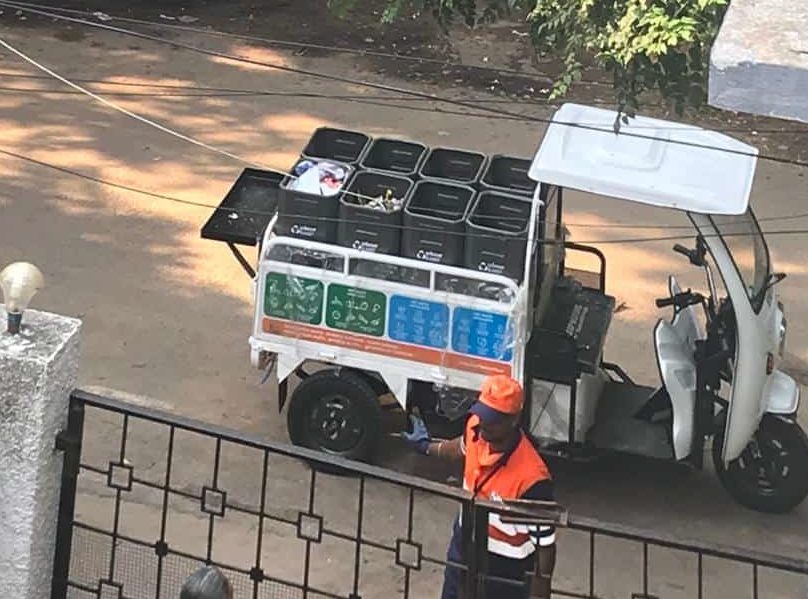
In his petition, the activist has stated that the vehicles ply freely without adhering to the traffic and safety norms and that the contractor has declined to register them despite the state granting tax exemption for registration of e-vehicles.
The petitioner added that this would imply that citizens cannot claim compensation or insurance if they get hit by e-vehicles as they do not have the registration number.
Source: The New Indian Express
Voter information slip to be distributed
With the State Assembly Elections around the corner, the Election Commission (EC) has decided to give a ‘voter information slip’ which will replace the ‘photo voter slip’. The slip will have information such as polling station, date and time of the poll, etc., and will not have the photograph of the voter.
The District Election Officers will distribute the slip to the voters at least five days before the date of the election. Polling is set to take place in the state in one phase on April 6, with the results to be declared on May 2.
Source: The Hindu
Chennai ranks fourth in Ease of Living survey
Union Ministry of House and Urban Affairs’ Ease of Living survey lists Chennai in the fourth spot. According to the survey that considered various parameters pertaining to life in cities, Chennai had the best quality of life and is highly resilient, safe and secure. On the other hand, it scored less on indicators related to economic abilities, places of recreation and the number of green structures.
Chennai ranked 18th in the municipal performance index, which measures governance, planning, technology, finance and services. The survey also found that the city is one of the 27 urban local bodies that does not have an updated master plan, which has caused delays in analysing and fixing the lapses in governance and infrastructure.
Some of the parameters where the city has scored well are: health, education, mobility, citizen perception, sustainability, safety and security.
Source: The Times of India | The Hindu
[Compiled by Bhavani Prabhakar]
Also read: