Madhavaram bus terminus to become a net zero emission zone soon
The Madhavaram Mofussil Bus Terminus (MMBT) in Chennai is set to become the first terminus to earn the “Net Zero Carbon Emission” status in Tamil Nadu. Member-Secretary of Chennai Metropolitan Development Authority (CMDA), Anshul Mishra, said that the bus terminus would completely switch to green energy.
A study on offsetting carbon emission by opting for an on-grid solar power plant system and achieving net zero carbon emission status for the terminus was recently completed by CMDA. Following the success of the project, Kilambakkam and Kuthambakkam bus termini will also be installed with net zero emission structures. The CMDA has also planned to install 10 megawatt (MW) solar plants generating 30,500 units a day as part of the mega green energy project.
Source: The Hindu
Read more: GPS speakers, panic buttons, pink buses and more: What the MTC rider in Chennai can look forward to
New spots for on-street parking identified
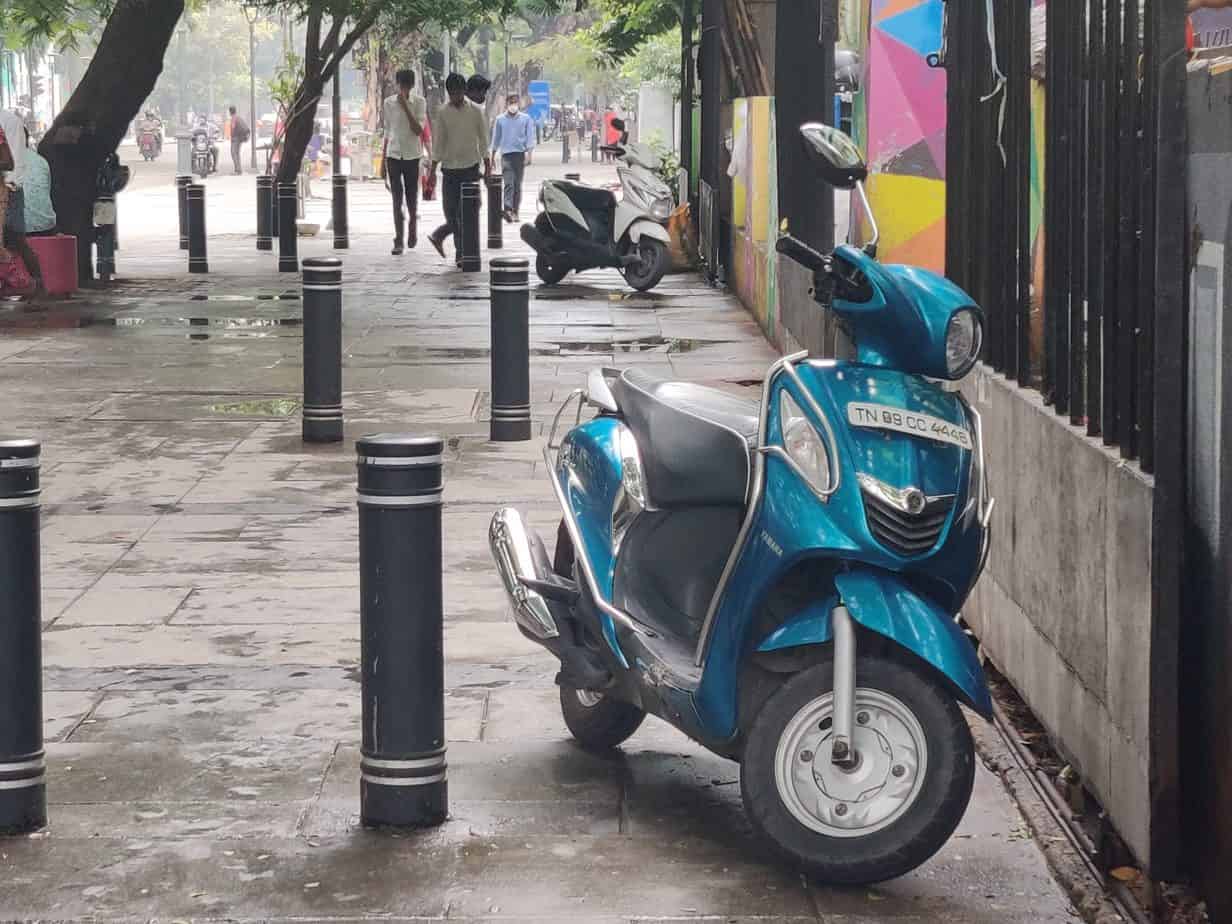
Corporation Commissioner Gagandeep Singh Bedi said that 88 new locations have been identified for creating on-street parking lots in Chennai. A feasibility study is to be conducted soon and over 12,000 slots are expected to be readied after consultation with the traffic police. The GCC has already created 44 parking lots so far on Sardar Patel Road in Adyar, Industrial Estate Road in Ambattur, Second Avenue in Anna Nagar, Third Avenue in Ashok Nagar, Sixth Avenue in Besant Nagar, Wallajah Salai in Triplicane, GN Chetty Road in T Nagar, KNK Road in Nungambakkam and Second Line Beach Road.
Licence inspectors have also been deployed to oversee the operations in these parking lots across the city. There has been an increase in the daily collection from Rs 80,000 to Rs 1.2 lakh. A dashboard has also been created to monitor the operations.
Source: The Hindu
New emergency care centre for ‘Golden Hour’ care
In a bid to provide ‘golden hour’ care to road accident victims, a new emergency care centre (ECC) is being constructed on the Tambaram-Chengalpet national highway at Singaperumal Koil. The 34-km stretch between Tambaram and Mahabalipuram is an accident-prone zone. Accident trauma victims are transferred to Chengalpet Medical College Hospital or Madurantakam Government Hospital, which are at least 30 minutes away, through ambulances.
Drawing inspiration from similar ECCs constructed on the East Coast Road (ECR) at Injambakkam and Mahabalipuram that helped save close to 20,000 lives in the last five years, the Union government under its ‘Rurban Mission’ sanctioned Rs 4 crore to construct a similar facility on NH-45 (GST Road) in Chennai’s suburbs last year. The facility is expected t be launched in November.
Source: The Times of India
Read more: When we have 108 and 104, why do we need to call the police for health emergencies?
Vertical gardens in a state of neglect
The Greater Chennai Corporation launched a project to set up vertical gardens on the pillars under many flyovers to increase green spaces back in 2019. At least a sum of Rs 8 crore was spent on 14 flyovers for the project.
A spot check by The Hindu has revealed that the vertical gardens were found to be in a state of neglect in 13 flyovers. The flyovers were G.K. Moopanar flyover in Nandanam, the flyovers in L.B. Road junction in Adyar, Gandhi Mandapam Road, Royapettah High Road, two flyovers on Peters Road, the one on Pantheon Road, C.P. Ramaswamy Road, South Usman Road, North Usman Road, the Doveton flyover in Purasawalkam, the one at the intersection of Dr. Radhakrishnan Salai and T.T.K. Road, and the Mint flyover.
Source: The Hindu
Safety audit in swimming pools across Chennai
An eight-year-old girl drowned in the swimming pool of an apartment complex in Ambattur on August 6. Following this incident, the Chennai Metropolitan Development Authority (CMDA) has proposed to conduct a safety audit of swimming pools in the city. Member-Secretary of the CMDA, Anshul Mishra, said that the CMDA has proposed to conduct random checks to prevent such accidents.
After several incidents of pool drowning back in 2015, the Tamil Nadu Urban Local Bodies (Regulation and Monitoring of Swimming Pool) Rules were issued, which detailed dimensions of pools, depth, barricades and pathways, apart from mandating the deployment of lifeguards. In May 2017, a safety audit was conducted after a child and an adult drowned in two different pools. These rules are however flouted in many places per experts.
Source: The Times of India
[Compiled by Shobana Radhakrishnan]