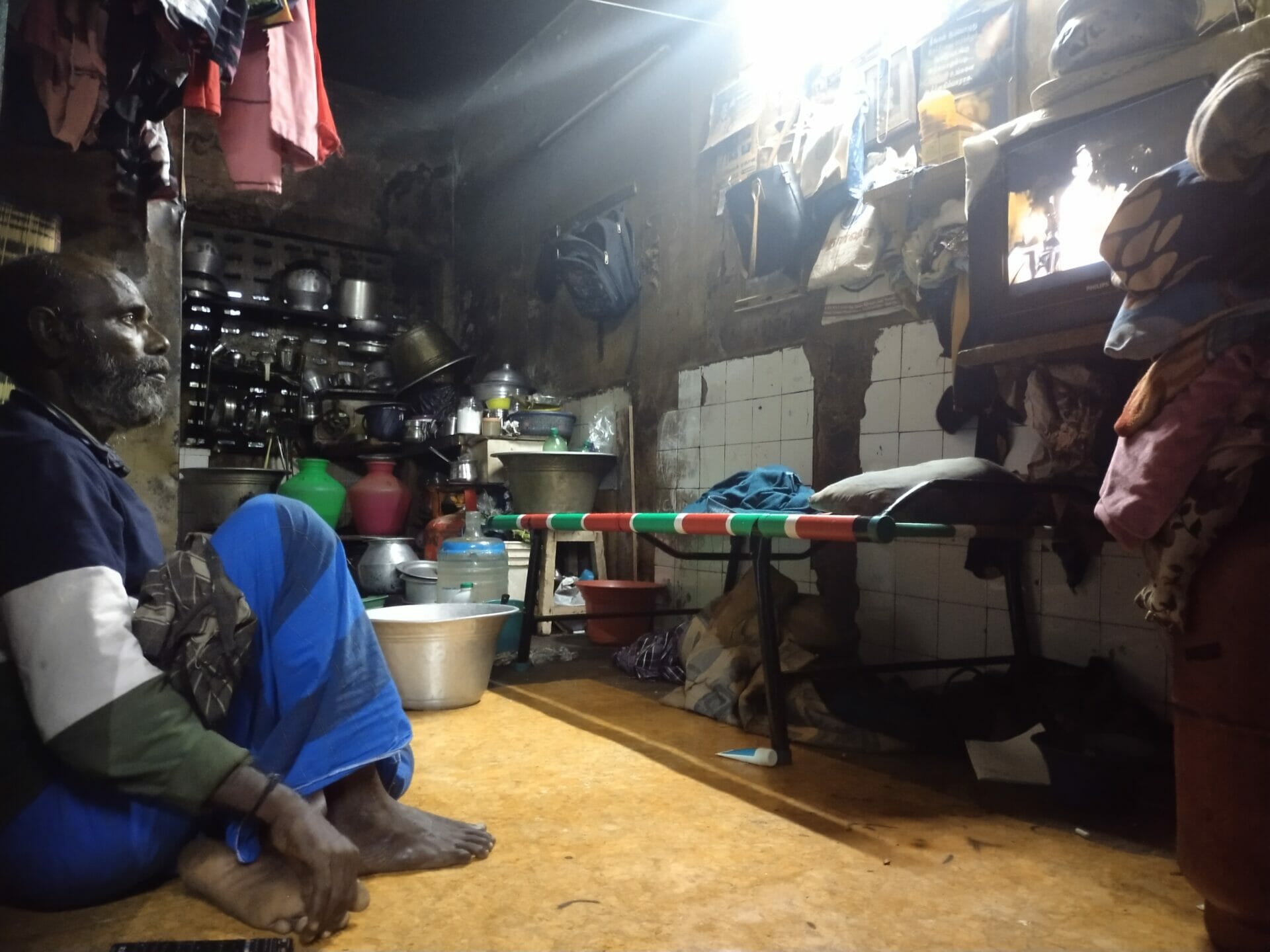
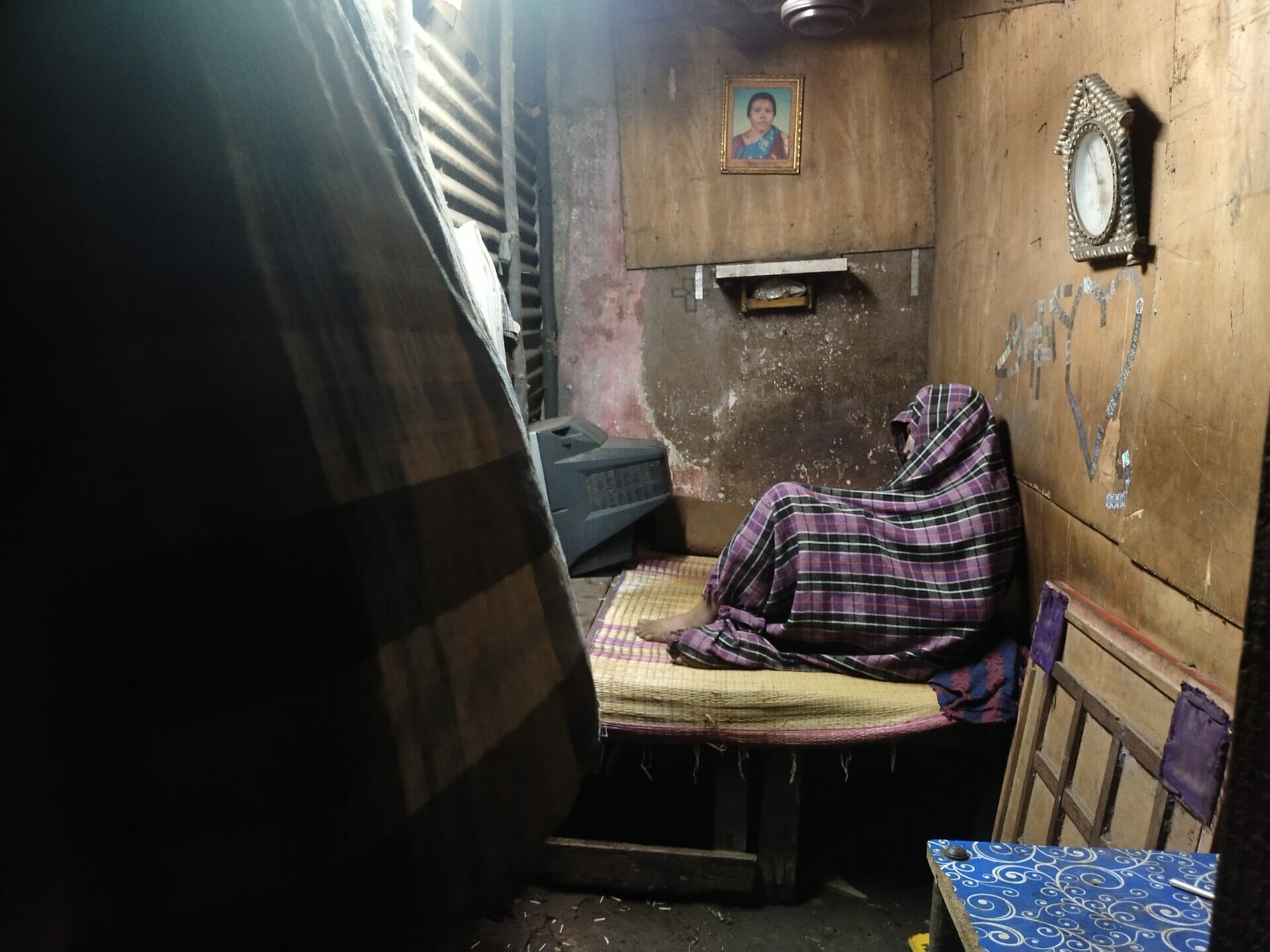
What does life look like for those families living in single-room homes in Chennai? These pictures tell the tales of those who await change.
Many residents of low-income communities in Chennai live in single room houses without any basic amenities. Pic: Shobana Radhakrishnan
A room of one’s own is considered a basic necessity for a good life. But having one’s own space to work, study and rest and a guarantee of privacy are a dream that is seemingly unattainable for many in Chennai. At a time when the city’s real estate price seems to be skyrocketing, there are still many families who live in a single room in Chennai, without a proper roof and any ventilation.
For these residents, the dream is not to build or buy a big multi-storey house, but merely call a space home where they can stretch their legs and sleep in peace. They dream, not of luxurious apartments with swimming pools, but of a house which would not be flooded during the yearly monsoons.
For decades, they have been living on the streets and in makeshift thatched-roof houses. They have survived heavy rains, floods and even cyclones in Chennai. “But, for how long should we live in fear!” asks Suganthi R, a resident of Kannappar Thidal, a makeshift settlement for over 120 families since 2002.
Suganthi echoes the voice of thousands of residents who have been living on the fringes for generations and still await some action from the government that would change their lives.
A single room holds their universe
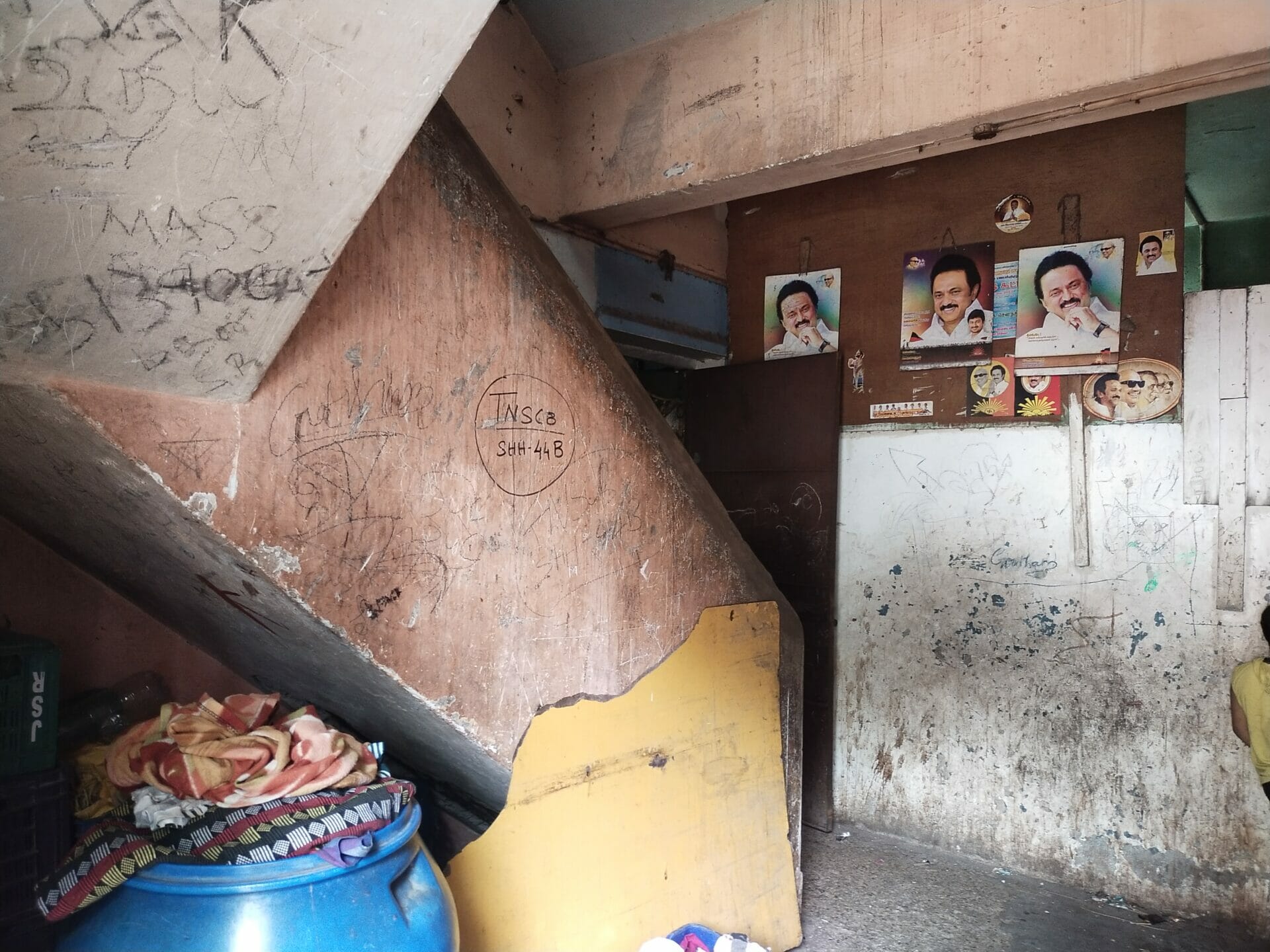
This is the entrance of a dilapidated building in Kannappar Thidal which is home to 128 families for over two decades. The triangular portion below the staircase is home to a four-member family where they cook and sleep. Pic: Shobana Radhakrishnan
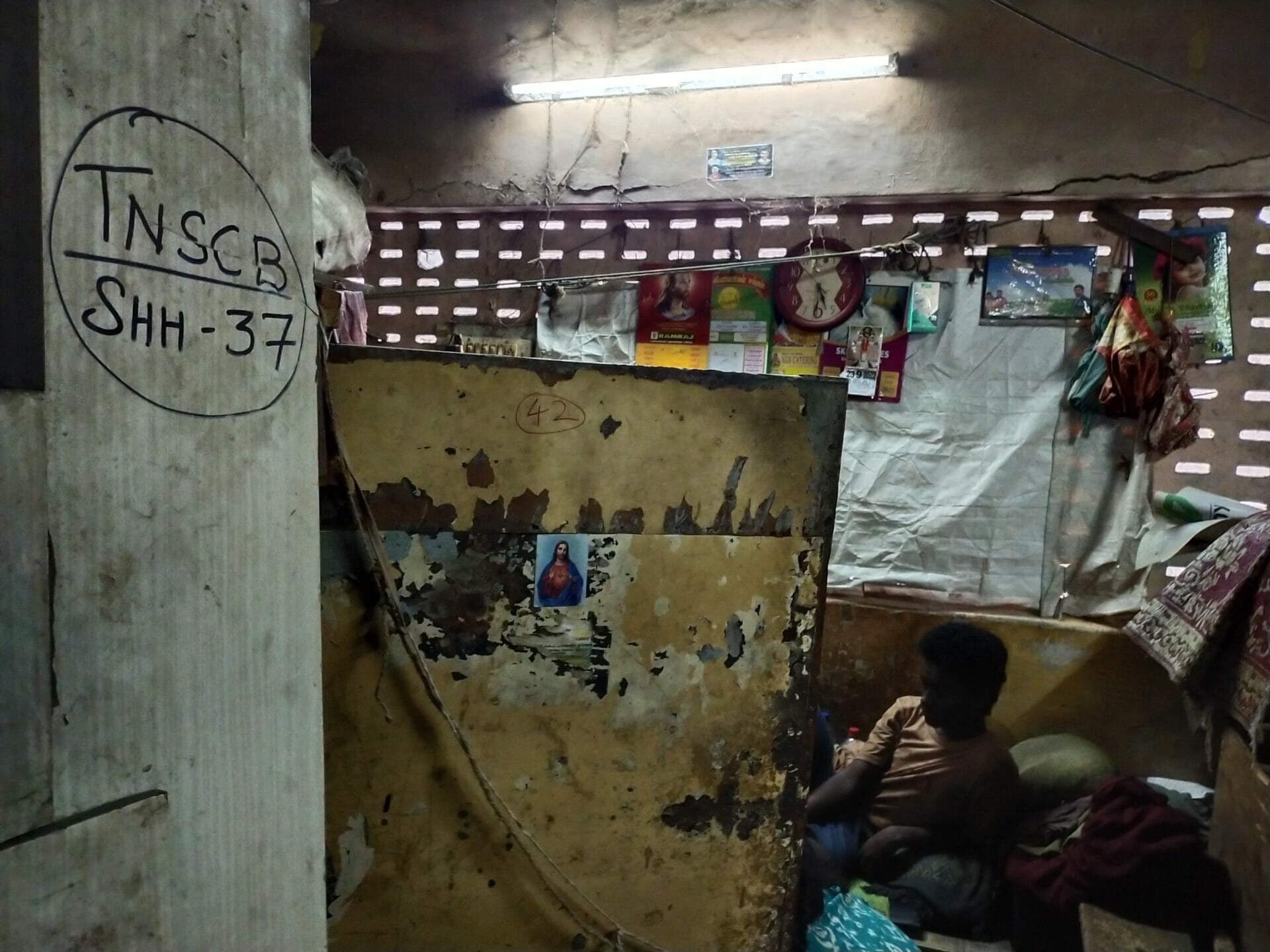
While the building was provided as a temporary shelter for 62 families two decades ago, the settlement has grown to 128 families now. To accommodate the growing population, cardboard sheets have been used to divide the space into multiple single rooms for different families in Chennai’s Kannappar Thidal. Each family has a minimum of four to five members. Pic: Shobana Radhakrishnan
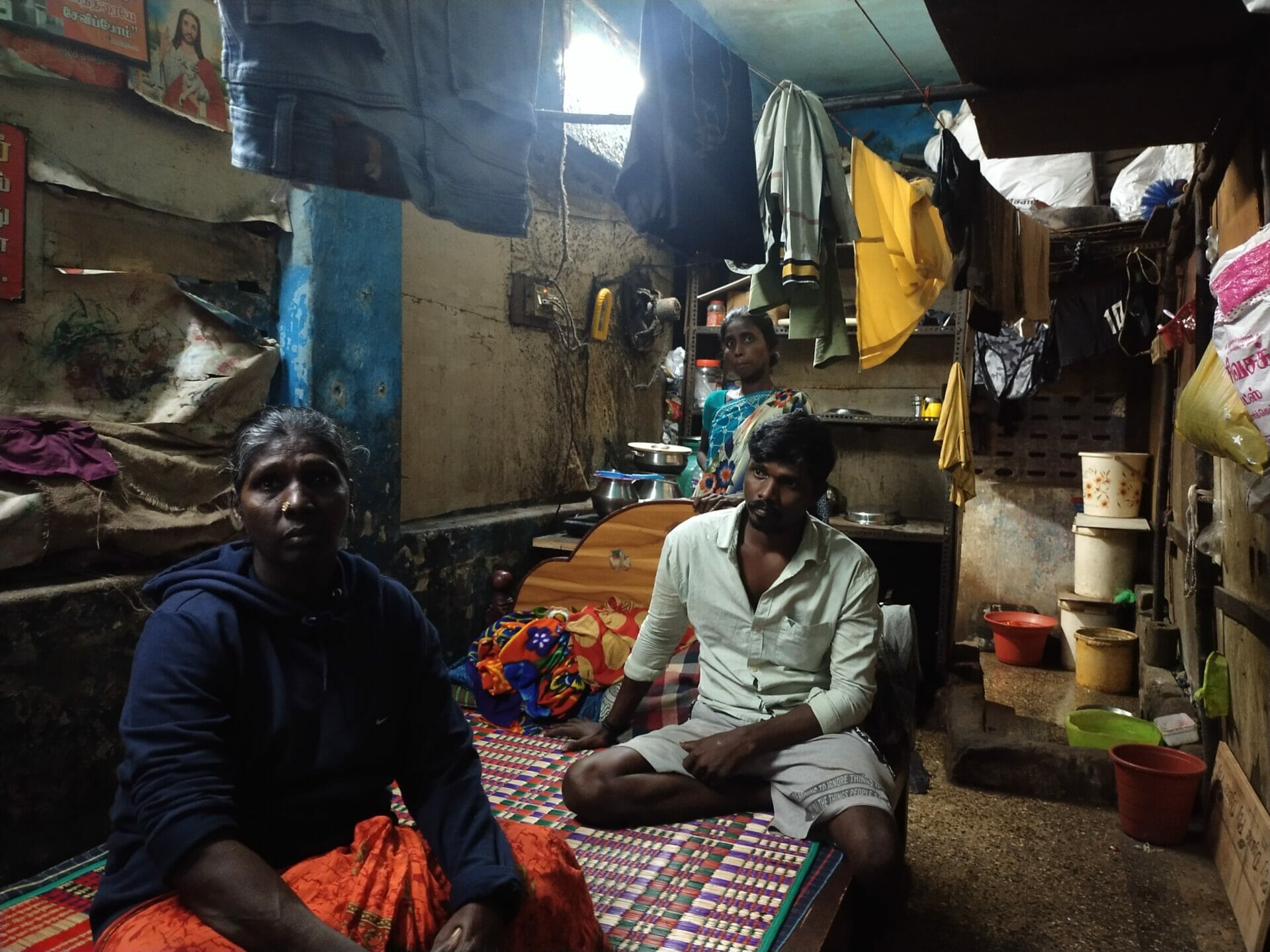
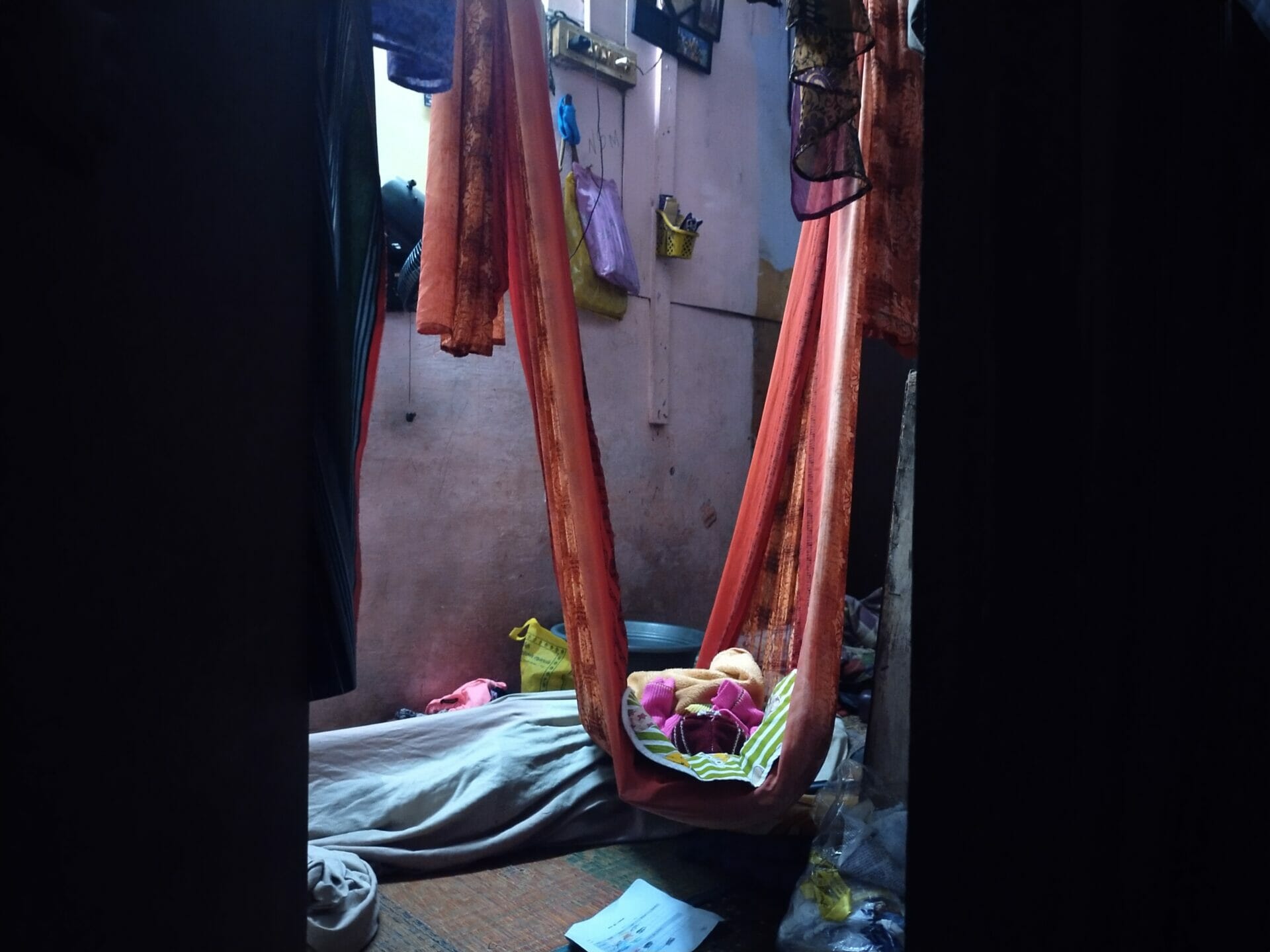
This single room in Chennai’s Kannappar Thidal houses two families and accommodates seven members. There is a cot, a small space for the kitchen and a television set in this room. Pic: Shobana Radhakrishnan
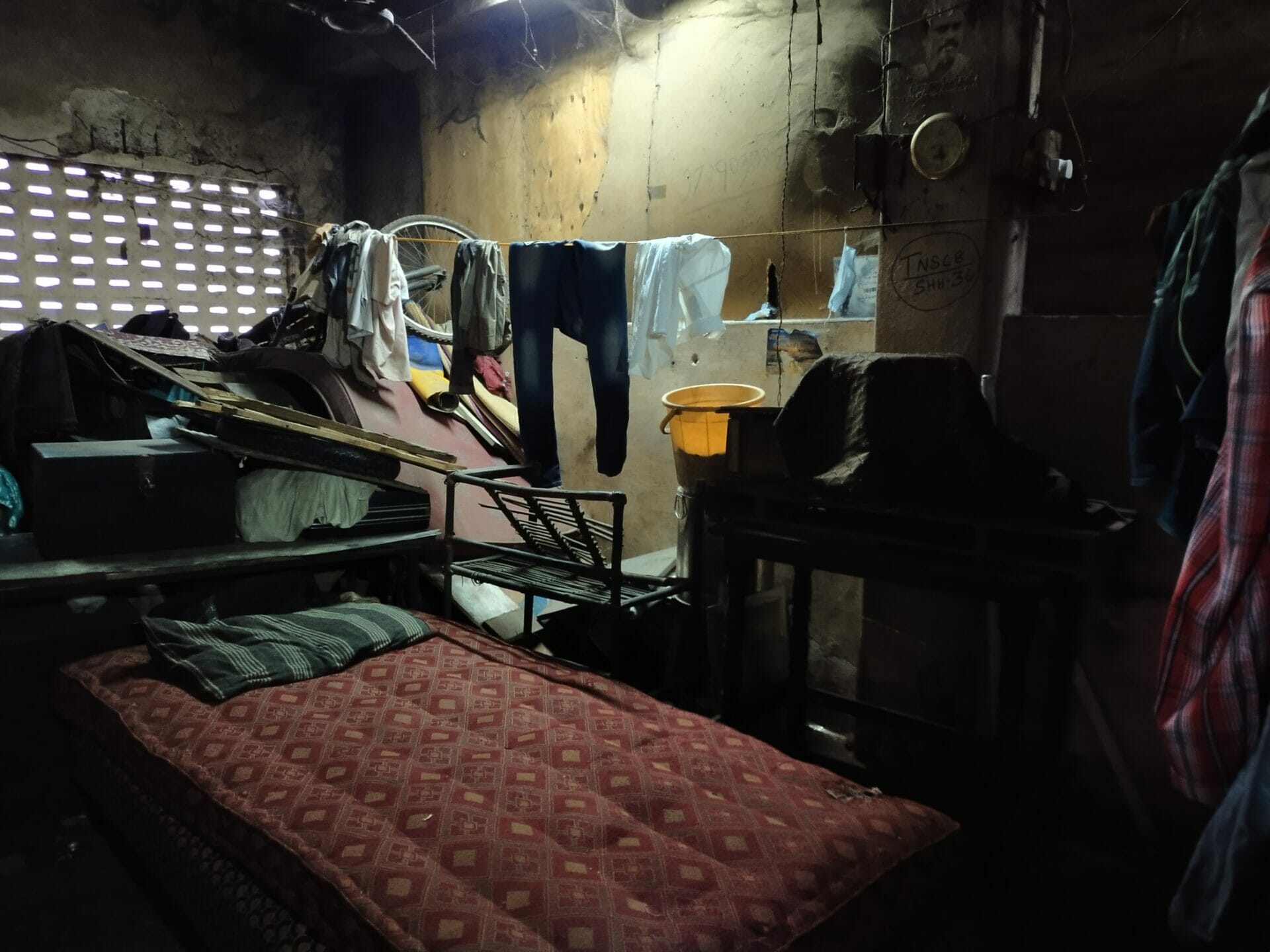
Though there is very little space in a single room, many of these families have a wooden or steel cot with a mattress. Radhika, a resident, said that they do not sleep on the floor as there would be insects. “During rains, the floor would either be damp or stagnant with water. So we had to get cots,” she said. Pic: Shobana Radhakrishnan
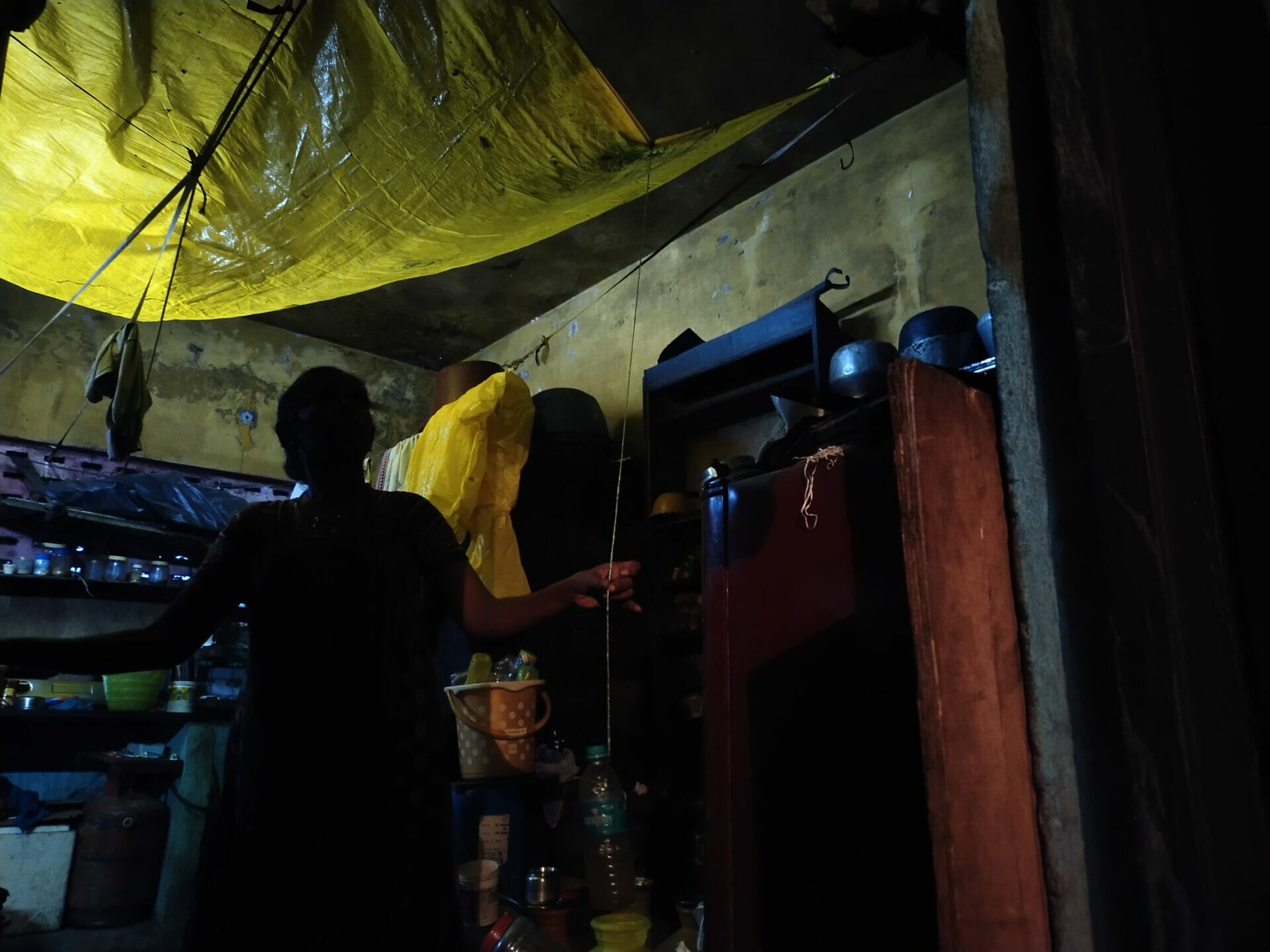
During rains, the water also seeps through the walls and ceiling. The residents have had to tie tarpaulin sheets to save their belongings. No one is able to sleep here when it rains in Chennai. Pic: Shobana Radhakrishnan
The people who live in these homes are not only affected by the rains but also by heat waves during summer. Selvi and her son live in a single-room house in Thideer Nagar in Chennai. As the house has an asbestos roof, Selvi routinely has allergic reactions to the heat. Pic: Shobana Radhakrishnan
Basic amenities a pipe dream for those living in single-room homes in Chennai
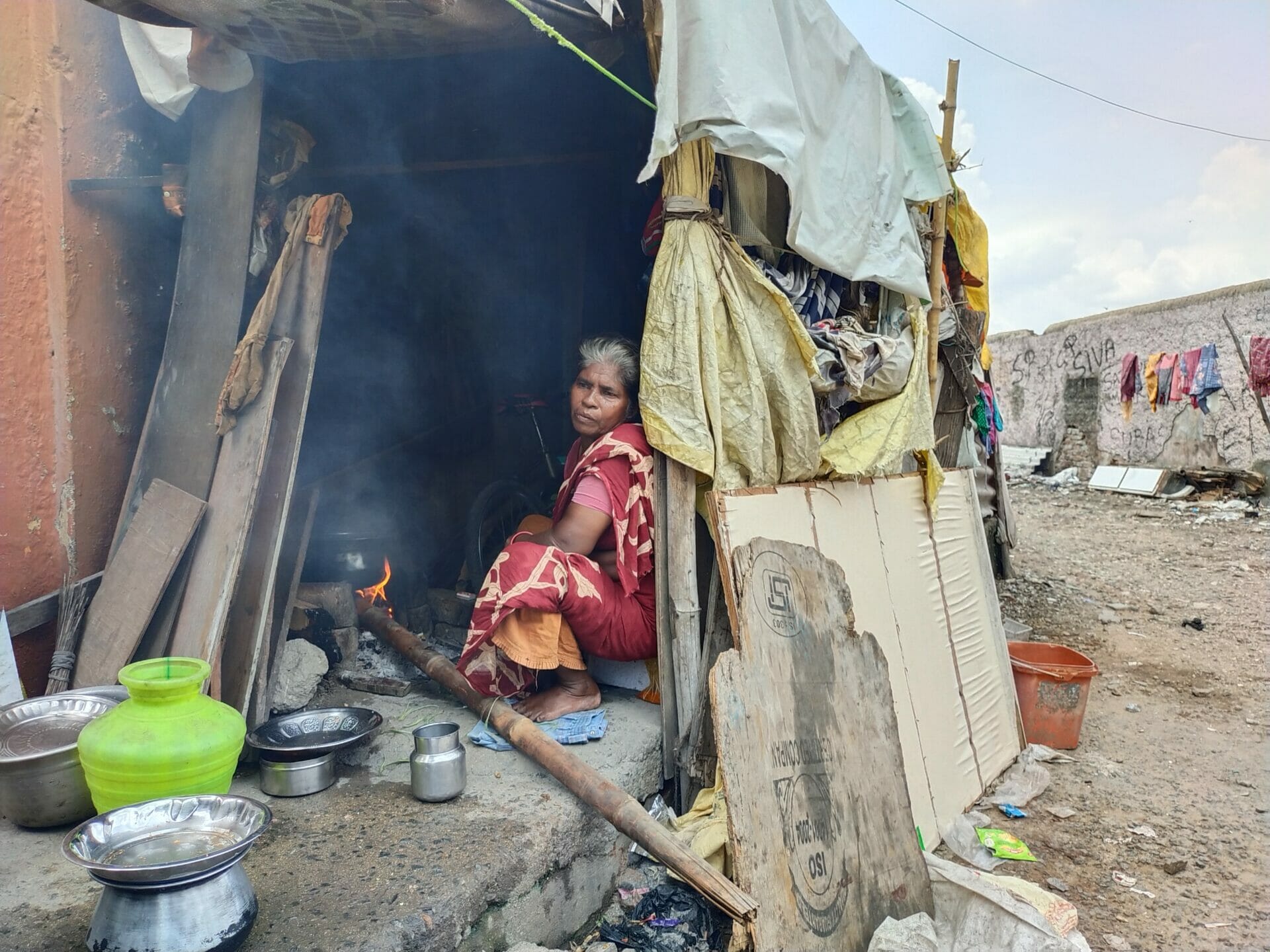
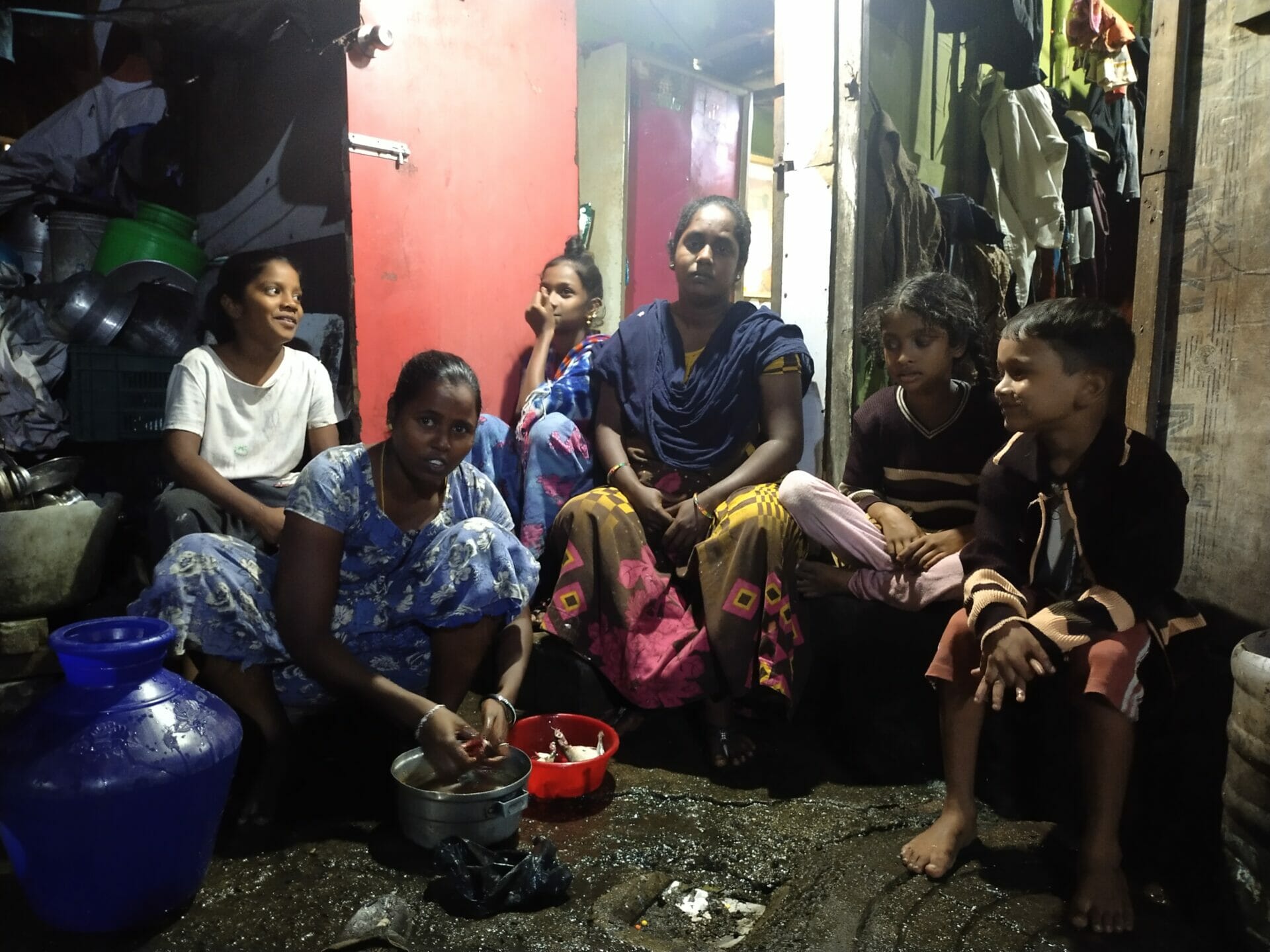
Since many of these families cannot afford Liquefied Petroleum Gas (LPG) for cooking, they rely on wood stoves. These single-room houses in Chennai are also at risk of catching fire due to cooking in wood fire stoves. Pic: Shobana Radhakrishnan
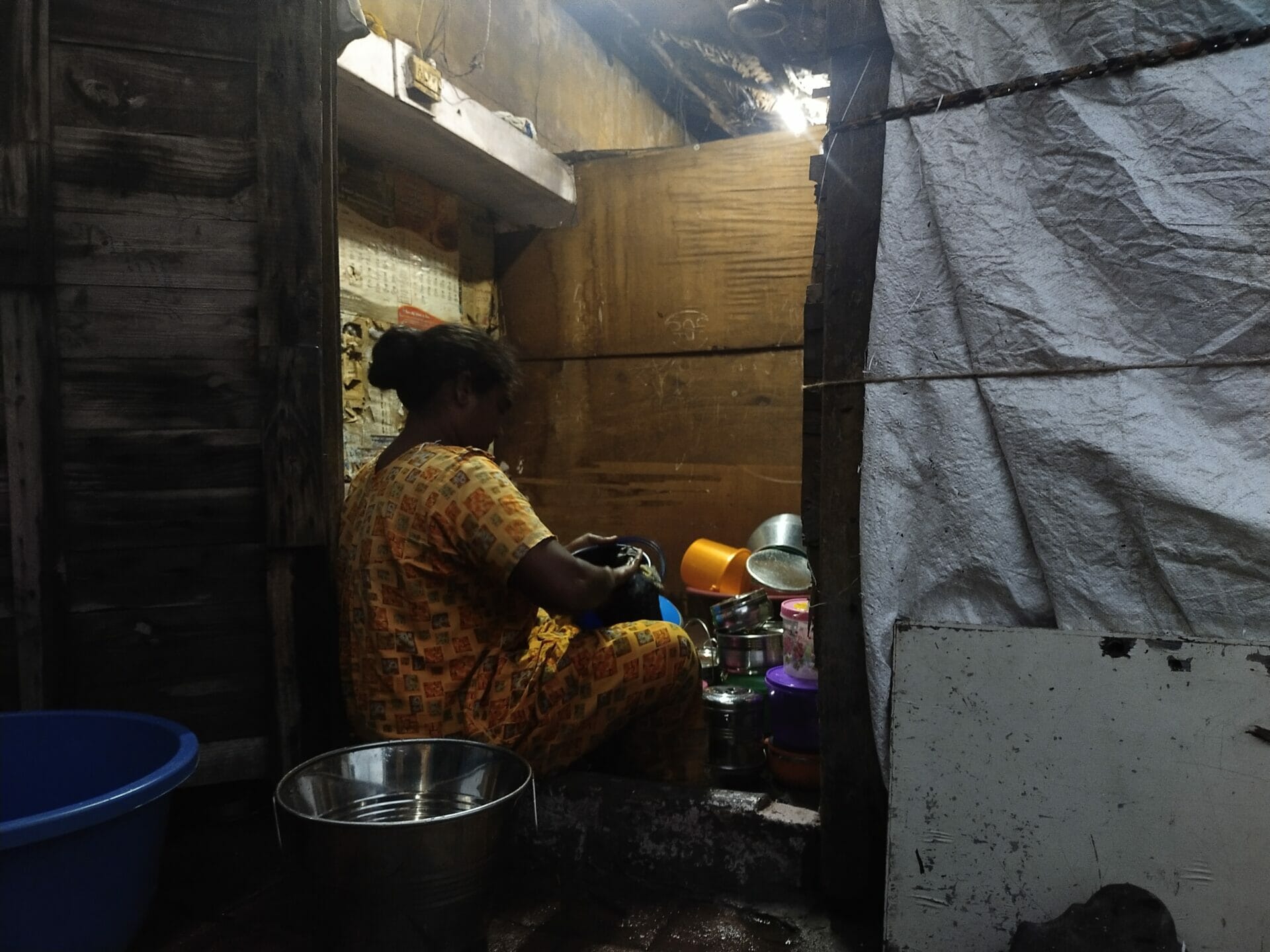
As there is no separate space for washing, the residents have to wash their vessels in the same room. Sometimes, they use the corner of the single room to bathe their children and wash their clothes. They also dry the washed clothes in the same room. Pic: Shobana Radhakrishnan
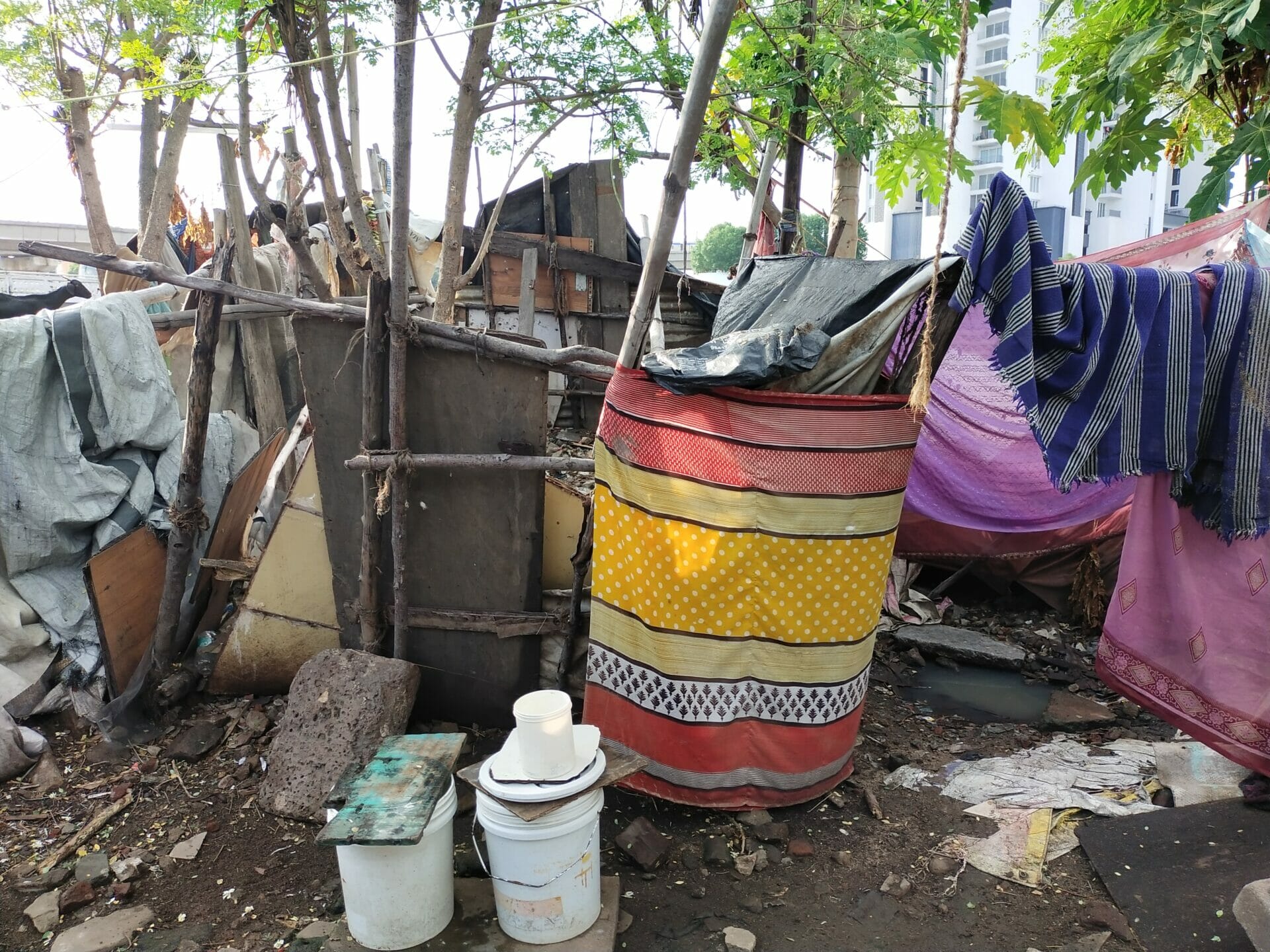
As many families living in single-room houses in Chennai do not have a separate bathroom/toilet facility, they rely on public toilets. “The public toilets also close by 7 pm and we cannot access them after that. So we end up having to defecate in open grounds,” said Shanthi, a resident of Thideer Nagar. The residents have also set up bathrooms using cardboard, clothes and tarpaulin sheets as they are unable to access public toilets all the time. Pic: Shobana Radhakrishnan
As there is no quiet or private space, children find it hard to do their homework after school. “I would have time only to fetch water and help my mother in cooking after school. Since the lighting is dull inside the room, I am unable to study for a long time even if I want to,” said Aishwarya, a class 9 student from Kannappar Thidal. Pic: Shobana Radhakrishnan
Many children, both boys and girls, in these low-income settlements get married at a very early age. Sometimes, the parents get the girl children married off as soon as they reach puberty due to safety concerns. No one here has any semblance of privacy. “The person next door can hear us even if we whisper. After the birth of our child, I have been sleeping on the roadside pavement, as there is no space for all three of us in a single room,” said Karthik, a resident of Kannappar Thidal. Pic: Shobana Radhakrishnan
Inside four walls, loneliness haunts the aged
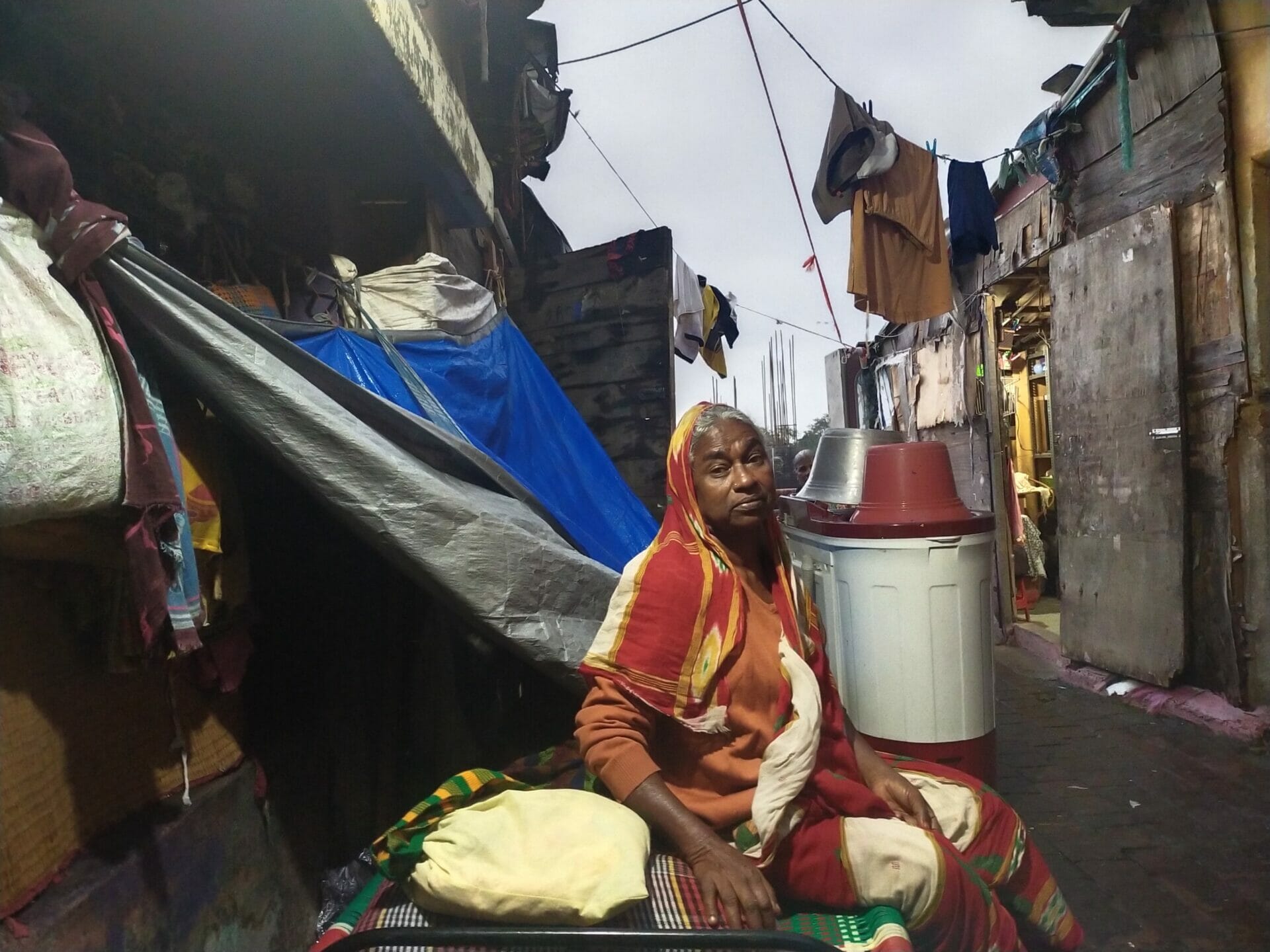
As families grow, the newly married couple either move out and make a temporary single-room shelter using cardboard for themselves or their old parents move out to live in tents. Chandra, a resident of Kannappar Thidal, made a home out of a tarpaulin sheet and a foldable cot after the marriage of her children. Pic: Shobana Radhakrishnan
Many of the senior citizens in low-income settlements suffer from health issues primarily caused by unhygienic living conditions. Since they cannot rely on anyone else, they earn their bread by taking up any job that comes their way. Pic: Shobana Radhakrishnan
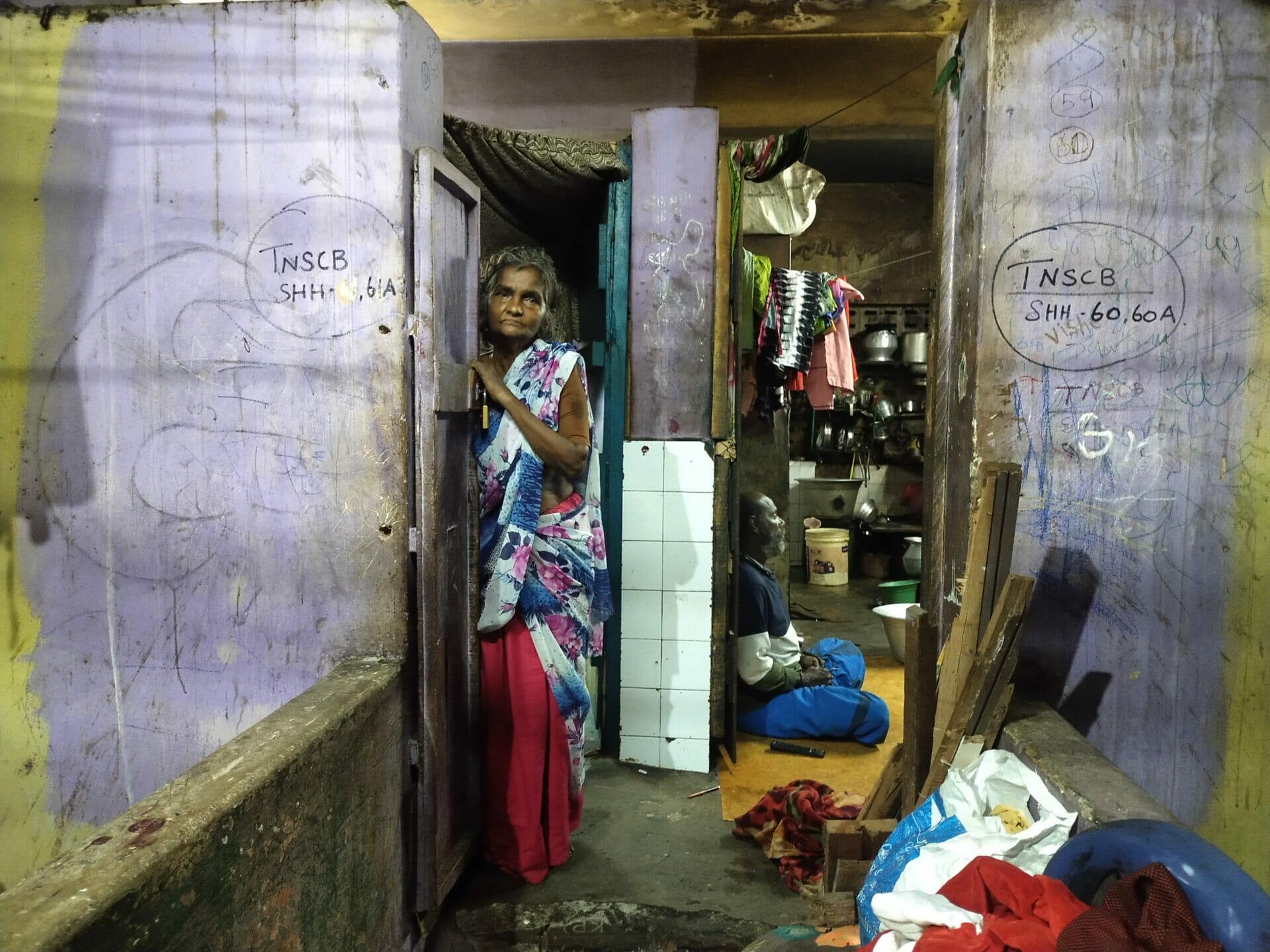
For many of the aged, television is their only escape. This single-room house of Irudhayam, a senior citizen who suffers from tuberculosis, houses seven people including his grandchildren. Pic: Shobana Radhakrishnan
While some still dream of moving to better living conditions, enduring many years of promises without change has made most residents wary of getting their hopes up that they will see a new dawn in their lifetime. Pic: Shobana Radhakrishnan
Shobana Radhakrishnan is Associate Editor at Citizen Matters. She keenly follows the impact of development on marginalised communities through an intersectional lens.
Before relocating to Chennai in 2022, she reported from Madurai for the national daily The New Indian Express. Over the course of her career, she has covered several key elections, including the Tamil Nadu Assembly Elections (2021), the Rural Local Body Polls (2021), the Urban Local Body Elections (2022), and the Parliamentary Elections (2024), as well as cultural events such as Jallikattu.
Known for her extensive reportage on the urban housing crisis, her four-part series on how state-led evictions propel domestic violence in Chennai’s resettlement areas was shortlisted for the 2024 Kamla Mankekar Award for Journalism on Gender and her photo story, Life in Single-Room Homes in Chennai, received a special mention (runner-up) in the Ashish Yechury Memorial Awards for Photojournalism.
Shobana holds a Master’s in Mass Communication and Journalism from Pondicherry Central University.
Women with disabilities face increased risks in public and private spaces because of consent violations, unsafe surroundings and neglect.
Every morning, Samidha Dhumatkar travels from her home in Mumbai’s western suburbs to Churchgate, where she works as a telephone operator at a university campus. Her journey involves taking a rickshaw, boarding a train, and walking to her workplace, similar to thousands of other Mumbaikars who commute daily. However, as a person with a visual disability, Samidha’s commute is fraught with threats to her safety. In their book, Why Loiter? Women and Risk on Mumbai Streets, writers Shilpa Phadke, Sameera Khan, and Shilpa Ranade, argue that spaces are not neutral. Moreover, they are not designed equally. “Across geography and time,…
Street dogs spark a national test — will India choose compassion or fear as law, humanity and coexistence come under strain?
At the heart of a nation’s character lies how it treats its most vulnerable. Today, India finds its soul stretched on a rack, its conscience torn between compassion and conflict, its legal pillars wobbling under the weight of a single, heartbreaking issue: the fate of its street dogs. What began as a Supreme Court suo moto hearing on August 11th has morphed into a national referendum on empathy, duty, and coexistence, exposing a deep, painful schism. Two sides Caregivers and animal lovers: They follow Animal Birth Control (ABC) and Catch-Neuter-Vaccinate-Return (CNVR). Their goal is to reduce dog populations and rabies…