104 accident hotspots identified in Chennai
Chennai police have identified 104 accident hotspots in the city. Ranked second in terms of fatalities due to road accidents, Chennai saw 5,034 accidents and 998 deaths last year as per the data from National Crime Records Bureau (NCRB).
Commissioner of Police (CoP) Shankar Jiwal, who addressed the media persons on September 8th, said that a special task force, which might turn into a road safety authority, has been formed. The special task force constitutes officials from six departments including corporation officials, highway department engineers, traffic police personnel and IIT professors who will work towards identifying the causes of accidents.
The CoP further added that the number of accidents this year has reduced by 20% (till August 31) compared to last year, due to targeted enforcement drives. The office of Traffic Warden Organisation was also inaugurated on the CoP office campus. The wardens are drawn from fields such as engineering, medicine and education, and are appointed by the CoP. They will regulate traffic and ensure road discipline at various junctions on weekends.
Source: The New Indian Express
Read more: Chennai survey finds 65% food delivery personnel violated traffic rules
Chennai to get seven new malls
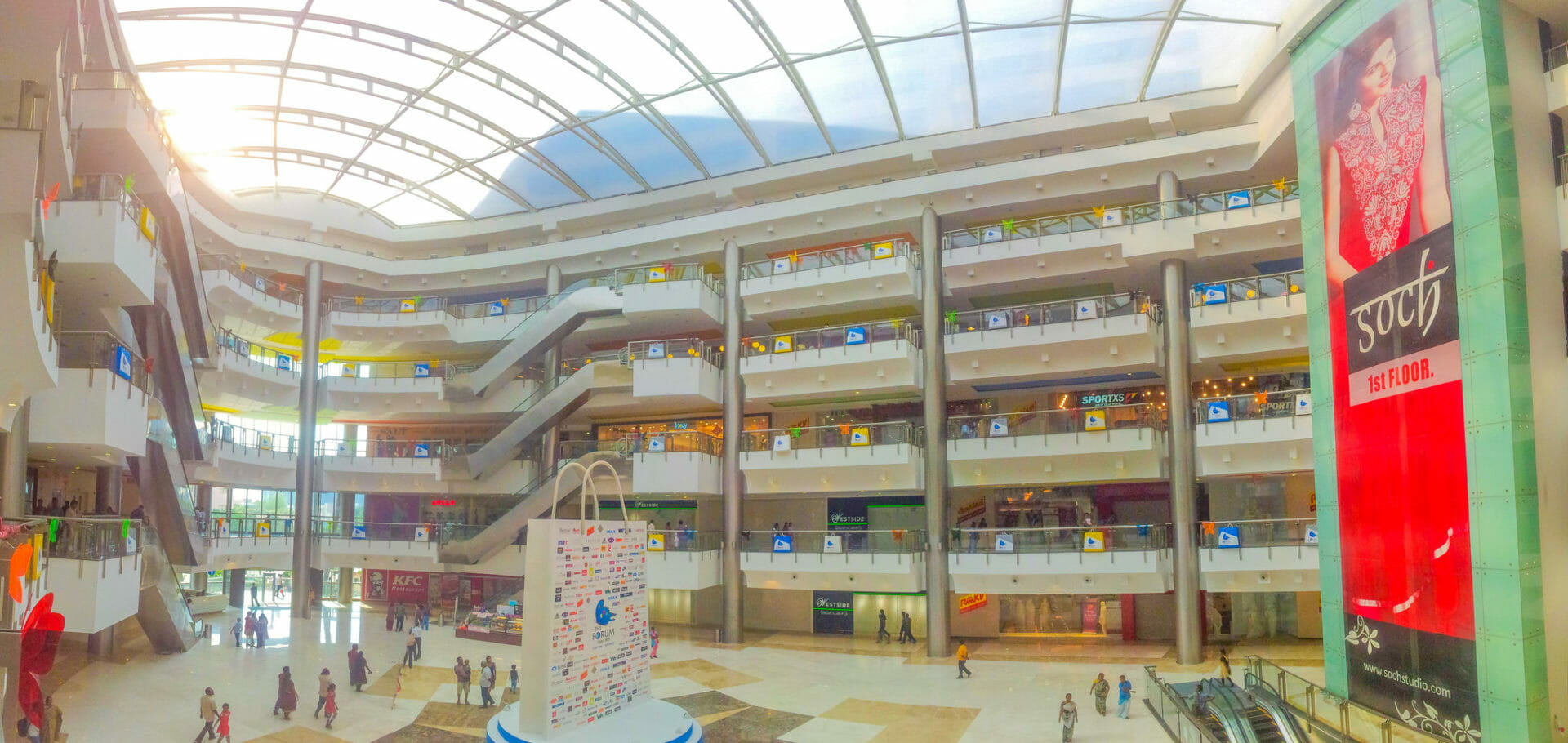
Chennai is likely to get at least seven more malls by 2025, taking the total number of shopping malls in the metro beyond 25. The new malls would come up on OMR, Pallavaram-Thoraipakkam Radial Road, Tiruvottiyur, Perambur, Mangadu and the airport at Meenambakkam. As malls have begun to see pre-covid level crowds, the demand for more shopping space has also surged in the city.
Currently, the city and suburbs have 19 malls of different sizes spread over more than 10 million sqft. While the minimum size of a mall is 1.5 lakh sqft, the largest mall is housed in an area of nearly two million sqft.
Data by Knight Frank India shows that four out of the six malls that are to come up will have a collective space of 6.5 million sqft and with a collective investment of Rs 3,250 crore. This includes one by the UAE-based LuLu Group which will be establishing its first mall in Chennai by 2024 with the location for building yet to be finalised.
Source: The Times of India
New STPs to increase wastewater treatment capacity
In a bid to cater to the projected population in 2035, the Chennai Metropolitan Water Supply and Sewerage Board (CMWSSB) has planned to add five sewage treatment plants (STPs) to its network by this year-end.
The new plants at Kodungaiyur, Koyambedu, Nesapakkam and Perungudi and other places, which will have a combined capacity to treat nearly 350 million litres a day (mld), are to be built with the latest sequential batch reactor technology to comply with the revised norms of the Central Pollution Control Board (CPCB).
Currently, the city generates 584 mld of sewage which is treated at various STPs across the city. The existing 13 STPs have a combined capacity to treat nearly 745 mld. Since there is a need to improve the treatment facilities the CMWSSB has planned to set up new STPs to increase its treatment capacity to about 1,000 mld by the end of 20 on par with the growing population of the city.
Source: The Hindu
Read more: Within GCC limits since 2011, Thoraipakkam still waiting for piped water and sewage system
Saidapet market to get a facelift
The existing buildings in Saidapet fruit and vegetable market are soon to be demolished and new buildings with toilets, parking and other such basic amenities are to be constructed by the Greater Chennai Corporation. While the fruit and vegetable market is functioning on the land belonging to the Corporation, fish and meat market functions on the land belonging to Karaneeswarar Temple in Saidapet.
The market has dilapidated buildings with poor amenities which became particularly difficult to use the market during rain. The Corporation is set to soon finalise a proposal and float tenders to commence the reconstruction work. In the meantime, the traders would be shifted to an open ground temporarily during the construction. Those traders who already have shops in the old building would be allotted shops in the newly constructed buildings.
Source: The Hindu
Otteri lake to become a model lake for eco-restoration
In a bid to construct a model lake and set an example of lake restoration in a scientific manner, the state wetland mission has allocated Rs 1.5 crore for the ecological restoration of the 16 acre Otteri lake situated inside the Arignar Anna Zoological park in Vandalur.
The habitat of the lake would be upgraded to attract more birds in addition to de-silting and dredging. The authorities of the Tamil Nadu Forest Department have sent a proposal in this regard to the State Wetland Mission which was accepted earlier this week.
The work to be carried out includes creating islands and mounds inside the lake, planting saplings and trees that are suitable for birds, removal of invasive species and ensuring all channels entering and leaving the lake are cleared of silt, garbage and encroachments to improve water flow. Continuous monitoring would also be done for the improvement of the lake.
Source: The Times of India
[Compiled by Shobana Radhakrishnan]