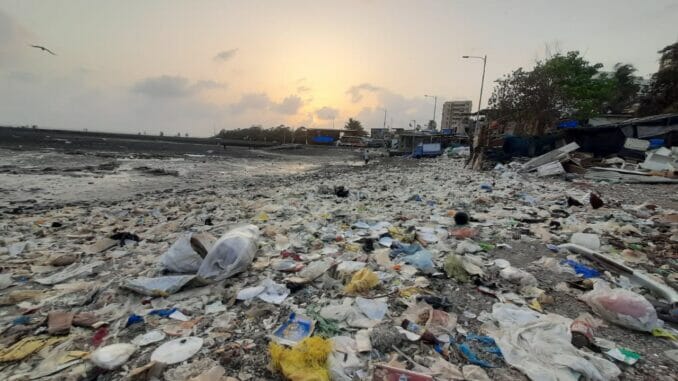
Few days ago, a reel on Instagram made it to several groups of citizens involved in civic action. It was about residents of Chimbai lamenting the condition of the beach, where they grew up.
They reminisced about how Chimbai beach looked like a ‘beach’ and it was used by the people as a playground. The residents said they used to play on the beach when they were young but now their children play on the road, which is unsafe. They all spoke about how Chimbai has lost its beauty over the years.
Several women spoke about the absolute lack of cleanliness at the Chimbai beach with deep anguish. The same video with them appealing to authorities to take action about the beach clean-up soon went viral.
Chimbai: A village nestled in modernity
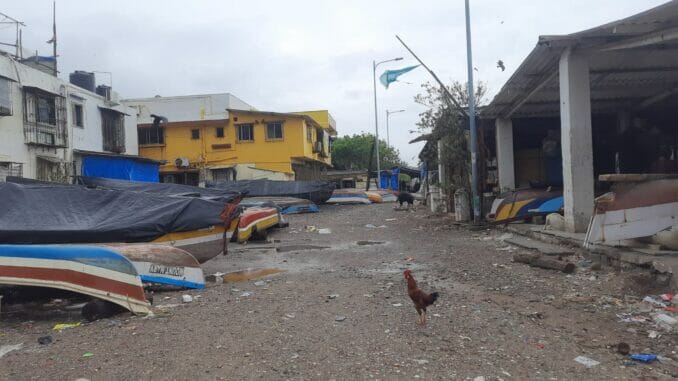
Spread beyond the bandstand stretch, Chimbai village is a small fishing village. It is home to the Koli (fishing) community. Chimbai beach is not crowded with tourists like other beaches in Mumbai. It is characterised by the smell of the fish and boats parked on one side like a typical fishing village. It is at this beach where the Mithi River joins from the Mahim Creek to merge with the Arabian Sea. The fishing community still practises fishing the traditional way and has lived here for generations.
When Citizen Matters visited the beach, it looked like a dumping spot for garbage and it did not look like a beach front as one imagines. The residents told Citizen Matters that they felt that Chimbai village is often ignored by the authorities. They alleged that the Brihanmumbai Municipal Corporation (BMC) pays more attention to maintaining places like Ranwar village and Carter road in Bandra. They pointed that Chimbai Beach is piling up with not only plastic waste and other garbage but also construction debris.
Rajini Goyil, a resident of Chimbai, says, “Mein yahan 70 saal se reh rahi hun par pehle ret dikhti thi. Yahan sabse zayada kachre ka hi problem hai.” (I have been living here for the past 70 years. Earlier we could see the beach sand. But now the biggest problem is that of garbage.)
Read More: Mumbai’s no.1 source of trash: Food waste
Impact of citizens voice on BMC
When the emotional appeal of the residents went viral, BMC got into action. Within one week of the appeal being posted, the civic body picked the garbage. Since then, workers have been cleaning the beach regularly till now.
Former municipal councillor Asif Zakaria said that the contract for the beach clean-up was over in March, and the process of renewing the contract or floating a new tender was delayed. “Now the contractor has come and they have again started cleaning the beach. In a few days they will be able to get it back to normal,” says Zakaria.
Monsoon brings tough times for locals
Once the rains arrive, it gets harder for the residents of Chimbai. The sea reaches their doorstep. It gets difficult to walk during monsoon. As of now, the water level has not increased but as monsoon intensifies in July, high tides will start and the waves reach the houses.
“The sea does not take anything, whatever waste people put in, it vomits out. Apart from sea deposits, most of the waste is the garbage thrown in the area by people”, says Nitin Chauhan another Chimbai resident.
As the monsoon intensity increases, garbage will increase at the beach. The residents are hopeful that the Chimbai beach cleaning continues and in fact becomes a regular practice. Who knows if the next appeal will have the same impact or not?