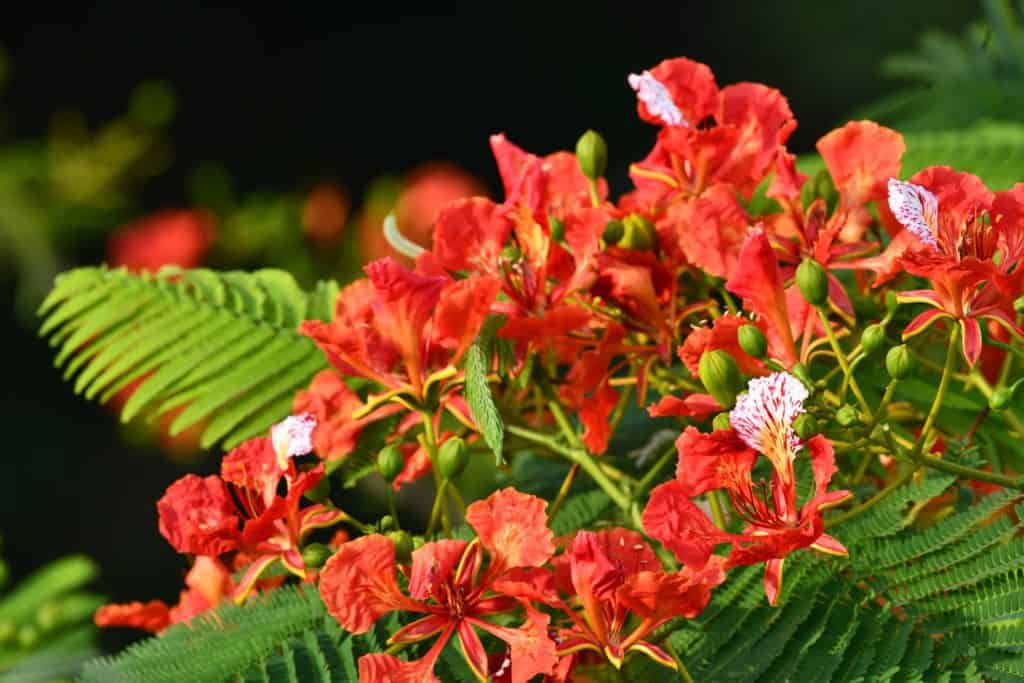
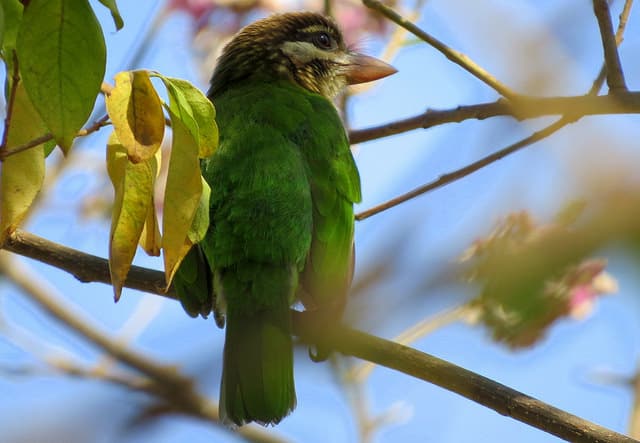
What are the many types of birds, animals and insects that you can see in Bengaluru? What are those beautiful trees, shrubs or weeds that grow here? And oh, those flowers that bloom in our neighbourhood parks and avenue trees!
From the beautiful bee-eater to the humble purslane, there are many captivating life forms to spot and admire just outside our own homes!
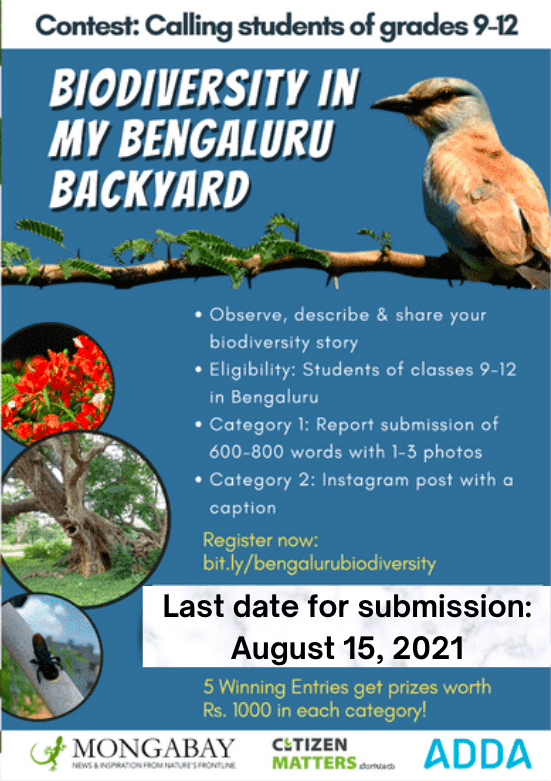
Citizen Matters is organising a contest on “Biodiversity in my Backyard”, in partnership with Mongabay India, an environment and conservation magazine, and apartment management software platform ADDA.
We invite students of grades 9-12 residing in Bengaluru to submit entries under the following two categories:
- Category 1: Report submission of 600-800 words with 1-3 photographs. Research, talk to experts and residents, and refer to relevant studies and data related to the species you come across.
- Category 2 Instagram post (a series of photographs, videos, or graphics designed by you with a caption of (approximately 2,000 characters)
The observations can be made in your garden, balcony, or a nearby nature spot – garden, park, lake, or any open space. Or even inside your house!
The five best entries will get prizes worth Rs 1000 in each category, sponsored by our partner ADDA.
This contest is part of a project on ‘Bengaluru’s Ecosystems and Biodiversity’.
Rules
- Contestants must be residents of Bengaluru, and be studying in a Bengaluru school in grades 9-12.
- Individual contestants only. Only one entry per category per contestant.
- Entry should be the original work of the participants and in English.
- Instagram submissions must be tagged with #BiodiversityInMyBengaluruBackyard.
- For Instagram submission, the account should be public so that the jury can assess the submission.
- Submissions must be submitted only through the form provided, any other mode of submission will not be accepted.
- The last date to submit entries is August 15, 2021 [To allow more participation from more students (some of whom had mid term exams in July), we are extending the submission deadline to 11:59 pm on August 15, 2021.]
Entry submission
- Click here to submit your entry: https://bit.ly/BiodiversityInMyBengaluruBackyard
About the project: Biodiversity of Bengaluru
Over the last year, Citizen Matters and Mongabay India, supported by the Bengaluru Sustainability Forum, have worked together to document Bengaluru’s Biodiversity.
We have explored a range of topics, from colourful solitary bees easily found in urban gardens to the many rare species that are disappearing fast – for example, the slender loris that lives on tree canopies to the disappearing traditional food crops, and butterflies that can’t bear the city’s bright lights.
We found that the Hesaraghatta grasslands, which is under threat now, houses rare species like the Lesser Florican and the Lilac Silverline. We also covered Bengaluru’s neglected mini water bodies — keres and kuntes, that host many birds, insects, and animal species. The bigger water bodies — lakes, also host a lot of biodiversity, and have traditionally provided food and livelihood to local residents. Though lakes have been disappearing fast, fishermen and others have been reviving some lakes while also protecting their biodiversity.