Pay to park outside your home
Parking a vehicle in a public space in the city, including on a residential street, will be charged. That is the norm under Parking Policy 2.0 approved by the Urban Development Department. It will come into effect once the Directorate of Urban Land Transport and Bruhat Bengaluru Mahanagara Palike prepare area parking plans, six months to one year from now.
Almost all places including commercial and residential areas will be covered under the pay and park system. The new parking policy introduces a permit system to park outside one’s home as well. The annual fee for a permit has been fixed at Rs 1,000 for small cars, Rs 4,000 for medium cars and Rs 5,000 for MUVs/SUVs. An applicant can get the permit for only one vehicle. The permit will be issued as long as parking does not disturb the movement of emergency vehicles. Even then, the permit does not “guarantee” a free spot but only authorises permit-holders to park a vehicle on their street.
An activist called the policy “heavily diluted” and a “great blunder” because of the low” permit charges.
Source: Bangalore Mirror, Indian Express, Deccan Herald
‘Ban Mixopathy’ call
Allopathic doctors have threatened to intensify their protest against the central government’s decision to allow Ayush doctors to perform surgeries. With the call ‘Ban Mixopathy’, about 20 doctorshave been boycotting work and staging a sit-in in front of the Karnataka Medical Council. On Thursday, the 11th day of the strike called by the Indian Medical Association, its Karnataka chapter pledged to step up the protest after February 14.
Dr Shashikumar B M, the president of the Karnataka chapter of the Indian Association of Dermatologists, Venereologists and Leprologists, held that many experienced surgeons face difficulties while performing some surgeries, and it was unscientific to allow Ayush doctors to undertake them.
Source: Deccan Herald
Pourakarmikas get vaccine
On Thursday, 80 BBMP marshals, who were deployed to enforce Covid protocols, were vaccinated at various primary health care centers in the city.
Pourakarmikas and drivers of BBMP’s tippers and compactors were given half-day off with pay, to get vaccinated on Friday. They went to the nearest primary health centre from the respective mustering centres, after marking the day’s attendance.
On Thursday, Bengaluru urban district reported 228 infections, with all the fatalities in Bengaluru Urban (6) and Bengaluru rural district (1). The city has reported 4,01,323 infections, 4,417 deaths, 3,92,985 discharges and 3,920 active cases. However, a study says that Karnataka may have under-reported infections.
Meanwhile, the Bengaluru Traffic Police resumed its crackdown against drunk driving after a long gap. The checks were suspended following the COVID-19 outbreak.
Source: Indian Express, The Times of India
HC to examine lake report
The High Court of Karnataka on Wednesday said that it will examine in detail the first report submitted by the Council for Scientific and Industrial Research and National Environmental Engineering Research Institute on the restoration and rejuvenation of 210 lakes in the city. The court said it would reserve one hour twice a week to the issue, beginning next week. It will start with the plans for Kamakshipalya, Arehalli and Thavarakere lakes.
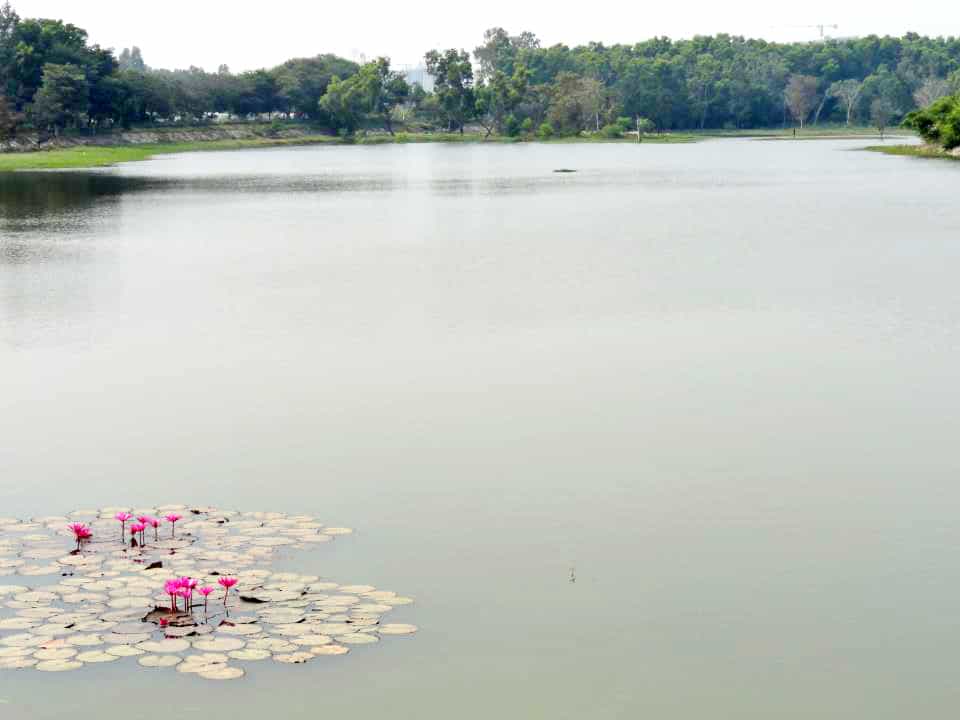
Titled ‘Assessment status of the lakes and need for rejuvenation’, the report was prepated as per directions of the High Court. It dealt with issues of encroachment, quality of water, long-term and short-term measures for rejuvenation and maintenance.
Source: The Hindu
RTC staff protest
Road Transport Corporation employees protested on Wednesday demanding timely payment of salaries, reduction in work hours and restarting the entire fleet of Bengaluru Metropolitan Transport Corporation buses in the city. They also want BMTC to drop its plan to lease electric buses from private operators.
Stoppage of several services after COVID-19 has forced RTCs to rely on the State government’s funds to pay salaries to its 1.3 lakh employees. The staff is yet to get full salaries for December and January. To increase revenue, the BMTC recently introduced a general shift under which bus crew had to work for 12 hours with a break of three to four hours in between.
BMTC chairman N S Nandiesha Reddy said that a decision has already been taken to reduce work hours for female employees to eight hours.
Source: The Hindu
Schools want fee-cut revoked
Eight school associations comprising members affiliated to both the State and Central boards, have planned a state wide protest on February 23 to urge the government to revoke its order on reducing school fees.
The Department of Primary and Secondary Education had issued an order that school managements should collect only 70% of the tuition fees that they collected for the 2020–21 academic year. The order said that no other fee can be collected.
D Shashi Kumar, general secretary of the Associated Managements of English Medium Schools in Karnataka said that the decision on how fees has to be collected should be left to schools, with concessions to be provided to students based on the parents’ financial condition. Although the government has reduced tuition fees by 30%, the loss incurred by schools would be as high as 55 to 65% as no other fees can be charged.
Some of the Association’s other demands include a relief package to teaching and non-teaching staff and reopening classes for standards I to V immediately.
Source: The Hindu
[Compiled by Revathi Siva Kumar]