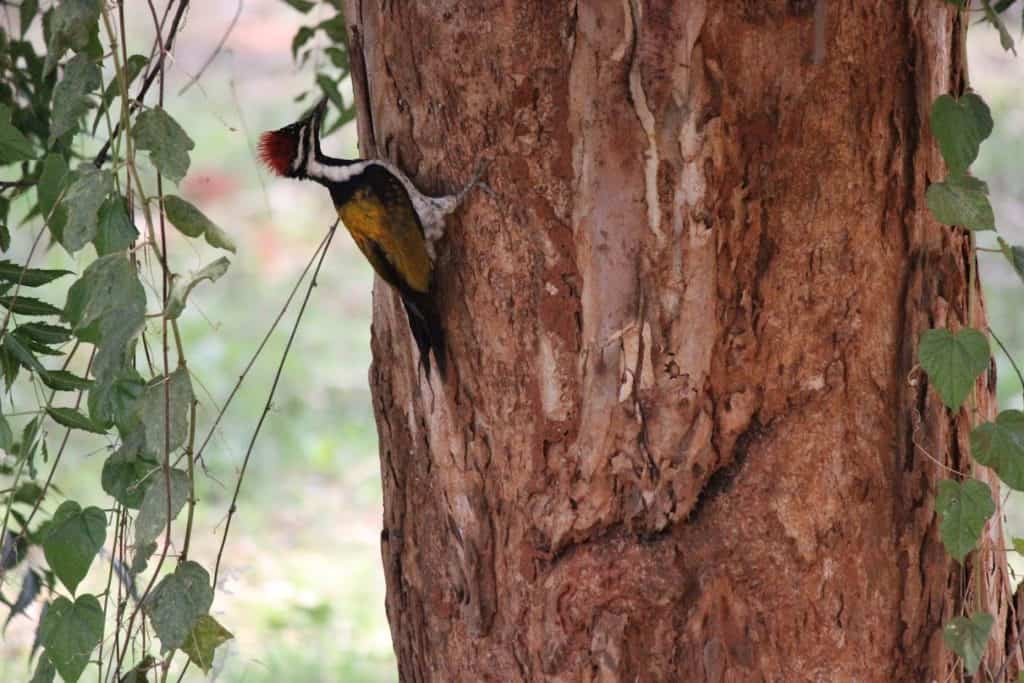
Many Bengalureans don’t think of the city as a biodiversity hub. But school students who participated in the ‘Biodiversity in my Bengaluru backyard’ contest challenged this notion.
The contest was organised by Citizen Matters, in collaboration with the conservation magazine Mongabay-India and the apartment management software platform ADDA. Students in grades 9-12 were invited to submit articles or photos/videos of biodiversity in their premises.
The best entries were announced at a virtual event on September 18th.
Read more: “To protect nature, start at home”: Bittu Sahgal
Best entries – ‘Article’ category
The following students were selected for submitting the best entries in the ‘Article’ category. (Click on author names to read their respective articles.)
Anirudh Gopinath, Grade 9, Legacy School Bangalore
Anirudh wrote about a fly he discovered in his backyard. It was after quite some research that Anirudh and his father identified the species to be Stomorhina xanthogaster, from the Nose-fly family (Rhiniidae).
Following is an excerpt from Anirudh’s article.
Strolling around the shrubbery, mobile phone in hand, I spotted an insect I didn’t recognise, an attractive fly with very alien-looking eyes resting on a pavement tile. Intrigued, I immediately clicked a few snaps and having exhausted my field guide resources, sent the images to Karthikeyan, chief naturalist, Jungle lodges & resorts.
To my surprise, Karthikeyan reported back being clueless on what it was. This drove me into research mode, scouting the web, spending endless hours foraging for information about this fly. It turned out to be tough than I anticipated, almost defeated in my endeavour, I reached out to my dad, a self proclaimed naturalist. He thinks he is the next David Attenborough, and I can’t help but laugh out loud when he enacts him.
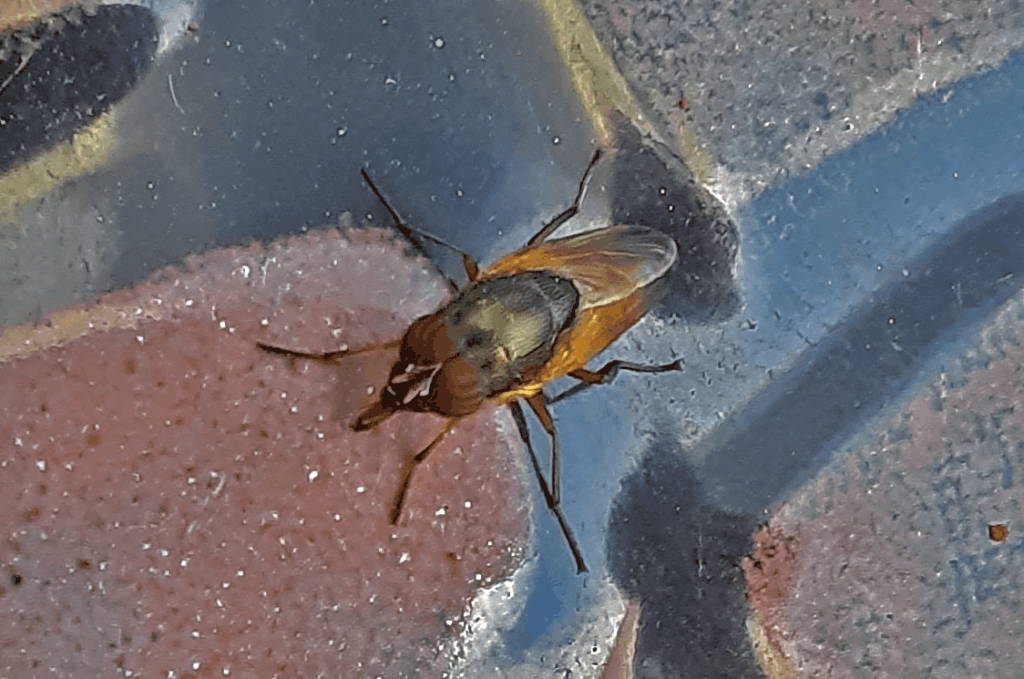
Anirudh went on to explain the importance of this species in pollination, and how mango farmers in India and Australia have been rearing and releasing them into orchards for better yield.
Pranav Naresh, Grade 11, The Valley School
Pranav wrote about the surprisingly rich wildlife in the premises of his residential community Good Earth Malhar.
According to ebird.org, the hotspot of Good Earth Malhar is currently home to over 130 species of birds. From India’s smallest bird; the Pale-billed Flowerpecker and the colourful Indian Pitta, to the relatively large Red-naped Ibis, Peacock, Black Kite, Brahminy Kite, Booted Eagle and many more.
The community premises also boasts the presence of around 100 species of plants, 200 species of insects, 20 reptile species, 15 amphibian species, and so on. Even wild elephants were spotted here twice! Pranav wrote:
Once the sun bids adieu, Malhar is given a whole new lease of life. Insects come out of their hiding spots, snakes creep out of their holes and nocturnal birds fly out of their homes in trees. The chirps of various species of mantis’, grasshoppers and cicadas can be heard loud and clear throughout the night.
Diya Agrawal, Grade 10, National Public School
Diya photographed and described four different species – rock pigeon, Indian palm squirrel, the white-cheeked barbet, and the cockspur coral tree. While the first three are ubiquitous in Bengaluru, the cockspur coral tree is a disappearing species and was difficult to identify, wrote Diya.
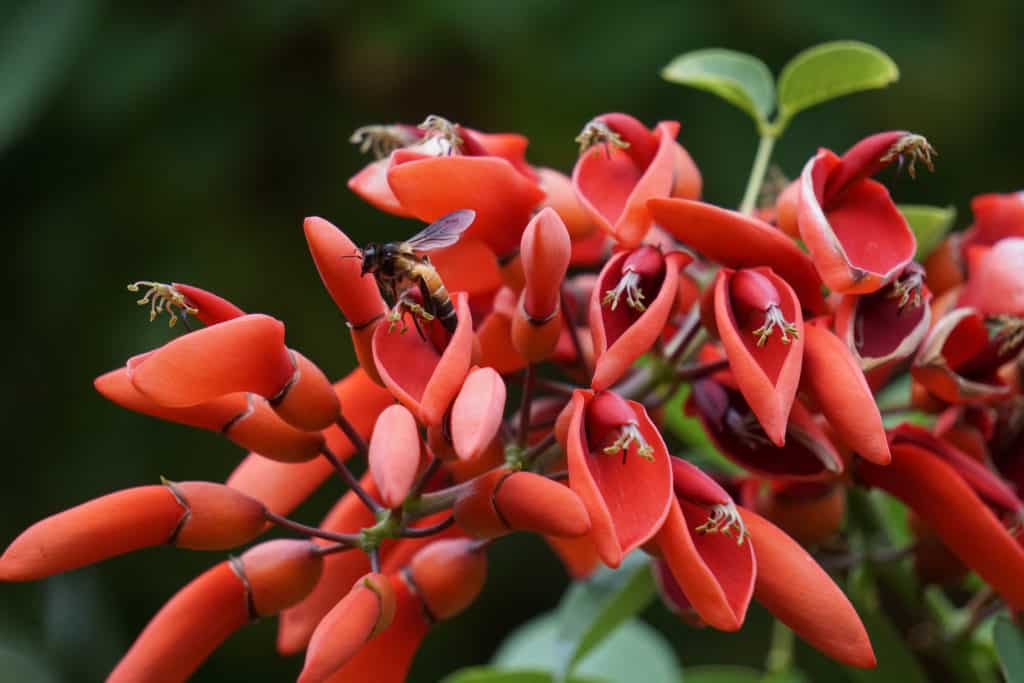
Describing the tree, she wrote:
Its vivid blooms are, quite literally, “bursting” with life; and I really like how there are flowers in all stages, from buds to wilting blossoms, in the same frame. Pollinating the flowers is a female rock bee (Apis dorsata), whose species is rapidly vanishing in Bengaluru due to human apprehensions. The beehives seen hanging from roofs of buildings often belong to rock bees, which are known for their highly defensive nature.
Tarini Kumar, Grade 11, The Valley School
Tarini wrote about the plant and animal species she could observe around her apartment at the heart of the city, in Richmond Town.
From my balcony I see a continuous canopy of mango and coconut, intertwined with the criss-crossing branches of a Singapore Cherry. There is always some movement in this canopy. Bees, butterflies and bats come to pollinate the flowers. Squirrels play in the branches. Ants walk over from the palm to nest in my flowerpots. Numerous birds visit to feed on flowers, fruit or insects. Green barbets hide in the foliage. Koels call out from the mango tree, and parakeets screech as they fly to the champaka.
Flowerpeckers – among the tiniest of birds – flit in and out, and sunbirds glint in the sunlight. I saw a Greater Coucal show off its bronze wings, so close that it caught my breath.
She also pointed to the loss of biodiversity she has observed over time – for example, monkeys no longer visit her garden, probably due to the loss of canopy in the area.
Rakshan Pandian, Grade 10, Inventure Academy
Rakshan shared pictures of various animal, plant, insect and reptile species found in his backyard. He explained the ecosystem services that each of these species provide.
He said:
Biodiversity to me, is the coexistence of a variety of lifeforms from microbes, fungi, insects, birds, reptiles, plants to mammals and more in a habitat to sustain a healthy ecosystem.
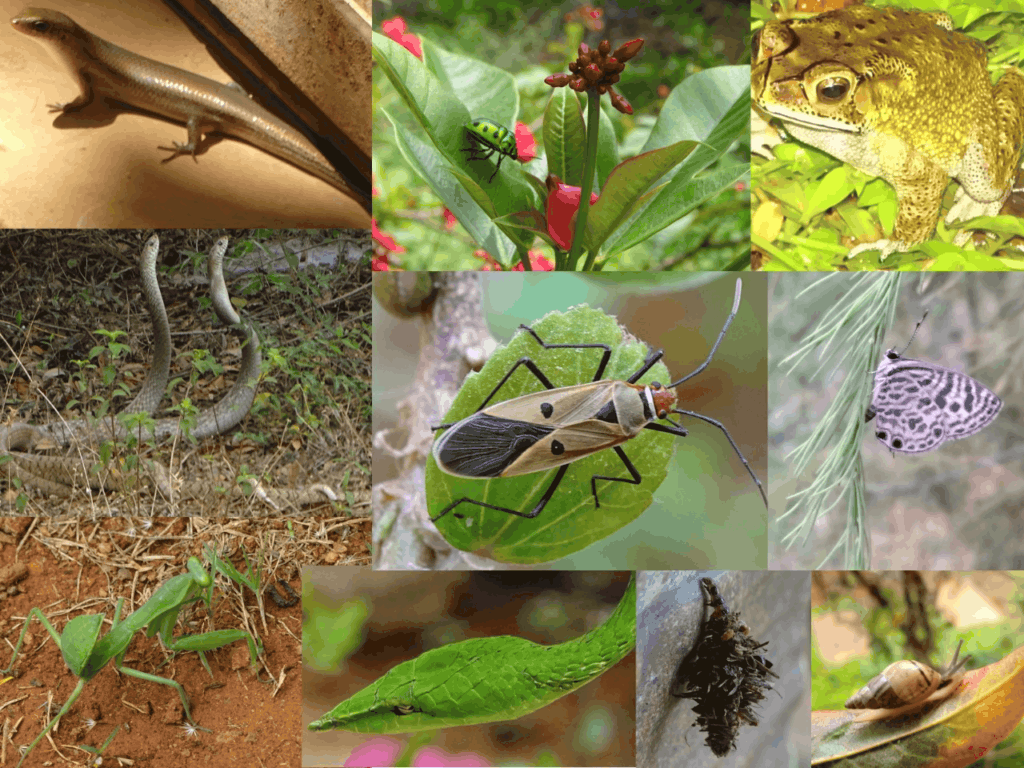
The frog acts as a countermeasure to the snail to make sure it doesn’t eat too many living plants while also eating any pests that get in its way. The bagworm, though being a pest, upcycles waste to make an architectural masterpiece for its house. The green jewel bug, despite being a pest, is a visual delight that continues to inspire our fascination and love for Mother Nature. Why worry about pests when they are naturally kept in check! Did I mention that even the mosquitoes are naturally controlled?
Read more: How a Bengaluru apartment created a ‘food forest’
Best entries – Instagram category
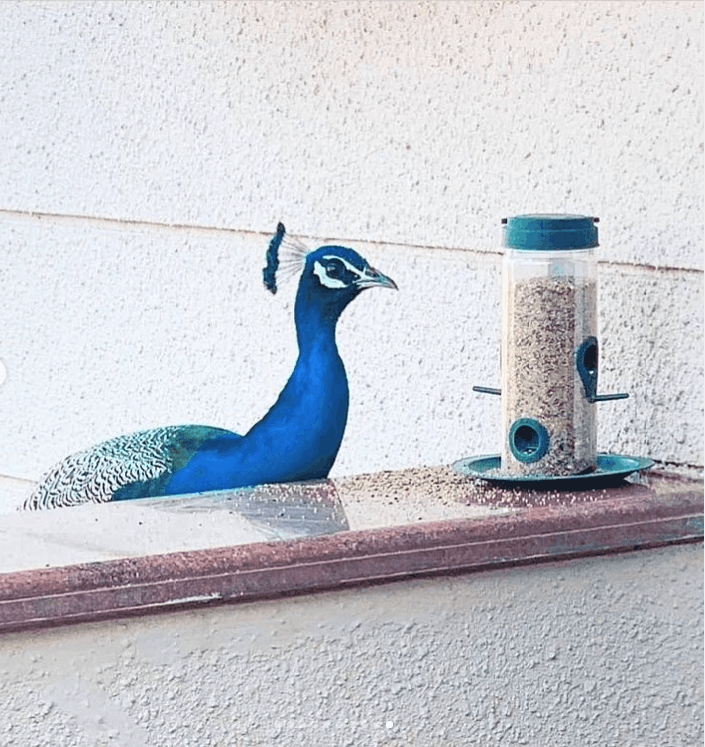
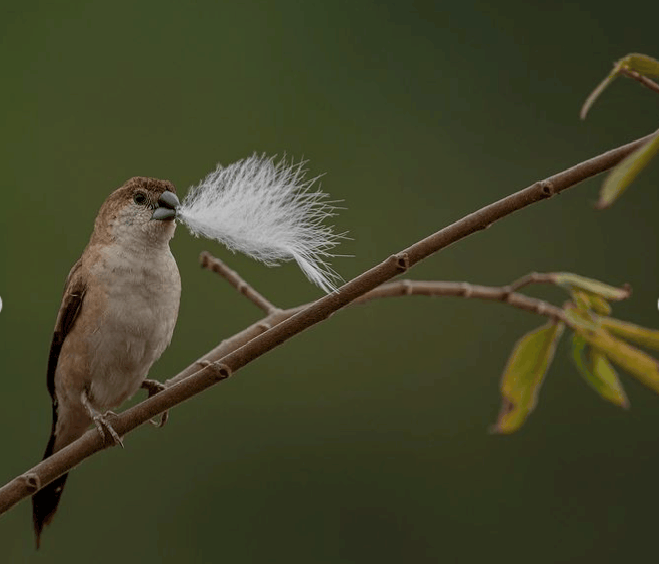
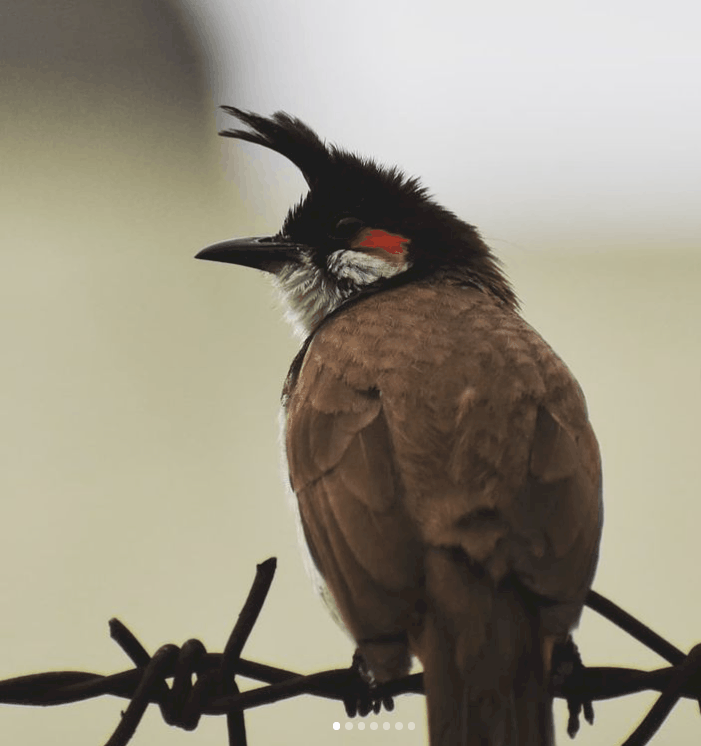
Following are the students who submitted the best entries in the Instagram category. Below is a sample of their photos/videos.
Rohan Jacob, Grade 11, Canadian International School
Shradha Suman, Grade 12, Silicon Valley PU College
After spotting snails in her garden, Shradha was intrigued about how these creatures thrive in polluted urban environments. In her research, she found that land snails are more tolerant to pollution, and are even used by researchers as biological tools to evaluate soil pollution. This is because these snails can concentrate pollutants in its tissues, and its shell size too can indicate pollution in the area.
Aarushi Mahesh, Grade 9, The International School of Bangalore
Surya Turaga, Grade 11, Inventure Academy
Anvita Trivedi, Grade 10, Prakriya Green Wisdom School