On December 2nd, observed as National Pollution Control Day, the Bangalore Apartments’ Federation (BAF) is launching an E-Vaahana campaign to facilitate the adoption of community Electric Vehicle (EV) charging stations. BAF plans to reach out to over a million apartment residents who could benefit from one-stop access to the knowledge and rules on implementation/technology/choice of vendors for EV charging installation.
BAF has partnered with the Energy/Industry departments of the state government, WRI (World Resources Institute) India, Apartment ADDA, Citizen Matters and EV charging vendors for the campaign. The campaign will kick off with a webinar on December 2nd.
The federation, which has over 1050 member-apartments, aims to provide knowledge on EVs, and to influence policy and pricing to make it more affordable.
According to BAF President Nagaraja Rao, “BAF recognised a year ago that EV charging stations in apartments are a critical precursor to motivate the widespread adoption of EVs. An engagement with BESCOM was started September last year, seeking simpler approval rules and favourable tariffs that can incentivise RWAs at a large scale to install EV charging stations within their premises.”
Chaitanya Kanuri, Senior Program Manager-Electric Mobility at WRI India, believes, “The ease of access to residential EV charging is necessary for a transition to EVs. DISCOMs (distribution companies) and charging operators have started streamlining the process to instal EV chargers in buildings, and apartments can work with them to provide the amenity for their residents.”
Read more: Guide to setting up Electric Vehicle Charging Stations in your community
Since its inception in 2014, BAF has been advocating environment-friendly practices in apartment complexes. It periodically launches themed events on sustainable living, covering topics like solid waste management, water conservation, wastewater treatment and recycling, and green energy solutions. An SRTPV (solar rooftop plants) initiative launched in 2018 continues to draw the interest of apartments.
Since September 2020, BAF has been raising awareness on EVs and their charging stations. A knowledge document has been created and shared among members in the BAF website. BAF’s monthly signature programme BAF KI BAAT also featured a session on the subject a few months ago.
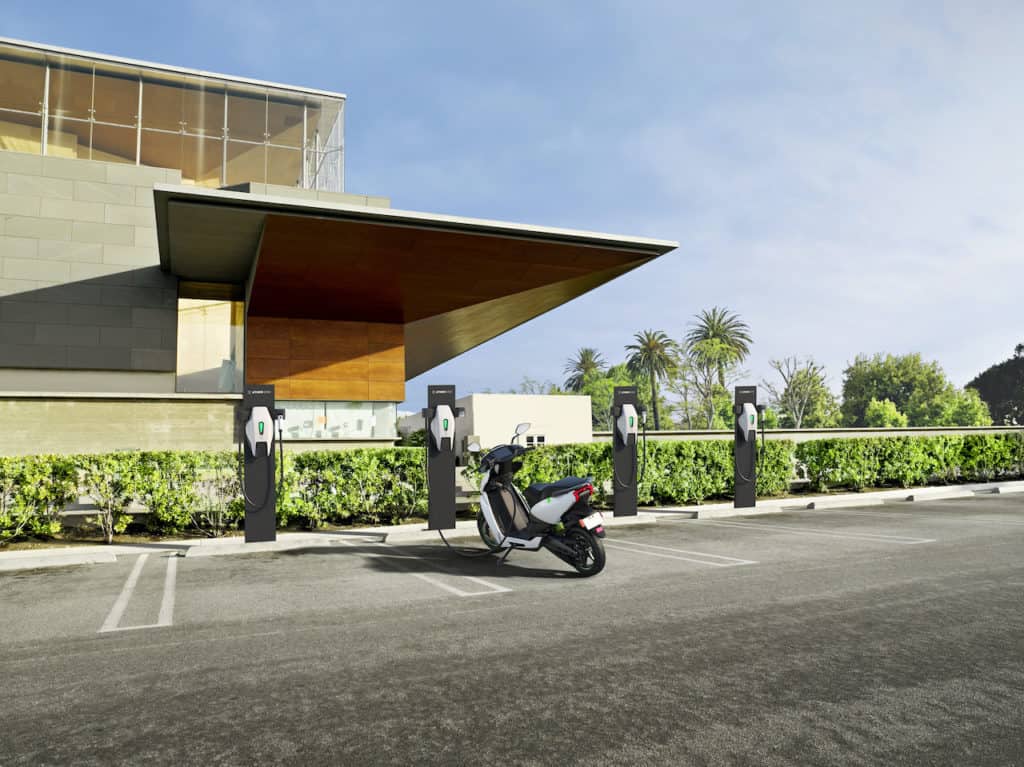
The team spearheading BAF’s EV mobility campaign, headed by BAF Vice President Shankar Swaminathan and Governing Council member Vishnu Gattupalli, believes that “the public adoption of EVs would be faster than the cautious projections made in public fora”.
In e-mobility webinars, Vishnu has been articulating the challenges RWAs face, highlighting “the need for government rules and tariffs that make EV infrastructure a viable proposition to draw the interest of apartment residents”. He has also been seeking vendors to provide equipment/installations that would be brand-agnostic.
Read more: EV Charging: Challenges and options in gated communities
According to San Banerjee, CEO of Apartment ADDA, “EV revolution is here in India, and Bengaluru will play an early-adopter role. ADDA is honoured to have the opportunity to support BAF in this initiative to make hundreds of residential communities EV-ready.”
Meera K, Co-founder of Citizen Matters, says, “Citizen Matters is happy to partner with BAF, WRI India and ADDA in this initiative by sharing detailed information on the why and how of electric vehicles. Bengalureans are keen to explore electric vehicles for their commute, and this programme will give them the lowdown on that.”
Over the past three months, BAF has been engaging with a range of charging infrastructure vendors, reviewing the technology options available. The webinar on December 2nd will be followed by engagements between charging infrastructure vendors and apartment RWAs in subsequent weeks.
The webinar will start with keynote speeches from BESCOM MD Rajendra Cholan, and Gunjan Krishna, Commissioner, Department of Industries & Commerce, GoK. This will be followed by a knowledge session by WRI India, a video presentation by BAF, and short introductions by participating vendors.
Webinar: BAF E-Vaahana Campaign inaugural meeting
Time: Dec 2, 2021, 5.30 pm (Thursday)
Watch on YouTube: https://www.youtube.com/c/BAFBangalore
[This article is based on a press release by BAF, and has been published with edits.]