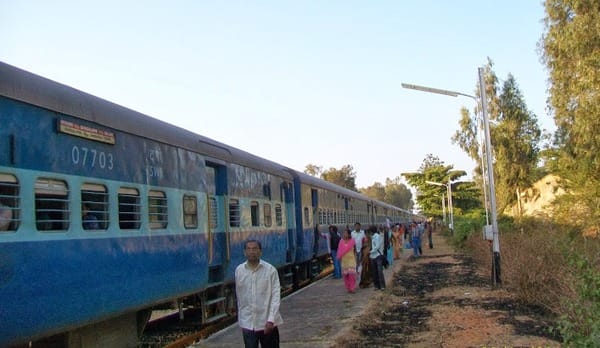
Pic courtesy: skyscrapercity.com
Railway Minister for India is from our own Bengaluru. Bangalore North MP D V Sadananda Gowda is all set to present railway budget tomorrow. What does the Railway Budget mean to Bengaluru?
Here are some expectations from this budget expressed by several citizens of Bengaluru, who have been in touch with Railways and have been bargaining for particular issues. FKCCI president also had some of his own demands.
|
Sumathi Rao Malleswaram Swabhimana Initiative We want the land adjacent to all the tracks inside the city to be kept clean. Malleswaram has a railway station and there is a long track going adjacent to the road. We want this to be kept clean. Railways neglects the land that actually belongs to them and that is one of the reasons why all the hutments come along the track – migrants come and settle down there. Railways turns a blind eye to this. If the Railways take responsibility of their own property, that will be good. |
|
Sampath Ramanujan Bruhat Whitefield Resident Welfare Association The stoppage of trains at the Whitefield Railway Station is very less. We would like the Railways to introduce a stop at Whitefield – this can take the traffic burden off the major roads, as well as connect Whitefield easily and efficiently with the city centre. Also if there is an underpass for walkers and two-wheelers, it will be good. The current railway bridge is very small and cannot handle the traffic. |
|
Muralidhar Rao President, Praja-Raag Namma Railu, the suburban railway project, will decongest Bangalore to a great extent and has been supported by all political parties. I expect this to be formally announced and implemented, through this railway budget. As far as reforms in Railways are concerned, I fully agree with what Swaminathan Anklesaria Aiyar has written in Times of India. Revamp the Railways and form corporations. Let it run independently. |
|
Amith Subramanian Freelance Management Consultant Home Ministry says that FDI can’t be allowed in operations in Railways as this is considered to be a sensitive area. The previous government had taken a decision to allow 100% FDI in Suburban railways. Although, FDI in railways is not the ideal thing but given the poor state of Finances in railways it may not be a bad idea. A proposal was mooted earlier to get BMTC to be part of the SPV for Namma Railu but since then even their financial position seems to have become dicey. In the light of all this, I am not sure what the union budget holds in store for Namma Railu. |
|
S Sampathraman President, FKCCI Railways has always been considered as a social service as majority of users are mid segment population. The fares generally are low and need not be the same always. Presently, modernisation of railways is the need of the hour and huge resources to the extent of Rs.5.6 lacs crores are required for upgradation of railways. Currently, Industries using railway services are rendered uncompetitive due to excessive freight charges which are used to cross-subsidize passenger traffic. There is a need for setting up of Railway Regulatory Authority for mandatory passenger fare and a dedicated freight corridor for timely delivery. The funds from private sectors / investors / FDI and others need to be tapped. Economic reforms are required on a war footing for making railway journey comfortable. Speedy faster trains are the need of the hour and the railways should strive for better connectivity across India. Innovative technologies are the need of the hour. Presently the average speed of trains is too slow even after so many years of independence. There is a need for implementation of audacious plan to push train services to global benchmarks. Some of the areas which require attention are as follows: 1. High Speed Trains
2. New trains between
3. Doubling of Railway tracks
4. New lines
5. Infrastructure
|
Related Articles
Over 3500 Whitefield residents ask Railways to stop at Whitefield
Commuter rail: Just a few miles more to start
Commuter rail plans going nowhere?
Commuter Rail to be a reality in Bangalore: CM
Rajeev Gowda asks Sadananda Gowda to speed up Bengaluru Commuter Rail