Is Metro realignment the only alternative?

Even as the Metro Phase-II is hitting the headlines for the realignment issue raised by the Jayadeva Hospital, citizens have started questioning the process. Here’s Citizen Action Forum’s N Mukunda’s take on this.

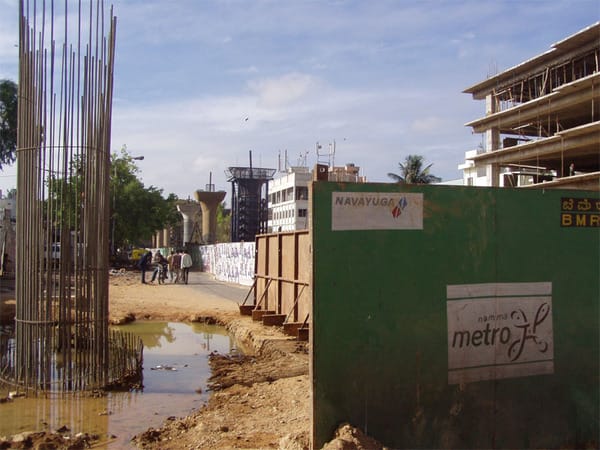
Metro Phase-I has not completed, but the plans for Phase-II have already begun. File Pic.

The new alignment near Jayadeva Hospital has caused panic among residents that many residential properties and commercial buildings on Bannerghatta Road would be demolished.

Here are some thoughts on this.

  1. Why public consultation with residents, experts,users ,metro officials and elected representatives is not being held on pros and cons, alternative routes etc, like the public consultation held by Additional Chief Secretary regarding Signal-free corridor of Koramangala? The project was scrapped unanimously by all stakeholders on direction of the High Court, based on the PIL filed by Citizen Action Forum and other Resident’s Welfare Associations.
  2. While the Metro is passing via Vani Vilas hospital and Bangalore Hospital, R V Road where similar surgeries are conducted, how the vibration will affect the patients in only Jayadeva?
  3. Instead of demolishing many other buildings by realigning the path, why Jayadeva can’t be shifted to Jayanagar General Hospital premises by constructing additional floors or build it on Jayanagar 4th T block bus depot?
  4. Alternatively multilocational Jayadeva Hospitals can be constructed across Bangalore.
  5. It is more easy to demolish a residential or private building rather than a government-owned building
  6. When Phase-I Metro is not completed in R V Road, why should the government think of Phase-II?
  7. Why underground metro or monorail or running of more BMTC buses cannot be considered instead of demolishing properties?
  8. A committee of residents, Metro, Jayadeva, elected representatives and experts should be constituted to look for practical alternative.

Comments:

  1. Vasanth Ramu says:

    Dedicated Bus Lanes and Commuter Rail is an alternative to Metro, whereas people are not ready for the Dedicated Bus Lanes to sacrifice a lane, nor want to travel in unattractive IR trains.

    People do not support once such idea is proposed rather only when their properties are going away alternative ideas come to their mind.

Leave a Reply

Your email address will not be published. Required fields are marked *

Similar Story

,

High transport costs, low support: The daily toll on commuters with disabilities

Disabled persons spend thousands monthly on commuting in Chennai and Bengaluru, as inaccessible transport and meagre pensions increase their woes.

TMN Deepak, a professor of social work who has a physical disability, commutes from Velachery to Loyola College in Chennai for work every day. He owns a wheelchair cum scooter that allows him to cover short distances comfortably, but he avoids public transport. “Instead, I have had to go for an automatic car, which has increased my overall spend, and I had to shell out an additional ₹2.5 lakh for modifications,” he says. Deepak's monthly petrol costs exceed ₹6,000. “I prefer not to use the bus because of inaccessibility,” he explains, highlighting how the lack of accessible public transport forces…

Similar Story

How OMR residents strive for better last-mile connectivity and improved public transport

Residents of Chennai’s OMR push for bus and metro links; FOMRRA’s survey highlights poor last-mile connectivity and urges MTC to expand services.

As commercial development along Old Mahabalipuram Road (OMR) has surged, reliable public transport has become essential. Yet, daily commuters, labourers, office workers, college and school students, and Resident Welfare Association (RWA) staff continue to grapple with limited access to Metropolitan Transport Corporation (MTC) buses. For many, reaching bus stops on the main road is a daunting task, especially since interior localities remain underserved and private operators like share autos rarely venture into these areas. The absence of adequate bus stops and the restricted MTC service forces residents into long, difficult journeys. The worst-affected by this lack of last-mile connectivity are…