The environment is a hot topic everywhere – in offices, in the press, even in classrooms across the world. The need for action to protect our planet is gaining traction, and the first step in addressing the issue is raising awareness.
Among the steps being taken to protect the planet, waste management is a burning theme. E-waste, in particular, is attracting attention since it is well-known that it is one of the most toxic forms of waste. India is the fifth largest e-waste generator in the world and produced 1.7 million tons of e-waste in 2014. The toxic pollutants of e-waste, if not recycled properly, can cause bioaccumulation and are biomagnified using food chain, water cycle and air toxic travel.
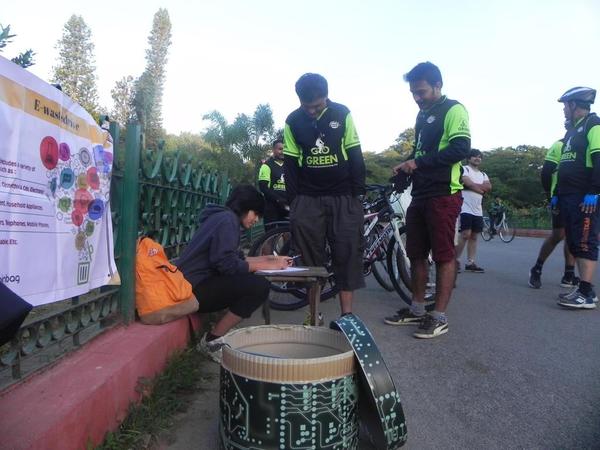
Cyclists queue up to register for the rally. Pic: Achitra Borgohain
Binbag joined hands with Go Green Go Cycling group to raise awareness about the need for e-recycling. About 50 cyclists from the Go Green Group came together on the morning of September 13th to support the cause. The morning started off with registration of the cyclists, who also brought e-waste to dispose with Binbag.
The cyclists then rode for 10 km ride starting from Cubbon Park, and ending at Kanteerava Stadium, and took a pledge to not only recycle on their own, but also spread the message.
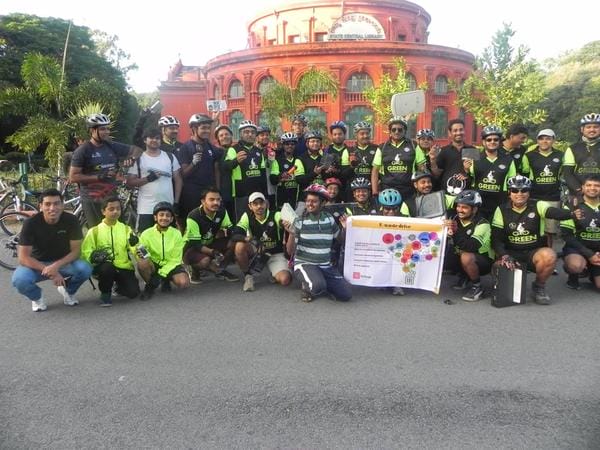
Cycling to raise awareness about e-waste. Pic: Achitra Borgohain
The group plans to come together at regular intervals to conduct more such awareness drives in the future to involve a larger section of the society.
About Go Green Go Cycling
GoGreenGoCycling is a concept of cycling to work encouraged and supported by a group of professionals from various backgrounds. They not only cycle to work, but also organise rides appealing the community to use bicycles for regular commuting and support green causes. More info: www.gogreengocycling.org.
About Binbag
Binbag helps individuals and households to dispose their e-waste responsibly through door-step pickup. By working with authorised recyclers, Binbag ensures e-waste is recycled by following highest standards of environmental safety. Individuals can dispose their old e-junk by simply logging on to www.binbag.in.
Related Articles
Between flames, fumes and bare hands: The untold story of Bengaluru’s e-waste
Lessons in e-waste management
Children pave the way for a plastic-free Bengaluru