It was in April 2018 that a bunch of enthusiasts banded together to make an increasingly chaotic Adyar, a more livable place. This led to a programme called ‘Azhagiya Adyar’ conducted last year at the KNRA Hall in collaboration with the Namma Ooru Foundation (NOF). The event was a big success and it encouraged the bunch to take the movement to higher levels.
It was around the same time that the Greater Chennai Corporation (GCC) announced plans to implement source segregation of waste, door-to-door collection and proper disposal by GCC of such segregated waste through composting, bio-methanation, recycling etc. We sensed the opportunity to work closely with GCC and Swachh-Bharat programmes to take these ideas at the ground level to every resident.
Formation of ROKA
The dedicated volunteers of Kasturba Nagar, each otherwise busy with her or his own work, formed a core group and took it upon themselves to conduct a door-to-door campaign — helping resident complexes get their color-coded bins, addressing resident meetings on how to segregate, going around with garbage collectors to ensure that both the residents and the collectors were following the protocol and that there was no mixing.
Seeing the plight of the collectors, who often had to handle hazardous waste, we arranged for gloves and aprons through voluntary efforts. It is quite another matter that our collectors somehow find them difficult to use!
Late 2018, we felt that our efforts would get better attention among the residents and traction among officials only if we formally founded a Resident Welfare Association (RWA). ROKA (Residents of Kasturba Nagar Association) was thus formed in December 2018 and formally launched on March 23, 2019. The function was yet another opportunity for exhorting residents to follow good SWM practices.
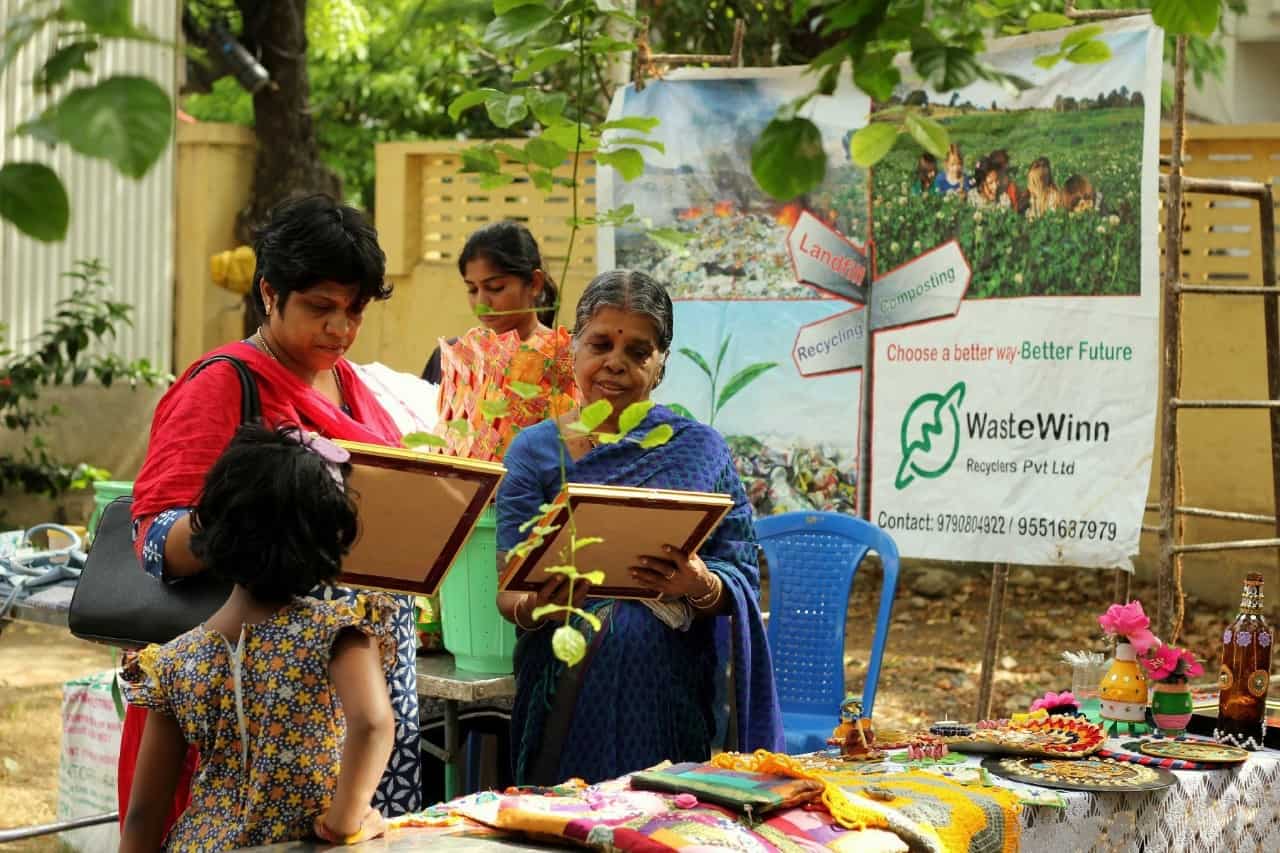
Residents participate in the Azhagiya Adyar event conducted by ROKA
Understanding micro issues
Apartment complexes, in the meanwhile, had their own myriad issues: where to keep the bins, would they stink and attract rats, would ROKA take responsibility if collection didn’t happen for a day etc. But, the most important point raised was the handling of wet waste by the maids since they could no longer just toss a plastic bag into the green bin on their way home. The volunteer group therefore rightly felt that the more important stakeholders were after all maids, and possibly watchmen who could be trained to keep a hawk’s eye on who threw what and where.
We, therefore, decided to sensitize them through a half-day fun-filled programme. This didn’t completely solve the problem as maids didn’t want any extra work of handling wet waste. So, our next target was to help homemakers explore some unique and innovative solutions. We also conducted frequent surprise checks to see if it had worked. It was not an unqualified success.
To add to our woes, we have a number of eateries ranging from branded up-market restaurants to simple pushcart vendors. We were surprised to find even big restaurants resorted to dumping their food waste into roadside dumpsters overnight. We had to go back to GCC with proof so that this menace could be curbed. The smaller eateries continue to litter as they do not follow the three-bin practice. Unless they are dealt with sternly by GCC, this menace will not stop.
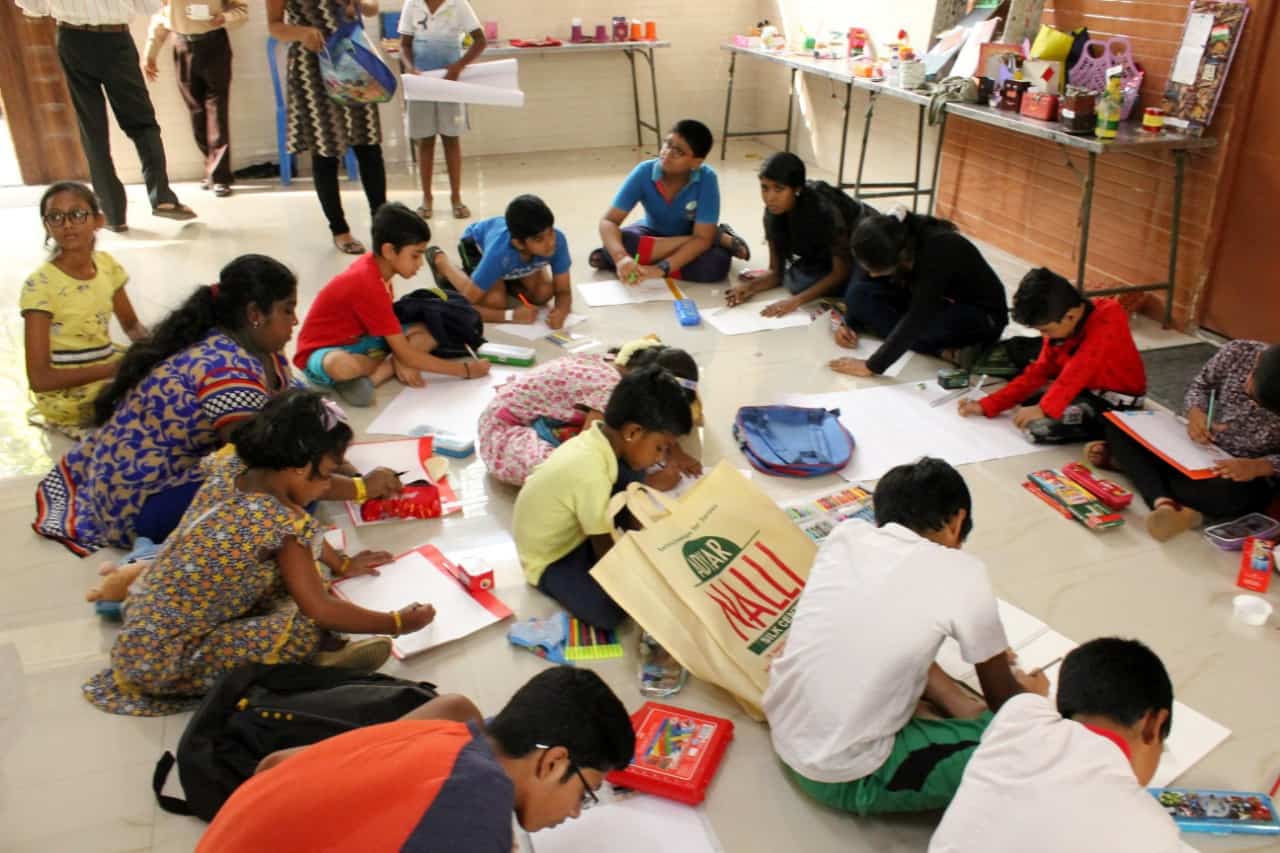
An awareness session to the kids about waste segregation. Pic credit: ROKA
Challenges…and success!
As things started to improve and in some parts of the Kasturba Nagar, we could achieve about 60% compliance, tragedy struck in the form of two things. One, the current contractor’s term was coming to an end and the uncertainty led to clearance issues. Both door-to-door and roadside clearing suffered and mounds of garbage started piling up. Some irate residents even blamed us for the situation.
Also, one of our dedicated collectors had a personal tragedy to cope with, compounding the problems. That was when we realized how a single person could make a huge difference. We arranged a joint meeting with GCC’s Deputy Commissioner (Health), Mr. Madhusudhan Reddy I.A.S. and the contracting company to resolve issues. On May 12th, ROKA arranged a zero-waste campaign along with Civic and Consumer Awareness Group (CAG) and obtained pledges from residents to follow SWM practices.
The way ahead
Our problems are far from over. We are struggling to get a composting facility nearby which should dramatically change proper wet waste collection. We see some light at the end of the tunnel now. We still have no satisfactory solution for collection of bulk garden waste as Adyar has thick foliage. Many residents gave up because of these issues and ROKA volunteers need to now go on overdrive again to cajole them.
We want roadside bins to be removed and source segregation more strictly enforced by the GCC. There is still no system in place to handle bulk waste generators like commercial establishments. Hazardous waste handling, from small and big clinics, dental hospitals etc is non-existent.
The new norms of segregation and collection that GCC is announcing would require ROKA volunteers to re-dedicate themselves for better results. As things progress, we only hope that Adyar will go back to being the neat, calm and well-laid out neighbourhood that it once was.
[Janani Venkitesh, a home composter and the Secretary of ROKA also contributed to this article. Janani initiated source segregation in Kasturba Nagar and actively involves herself with environment, waste management and sustainability.]
At last the key stakeholders (Maids/Watchmen/House keeping Services of Corporation/Rag Pickers/Scrap Dealers/Waste Recycler) are recognized in a land which has deep rooted apathy for dignity of work and need their share of right to life. People need to be taught that they need to be disciplined, responsible and pay for services/utilities and not steal from the poor who pay taxes in the form of GST.