At least one pedestrian life in Hyderabad was lost every other day in 2019.
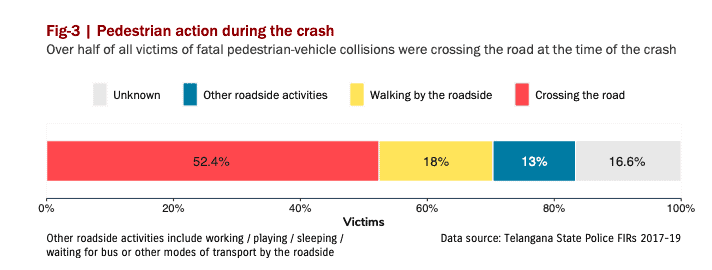
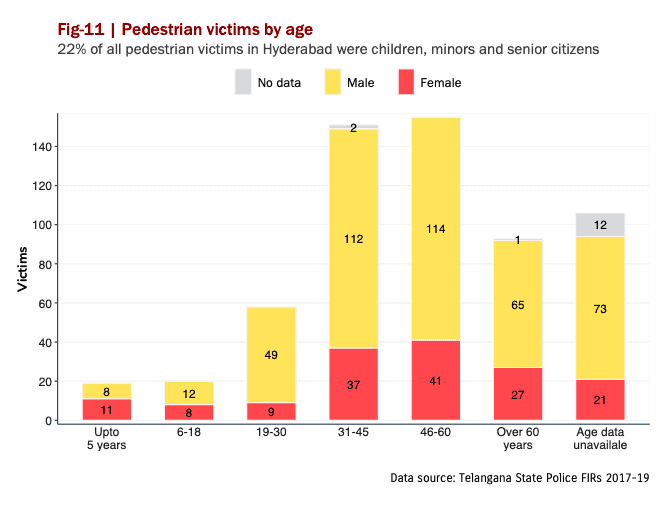
In total, 602 pedestrians lost their lives on the roads of Hyderabad between 2017 and 2019. More than half of them (52.4%) were hit by vehicles while crossing the road. A few others were victims of road crashes as they went about their morning walk, or while waiting for a bus or other modes of transport by the side of the road. And at least 14 children, all under 10 years of age, got hit by vehicles while playing by the roadside during this period.
The Footpath Initiative is a project aimed at understanding pedestrian – vehicle collisions through data and regulation. Through this project, and studies including this one on Hyderabad, we aim to raise awareness of issues affecting pedestrian safety in hopes of making neighbourhoods in cities safe for walking.
Our latest study is an attempt to understand such fatal road crashes in Hyderabad in hopes of informing future interventions aimed at improving pedestrian safety in the city.
Data collection
First Information Reports (FIR) of fatal road crashes leading to pedestrian deaths form the basis of our analysis.
The six GHMC zones span three police jurisdictions, of which we accessed data recorded by two police commissionerates. This data covers fatal crashes in five of the six GHMC zones. Access to this data was gained through RTI applications we managed to post days before the pandemic struck India in March.
Strict lockdown measures in our neighbourhoods have since upset a trip to the post office. As a result, we have been unable to get the relevant data from the third police commissionerate and, consequently, had to exclude GHMC LB Nagar zone due to insufficient data. We hope to extend the study to this zone once we have access to data.
Summary of findings
Through our study we found:
- 52.4% of pedestrians lost their lives trying to cross roads in Hyderabad between 2017 and 2019
- More pedestrians were hit by vehicles mid-block than at intersections.
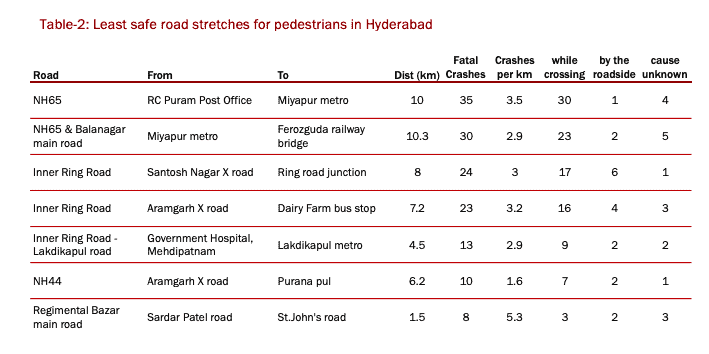
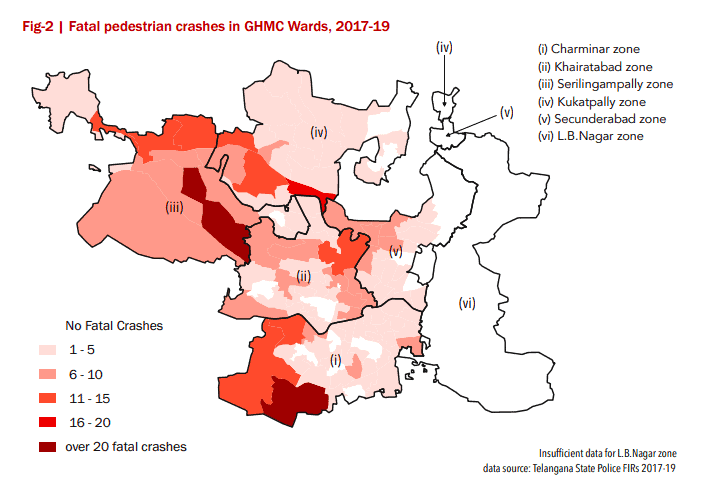
- The Inner Ring Road stretches in Charminar zone (through Chandrayangutta X roads and Aramgarh X roads) and NH65 across Serilingampally and Kukatpally zones (from Bharath Nagar to Miyapur) were particularly dangerous for pedestrians to cross or walk along the side.
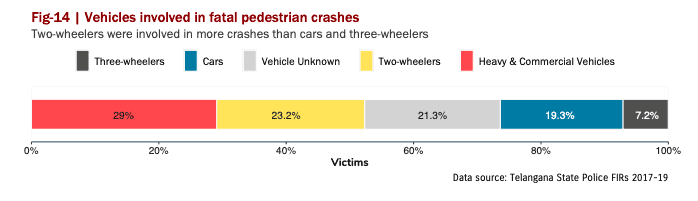
- Heavy and commercial vehicles (lorries, buses, garbage trucks, vans, etc) were involved in 29% of all fatal pedestrian crashes.
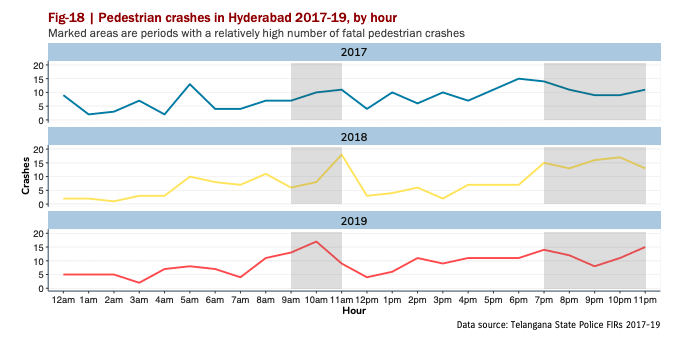
- 9-11 am and 7-11 pm proved the most dangerous times for pedestrians in Hyderabad.
- At least 14 children lost their lives playing by the side of the road, stressing the need for safer play areas in the city.
The full study can be downloaded here
[The post was originally published in the blog The Footpath Initiative and has been republished with permission with slight modifications. Read the original here.]