It was exactly a year ago that the Chennai Unified Metropolitan Transport Authority (CUMTA) was launched with much fanfare. The media had at that time hailed it, claiming that it was the solution to all the ills that city’s public transport systems faced – each of them striking out in different directions and with no connection to each other.
What was then forgotten was that even then the concept was seven years old. It had been approved by the Legislature in 2011 but for reasons best known to the Government, the required notifications were never issued. The change in political regime in 2011 is generally believed to be the reason why CUMTA was never notified. If so, this was yet another example, and in TN there are many, of how the public suffers at the whims of those in power. The CUMTA was an excellent scheme and its non-implementation has helped nobody.
In January 2019 it was relaunched with much fanfare and what’s more notified as well, with no explanation for the intervening delays. But then 12 months later, CUMTA is as clueless as ever.
The CUMTA as originally planned was to chiefly have a planning function and oversee the work of several agencies involved in the running of the transport systems. It was also to periodically revise and upgrade its plans. Headed by the Transport Minister, it was to have the Chief Urban Planner (Transport) of the CMDA as its Member-Secretary. Others on board were the Chief Secretary and the Vice-Chairman, CMDA (both ranking as Vice-Chairpersons), the Secretaries of the Departments of Finance, Transport, Home, Housing & Urban Development, and the General Manager of the Southern Railway.
Under CUMTA it was envisaged that all transport systems – buses, the suburban railway, the MRTS and the Metro being the main players – would all function in a fully integrated fashion. Commuters would be expected to switch seamlessly from one system to another without having to buy tickets at all the intervening stages.
But of course, such a paradise was not vouchsafed to Chennai and for this we must thank the usual bureaucratic hurdles. One of the main issues plaguing our mandarins is the choice of the person to head CUMTA. Initially it was proposed that the Chief Planner of the CMDA would be the Member Secretary or CEO of CUMTA. This was later changed, with a bureaucrat to head the body. This has been questioned by the Planners who point out that in other States it is one of their ilk who heads the body. The tussle continues as of now.
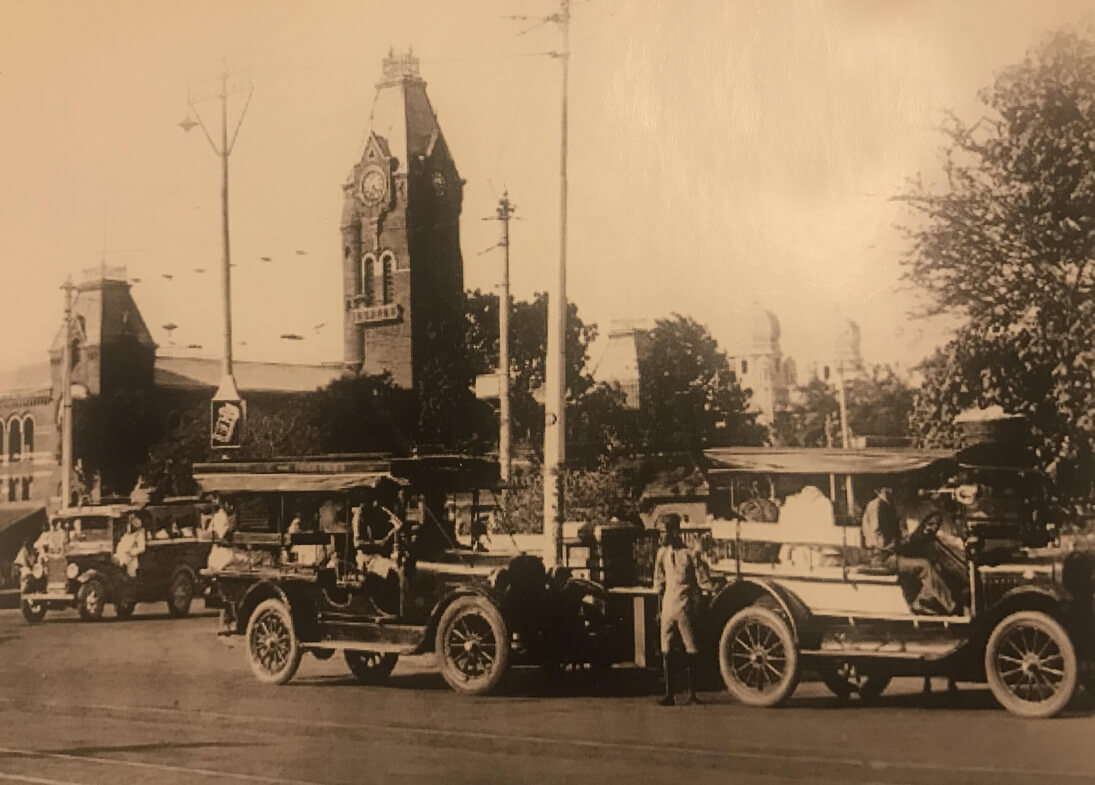
Private buses waiting outside Central Station in the 1920s.
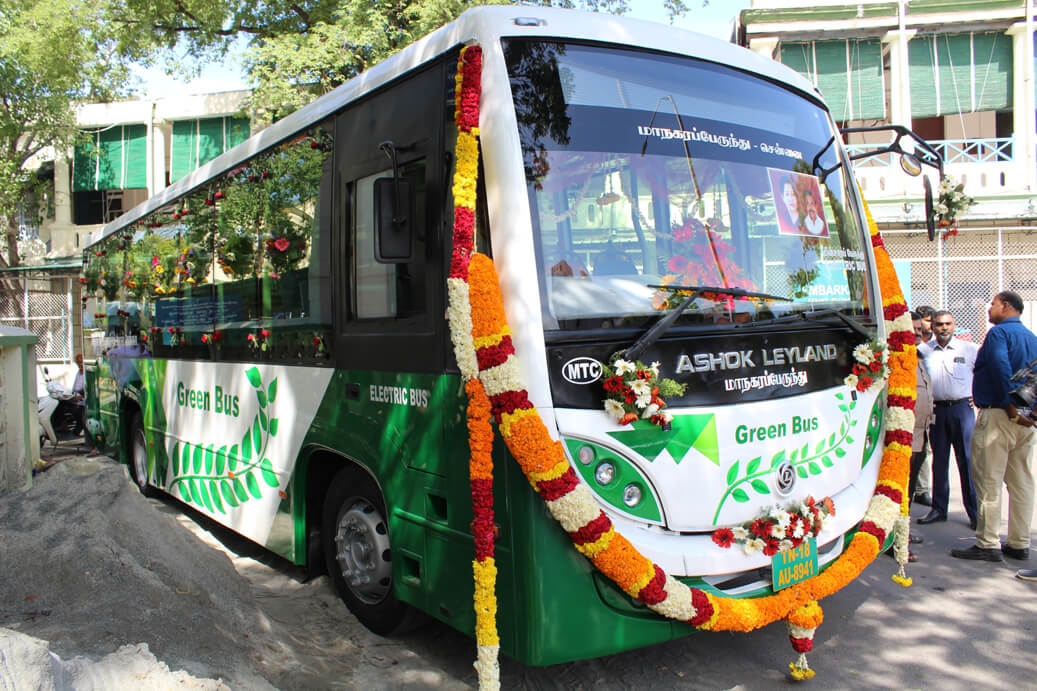
Newly launched “Green” bus on the day of inauguration.
Hanging fire owing to such delays are several projects. The World Bank has made it clear that its funding of the Chennai City Partnership initiative is subject to CUMTA getting off the ground. Also in a limbo is the Rs 500 crore Intelligent Transport System that aims to provide the city a smart way to commute using the latest communication and computing technologies, thereby making for safer and faster travel. This was in collaboration with Japan International Cooperation Agency and that body too had made it a precondition that CUMTA should be implemented. In fact, that was the chief impetus for the State Government to dust the old scheme and relaunch it. But a year later, with little or no action, the city has to wait that much longer to get integrated transport systems in place.
In the meanwhile, the Metro is very keen to get going with its second phase. The very viability of the system depends on getting the extended operations going. But with CUMTA nowhere in sight, it looks as though we will get yet another standalone system, that will only add to the urban chaos.
This story was first published on Madras Musings. It has been republished with permission. The original article can be found here.