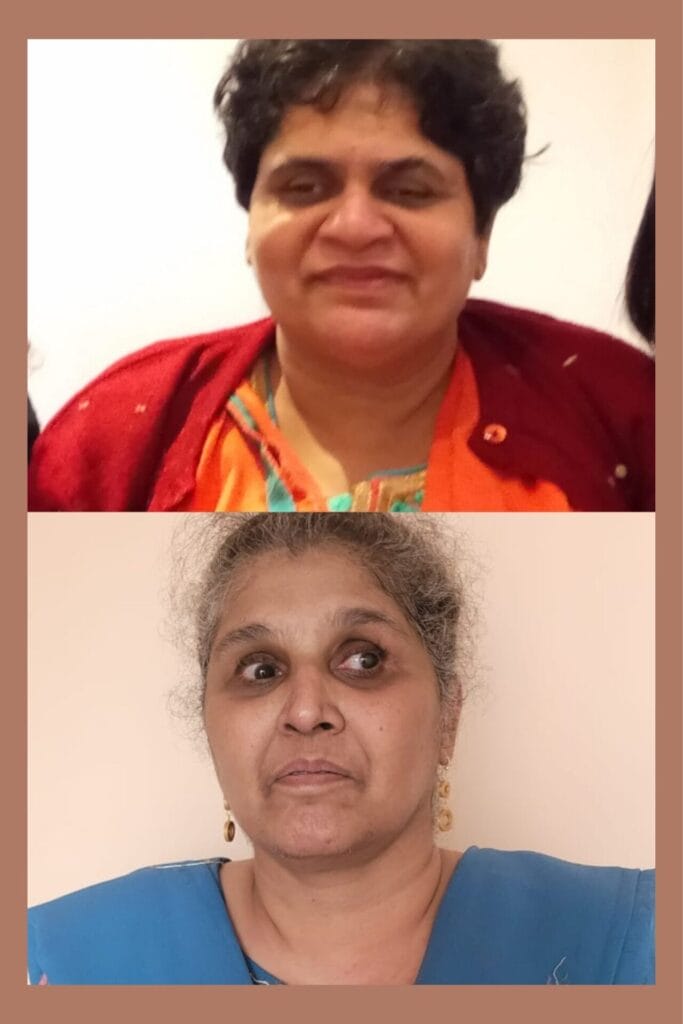
Every morning, Samidha Dhumatkar travels from her home in Mumbai’s western suburbs to Churchgate, where she works as a telephone operator at a university campus. Her journey involves taking a rickshaw, boarding a train, and walking to her workplace, similar to thousands of other Mumbaikars who commute daily. However, as a person with a visual disability, Samidha’s commute is fraught with threats to her safety.
In their book, Why Loiter? Women and Risk on Mumbai Streets, writers Shilpa Phadke, Sameera Khan, and Shilpa Ranade, argue that spaces are not neutral. Moreover, they are not designed equally. “Across geography and time, men and women do not have the same kind of access to space, nor do they use it in quite the same way,” the authors say.
According to the 2011 census, there are 26.8 million persons with disabilities in India, of which 11.9 million are women. Samidha’s disability amplifies the dangers that she faces as a woman navigating public spaces. Safety at the intersection of gender and disability is complex, and for women with disabilities, the threats are multiplied.
Read more: Most urban schools violate law, exclude children with disabilities
Disability, consent and gaps in sex education
Nidhi Ashok Goyal, Founder and Executive Director of Rising Flame, works for the rights of persons with disabilities, especially women and youth. She also serves on the core group of the National Human Rights Commission. Having lost her sight in her teens, Nidhi was advocating for women with disabilities even before establishing Rising Flame.
She emphasises the need to view disability through an intersectional lens. Sharing an example, she recalls being suddenly gripped at the waist by a female security guard while boarding a flight, in an attempt to guide her through a narrow space. Nidhi asks, “Which other woman would you feel comfortable grabbing by the waist? Because of disability, many aspects of womanhood are instantly ungendered.”
This incident foregrounds the violation of bodily autonomy experienced by women with disabilities. Such violations of consent are often practised under the guise of protection. This can take severe forms such as forced abortions and sterilisation of disabled women. Or in other ways, such as excluding them from sex education by assuming that they will not have sexual lives or want to reproduce. Depriving them of this knowledge exposes them to the risks of sexual violence, unwanted pregnancies, and sexually transmitted diseases.
Sarah, a Delhi-based lawyer who has been diagnosed with bipolar disorder, points out how the lack of sex education can particularly leave young adults vulnerable. “Most mental illness diagnoses happen around the age of eighteen, as you enter adulthood. This is the most vulnerable period. And because there is a lack of sex education, you don’t know what birth control is, as these conversations rarely happen at home or in schools.”
Support of a limited guardian
Provision 14 of The Rights of Persons with Disability Act, 2016 (RPwD Act, 2016) allows limited guardianship, where decisions are made jointly with the person with a disability for specific situations. Yet, families often make medical decisions about women with disabilities without involving them. Such violations of consent persist despite Section 25(k), which mandates government schemes to promote and provide sexual and reproductive healthcare for women with disabilities.
Read more: Accessibility in crisis: Climate disasters expose neglect of persons with disabilities
Safety at risk
Women with disabilities also face heightened risks in everyday public spaces, where violations of consent and safety take more immediate and physical forms. When Samidha was in her early twenties, she travelled to Worli for a course. One evening, she asked a passenger at the bus stop to alert her when her bus arrived. The man not only followed her onto the bus but also sat behind her and groped her through the gap between the seat and backrest. Worse, he got off at her stop and offered to help her home. Samidha had to take refuge in a friend’s building to throw him off before returning home.
While both women with and without disabilities face dangers like stalking, unwanted attention, and groping, the latter are more vulnerable. Samidha says, “Sighted women can gauge a person from their body language and facial expression. A blind woman cannot do that. She will not be able to understand their intention till the person offering help touches her. She may not even know if the person standing next to her is a man or a woman.”
They may often need assistance, depending on the nature of their disability. For example, a blind woman may require help crossing the road, says Abhidha Dhumatkar, head of a local college’s History department. She is Samidha’s sister and also blind from birth. She explains that these moments of reliance can leave women with visual disabilities vulnerable to inappropriate touch. Many people, she adds, approach under the guise of offering help but use it as an opportunity to touch them without consent.
Access is gendered
“We often don’t see access as gendered. We see it as a question of dignity, right to education, and right to employment. But we don’t see it as a right to safety. And it’s absolutely critical to look at it that way,” adds Nidhi.
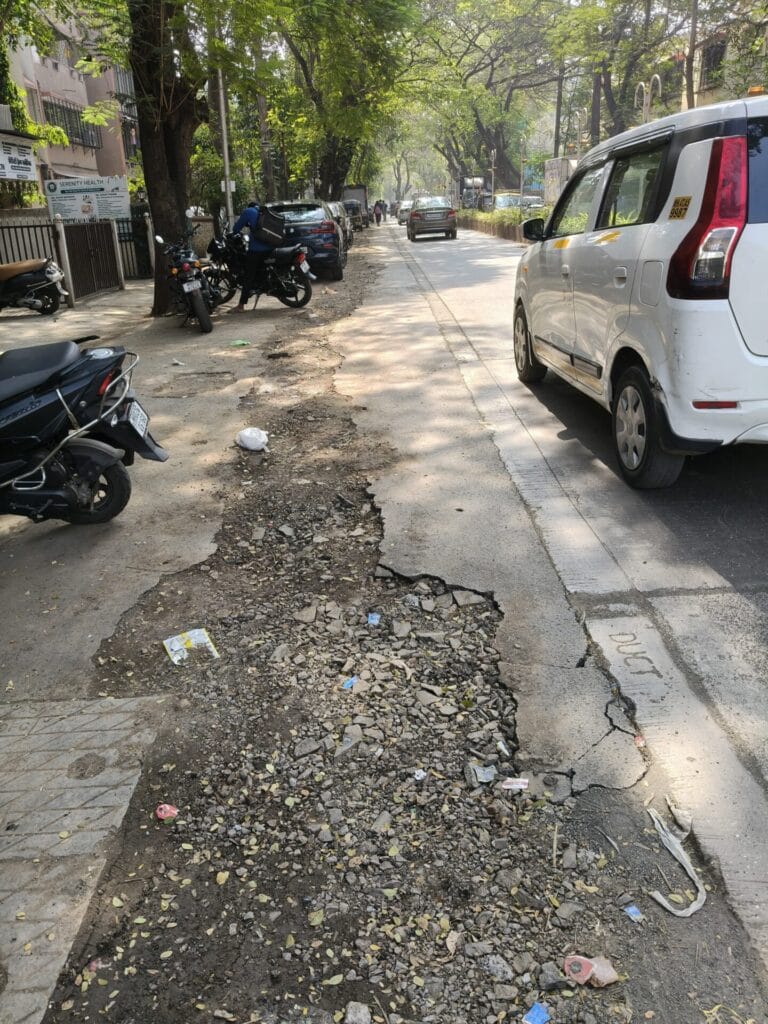
Poorly designed public transport invisibilises persons with disabilities by not taking into account their needs. Suburban trains in Mumbai do not provide wheelchair access. There is an abject failure on the part of the municipal corporation in providing footpaths. Where footpaths are present, they are narrow, uneven, have bollards which do not allow wheelchairs to pass, or worse, have open manholes. Multi-sensory cues at road crossings, which let a blind person know it is safe to cross, seem like an impossible thing in a scenario where basic infrastructure, such as footpaths are lacking.
Absence of a disability friendly public transport system means either relying on private transport or rickshaw and taxi services. Jasmina Khanna, a wheelchair user who has cerebral palsy and is the founder of the NGO Access to Hope, says that she hesitates to use these services while travelling alone as she feels unsafe with an unknown driver. She also points out that there are no disability friendly public toilets.
Read more: Home-based education: Bridging the gap for children with disabilities
Filial and financial control
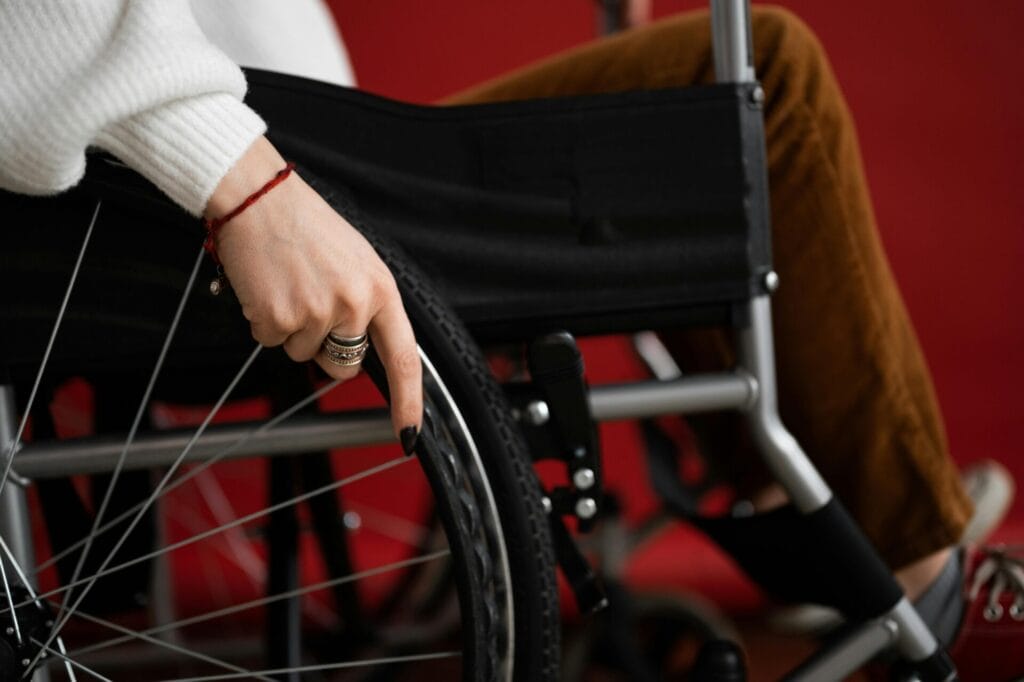
This exclusion of persons with disabilities from public life clearly reflects an assumption that they, especially women, do not have lives outside the home. Families often keep them hidden away, and social stigma is so strong that many women are taught to feel grateful just for having a place to live. Nidhi explains that this constant pressure causes many women with disabilities to believe these harmful stereotypes about themselves.
Violence against women with disabilities
- Studies show that women with disabilities are more likely to face intimate partner violence (IPV). A cross-sectional study conducted in informal settlements in Mumbai showed that there is a 50% greater chance of women with disabilities reporting emotional, sexual or physical IPV than non-disabled women.
- Women who face IPV are more likely to face depression, anxiety, and suicidal thoughts.
- According to the World Health Organisation (WHO), one in three women faces intimate partner and sexual violence the world over. These risks are amplified for women with disabilities.
- This often manifests as daily microaggressions, such as slightly moving furniture to confuse a blind person, speaking into a person’s deaf ear, or hiding assistive devices, say activists.
Women with disabilities are also not seen as people capable of earning their livelihood, spending their money, and making financial decisions independently. Women Citizen Matters spoke to, told us about the difficulties they face in using an ATM, because of their locomotor or visual disability. Entering CAPTCHA might be difficult too, especially when the audio quality is poor. While all persons with disabilities face these challenges, what makes it worse for women is the social conditioning which expects all women to relinquish financial control to men.
Legal recourse
Activists say that while laws exist to protect persons with disabilities, enforcing them is difficult. Section 4 of the Act requires governments to ensure women and children with disabilities enjoy equal rights. Section 89 states that violations will lead to a fine of ₹10,000, and repeated violations can result in fines from ₹50,000 up to ₹5,00,000
Anchal Bhateja, a lawyer working with Vidhi Legal Centre, and a person with a visual disability, says, “The penalties provided under the Act are very low…any offence against them is treated under the general criminal law framework, and there aren’t any heightened punishments under the RPWD Act as such.”
How to ensure safety and legal protection for women with disabilities
- Increase fines and legal punishments under the RPWD Act to effectively deter offenders and prevent repeat crimes.
- Reform courtroom procedures (like cross-examinations and evidence filing) to be inclusive of people with different disabilities rather than “able-bodied centric.”
- Accelerate the delivery of justice to ensure perpetrators are held accountable quickly, and victims do not wait long for a resolution.
- Make provisions that address the unique safety challenges and ensure the rights of women with disabilities.
- Make public spaces and public transport accessible for everyone, especially women with disabilities.
Also read:
- How water crisis deepens gender inequality
- Why accessibility remains elusive at Bengaluru’s bus stops and terminals