“For the last five years, I’ve only come to Govandi to report on crime or garbage,” admitted a reporter from a national newspaper during the Govandi Arts Festival 2023. “This is the first time I’m here to cover a story about art, and it’s one created by the youth themselves.” He went on to publish an article titled Govandi Arts Festival: Reimagining Inadequately Built Spaces Through Art and Creativity. It featured young artists who dared to tell their stories using their own voices and mediums.
One might wonder why a place like Govandi, home to Mumbai’s largest resettlement population, burdened with the city’s lowest Human Development Index (0.05), and often associated with crime, public health issues, overflowing garbage, inadequate infrastructure, and daily social and economic marginalisation, would turn to the arts.
In a place where survival is the priority, why would creative expression matter? Yet, it was precisely this question, this dismissal, that ignited a powerful response from the youth of Govandi. Their answer came through a movement and a question of their own: Humari jagah kahan hai? Humari pehchaan kahan hai? (Where is our place? Where is our identity?)
Starting a movement in Govandi
The initiative emerged over four years of working closely with the youth of one of Mumbai’s most densely populated resettlement colonies, Natwar Parekh Compound, through our Neighbourhood Regeneration initiative at Community Design Agency.
Spread over just five hectares, this settlement crams over 5,000 families, relocated from various slums across the city, into a rigid grid of 61 buildings on a 5-hectare plot. Almost a two-tier city within a city, it is home to nearly 3,000 children and over 5,000 young people. In this tightly packed environment, where daily life is shaped by overwhelming infrastructural challenges beyond their control, it was often the softer, art-led interventions that resonated most deeply with the youth.
Read more: Govandi residents resolve to push for more change after positive Bombay HC order
Through creative expression, they found agency within their own spaces, otherwise typically overshadowed by systemic neglect. Art became more than an activity. It became a tool of imagination and care. A means to build solidarity and demonstrate the tangible power of collective action.
The Govandi Arts Festival was a way to reclaim Govandi’s identity, moving beyond narratives of crime and garbage. It challenged the area’s ghettoisation, spotlighting the talent, creativity, and resilience of its youth. It was, and continues to be, an act of rewriting place and belonging in the face of social invisibility and spatial marginalisation.
With the support of British Council’s India UK Together Season of Culture in 2022 and Curry Stone Foundation, we developed the first edition of the festival through Youth Arts Mentorship and Artist Residency programmes. We brought together artists from across Mumbai to engage with the talent within Govandi and create works across the mediums of theatre, public art, rap, filmmaking and photography, writing animation and more.
Reclaiming their space
Code 43, a rap group named after the pin code of Govandi, became a popular antidote to the narrative of having to hide their address to get jobs or education. In the last two years, the rappers have performed in over 30 paid gigs. They have mentored students of other prestigious schools and colleges. Our women filmmakers’ works, Those Three Months and Nishaan, have been screened both nationally and internationally. They have also participated as panellists in some of these events.
The residents cleared the largest open ground in Natwar Parekh to host the festival. For the past 15 years, this space had been used to park old, abandoned cars. As part of the grant, we organised the first-ever neighbourhood-led lantern procession in collaboration with Lamplighters, a collective of Bristol-based artists and our UK partner.
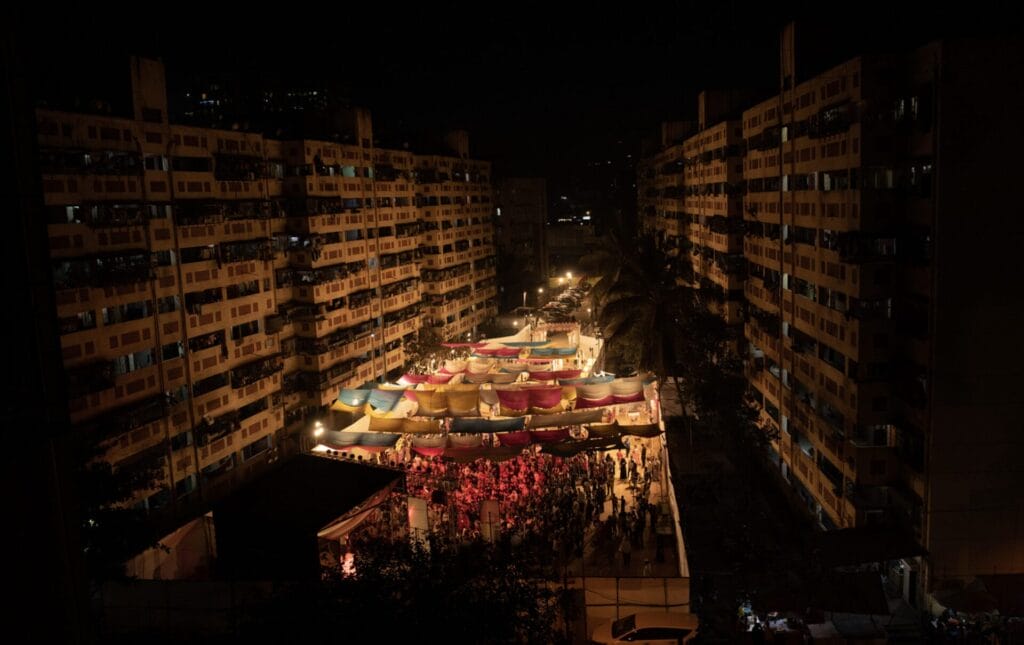
After the first festival sparked change, we focused on sustaining the creative movement, continuing to grow, create, and collectivise. In the last two years, the residents have not allowed the ground to go into its previous state of decline. Children now play here, and the elderly host celebrations and religious gatherings. The growing creativity among the youth inspired the launch of the ‘Ek Aasman Tale’ initiative, leading to two new community spaces—Awaaz and HumRaahi. These offer accessible, creative learning and well-being programmes for youth and women. Built in 2022, Kitaab Mahal has now begun operating as a dedicated children’s library.
Learning and building together
Community members who were once participants have transitioned into roles of leadership. They have become the facilitators and mentors for newer participants for the upcoming second edition of the festival in December. Parents who were first hesitant to send their children for creative arts mentorships are now encouraging them and actively participating as well.
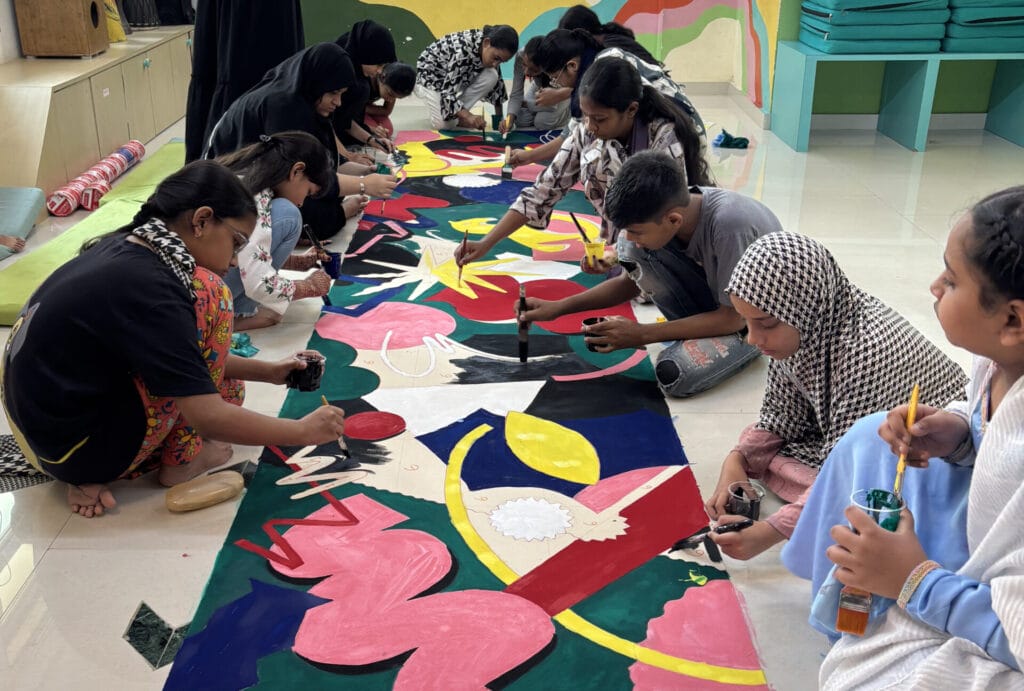
It’s a delight to watch a young person sharing a perspective that an older person had never considered, while an elder might offer wisdom that helps ground the younger generation, all happening in the same safe space. The community’s relationship with city authorities like BMC and MMRDA grew stronger. Now they are able to reach out to these bodies more easily than ever before because the arts festival got Govandi its due attention.
For the upcoming edition, our programmes leading up to the festival days are designed to amplify the voices of Govandi in discourses where their perspective and voices are systemically absent. This upcoming edition of our festival brings together a collective of over 100 youth, women and transgender artists from Govandi, and a cohort of 25 mentors, artists, residents, and collaborators who have embedded themselves in the neighbourhood for the last six months.
Participants will explore over ten art forms, including game design, textile arts, theatre, and filmmaking. The five-day event features workshops, screenings, performances, exhibitions, and games. All the programmes are rooted in themes of collective care, friendship, migration, the environment, and gender identity.
Read more: Govandi residents try to safeguard public library and ground
Govandi’s ode to creative identity
The journey has not been without challenges. But we’ve learned that community-led work must remain deeply responsive to the lives, rhythms, and realities around us, and that kind of work takes time. From an early monsoon disrupting timelines to unpredictable exam schedules of our youth artists, overlapping festivities, uncertain city-level permissions, and the long, often invisible hours of proposal writing that go unanswered, every step has tested our resolve. Yet, we continue. We adapt, we hold space, and we move forward, trusting that, like before, it will all come together in ways that matter.
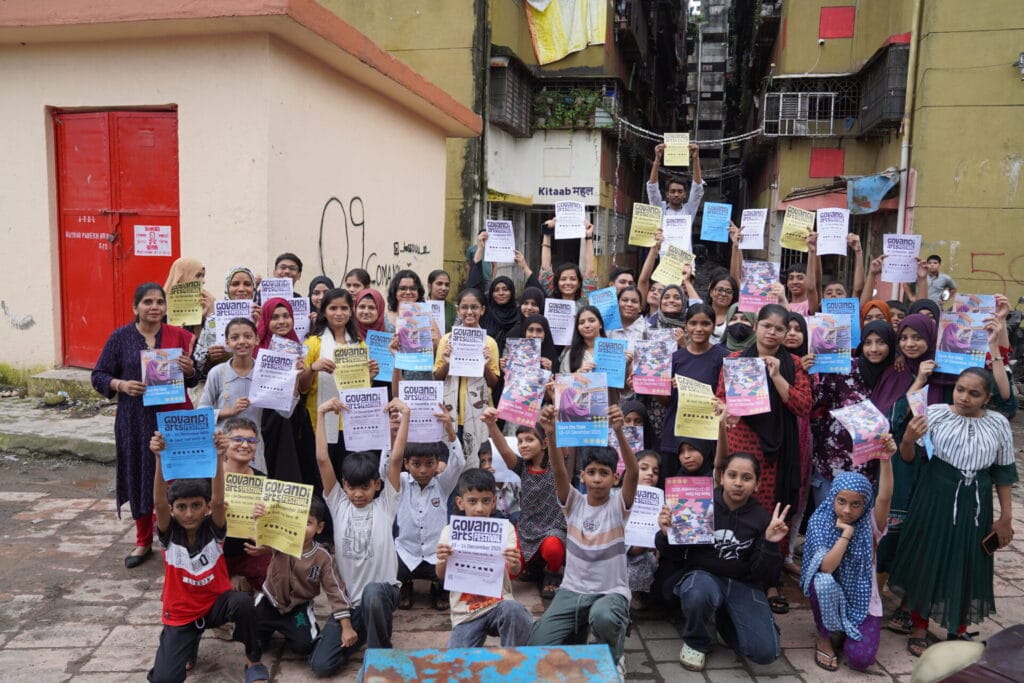
The Govandi Arts Festival is no longer just an event; it is a movement, a reclaiming of space, identity, and imagination. What began as a question, Humari jagah kahan hai? Humari pehchaan kahan hai? has become a bold, ongoing answer written in murals, films, rap verses, performances, and acts of community care.
In a city that often chooses to overlook places like Govandi, this festival refuses invisibility. It reminds us that even in the most densely packed, underserved corners of the metropolis, creativity thrives, not despite hardship, but in response to it.
As we prepare for the second edition that will be held from December 10–14, we invite the rest of Mumbai and beyond to show up. To witness what happens when young people are trusted, when communities are seen not just through the lens of what they lack, but through the abundance of what they create. This festival is an invitation: to listen, to learn, and to celebrate a future that’s being authored from the ground up.
[Govandi Arts Festival 2025 is made possible by IMC Trading Charity Foundation and UNESCO x SEVENTEEN’s Going Together Grant Scheme 2025. And hosted by the community of Natwar Parekh Colony and the Community Design Agency.]