Housing has become a battleground in Bengaluru, where developers target every profitable corner of the city. The Ejipura EWS housing complex stands as a stark example of this. A site once home to urban poor families, this was violently cleared in 2013-14 following a Karnataka High Court order. The court order resulted in the demolition of the quarters and the subsequent eviction of the occupants. The legality of the eviction and the delay in redevelopment continue to throw up important questions, but equally urgent is a focus on the lives of the evicted families, many of whom moved to Sulikunte village.
Karnataka Slum Development Board (KSDB) Quarters, Sulikunte is a housing settlement near Kodathi village, 14 kilometres southeast of the eviction site. Twelve years since the demolition in Koramangala, a demolition carried out to provide ‘improved’ housing for the evicted occupants, not much has changed for them in terms of the quality of life. An estimated 160 families live in Sulikunte, scattered across 900 apartments, arranged in 45 blocks of 20 one-bedroom units each.
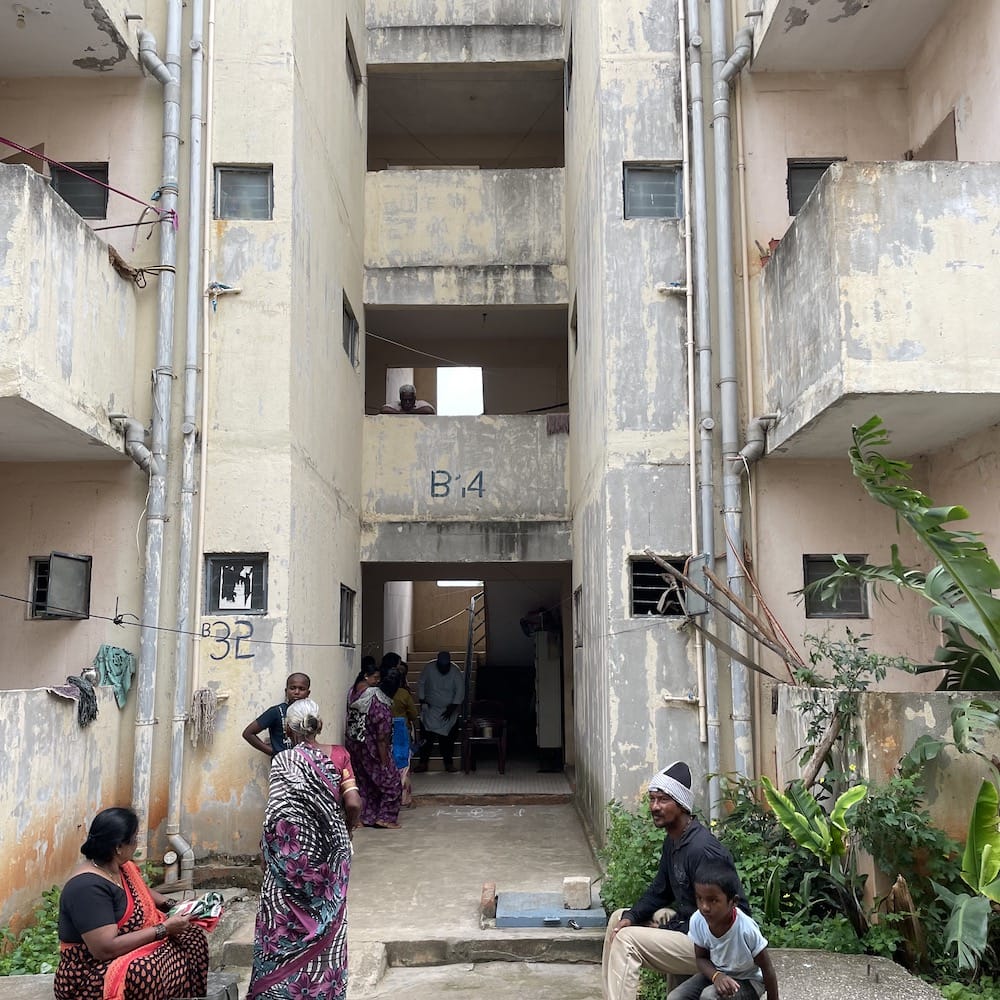
Previous reports have documented the complicated delays in allotment and questions surrounding the legitimacy of the process. As opposed to the 1,512 homes demolished, only 900 apartments were made available for the relocated families.
Incomplete allotment implied that these apartments have not been assigned in an orderly manner. Some families, despite having received a unit in this housing complex, have chosen to lock them up and move back as tenants in Koramangala, because of the poor living conditions here.
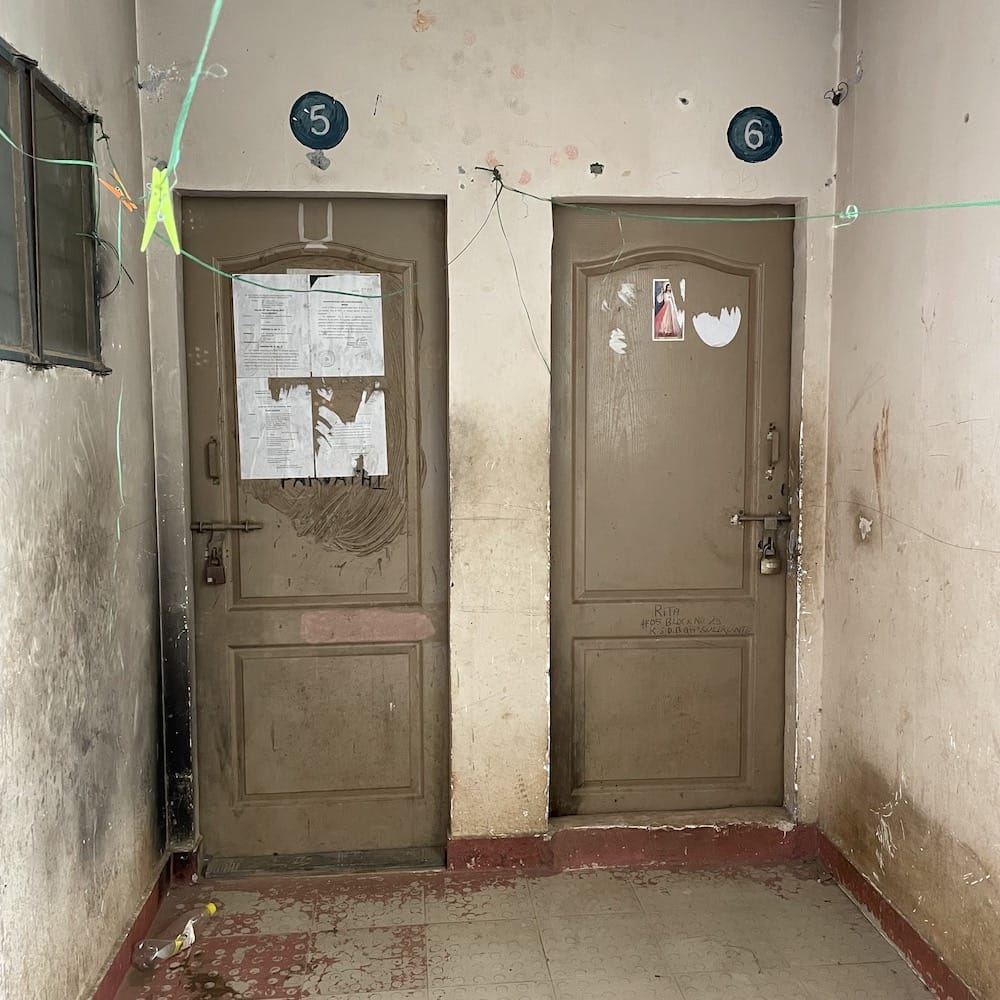
Most residents are Dalits and Muslims who once lived in the EWS quarters in Koramangala before demolition. It is important to note that they were tenants there, not the original allottees. When redevelopment in Ejipura is completed, only original allottees will receive new housing there. Therefore, for these erstwhile tenants, the relocation to Sulikunte is permanent from the state’s point of view.
So, what kind of life has the state provided them in their new habitat? A visit to the area presents a rather alarming reality.
A life lived in darkness
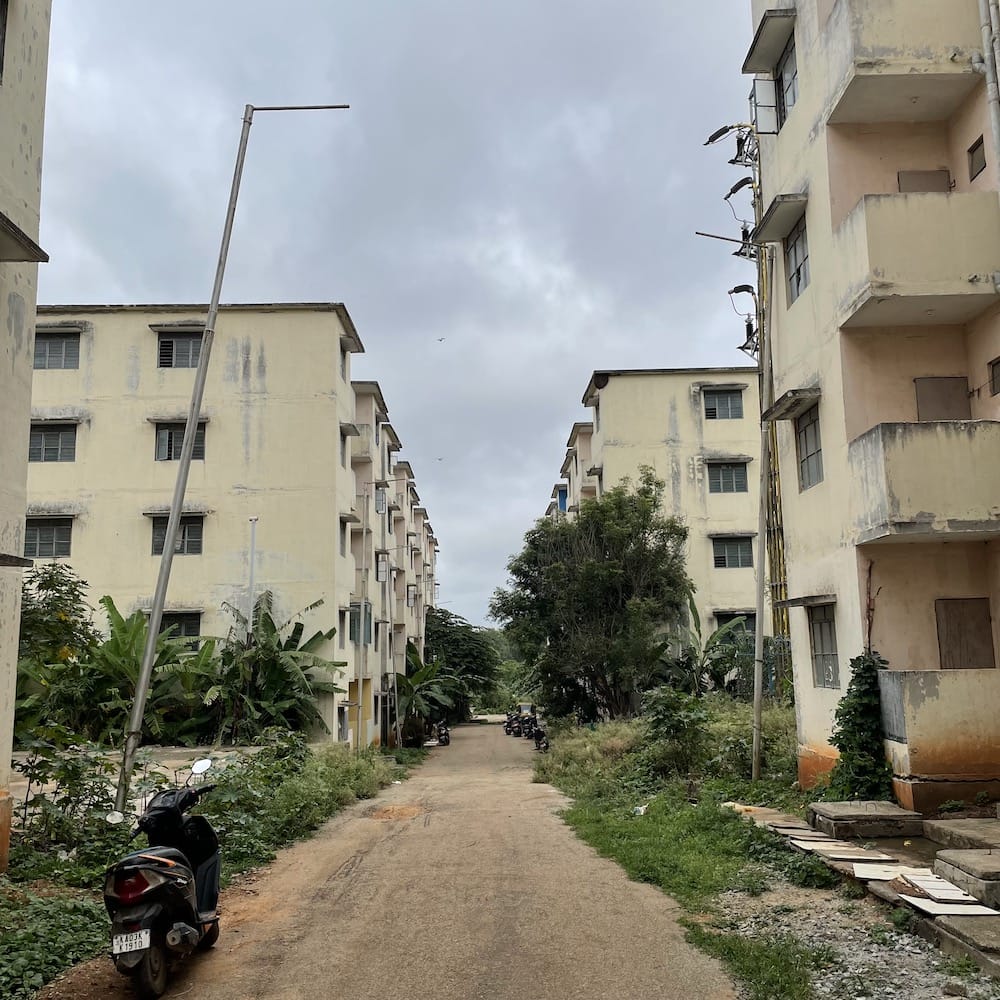
Poles stand bare without wires. Bulbs hang powerless in their sockets. The residents of Sulikunte have lived in darkness since their arrival. When night falls, silence descends and people retreat indoors, unwilling to step outside or speak to neighbours. Only scattered individual lamps and the occasional headlight of a passing motorcycle pierce the black.
Some families have managed to put together solar units to power appliances like lights, refrigerators and washing machines. Others rely on small solar-powered lamps that cast weak circles of light. In a city that illuminates every profitable commercial corner, Sulikunte remains an island of enforced darkness.
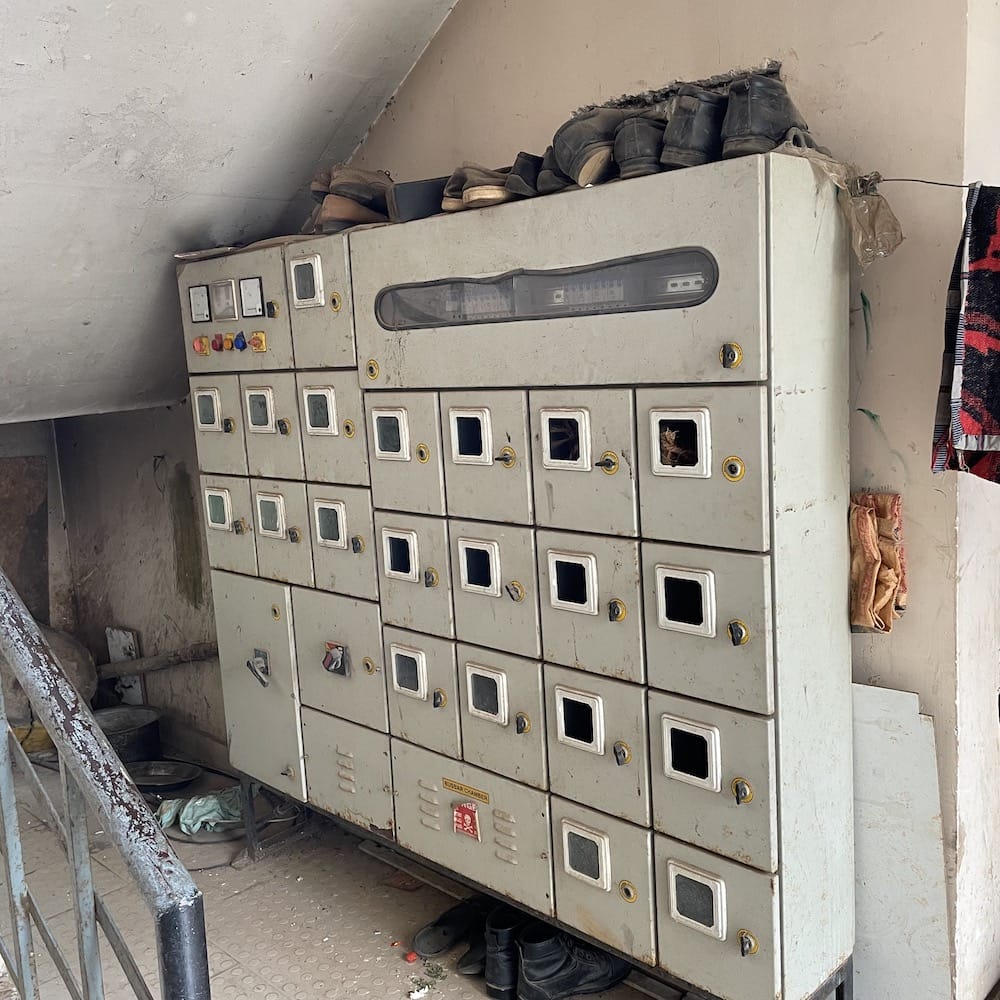
The electricity panels mock residents daily, visible reminders that power supply was planned, budgeted, and partially implemented (as one resident informs me) before being abandoned.
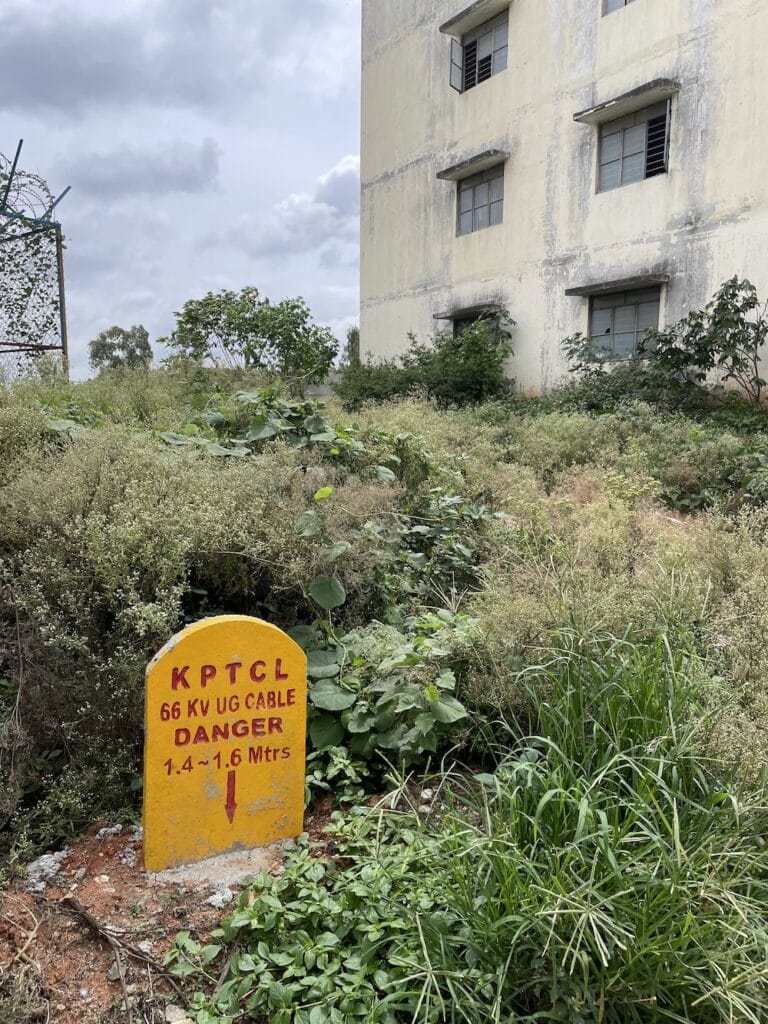
A Karnataka Power Transmission Corporation Limited (KPTCL) cable runs directly under the Sulikunte quarters, carrying electricity everywhere except the homes it passes beneath. Irrfan, 31, who has lived here for several years, remembers when massive trenches were dug to lay the cable.
“All of that turned out to be only for providing electricity to the neighbouring areas,” he says, pointing toward an upcoming office complex near the main road, just metres from the quarters.
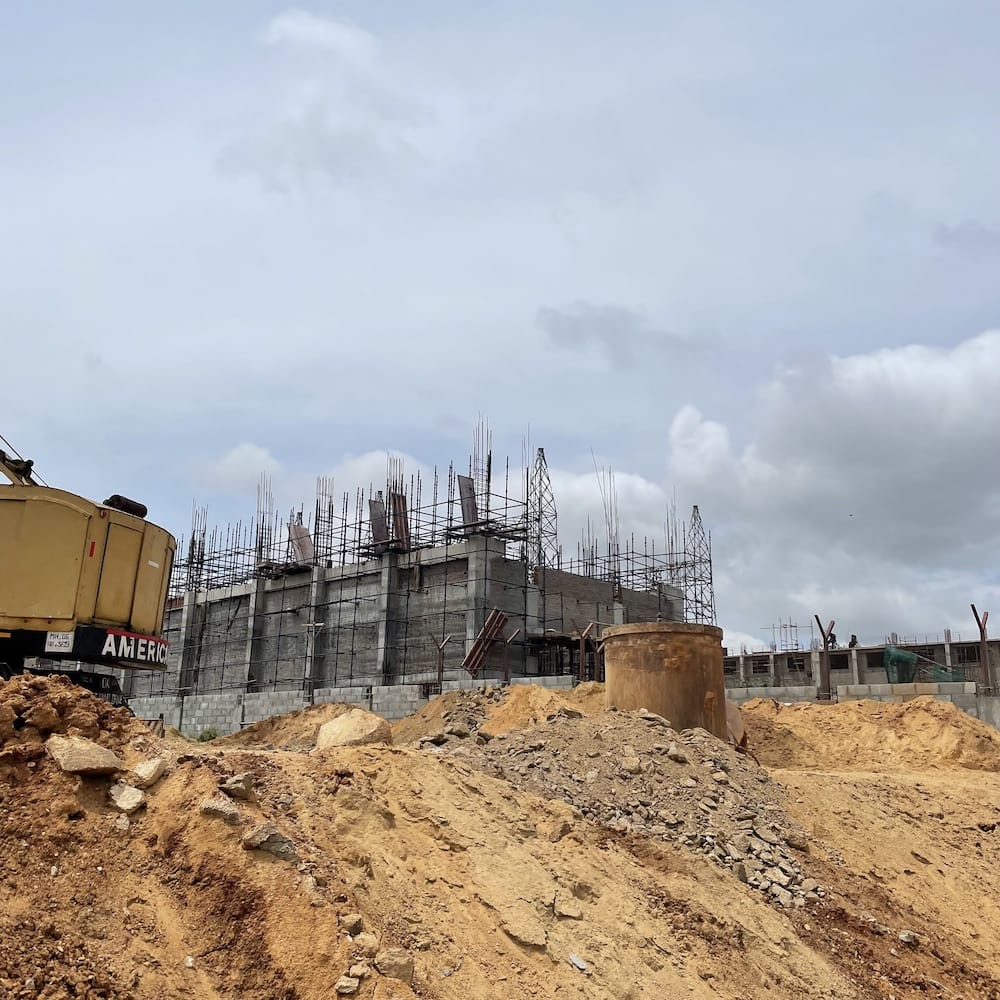
But what is this building that is set to receive power supply on priority? “An office of Bangalore Electricity Supply Company (BESCOM) is coming up here, right next to the place which has seen no electricity in the last ten years,” Irrfan informs me, his voice heavy with disbelief. BESCOM, the agency responsible for bringing power to the city, will now conduct its business metres away from families who have been cooking by candlelight and small lamps for over a decade.
Several residents and the local guard at the construction site confirmed this, but this remains unverified by authorities. This story will be updated if we receive a response from BESCOM.
Read more: Nine years after Ejipura slum demolition, evictees struggle for shelter, basic facilities
The struggle for water
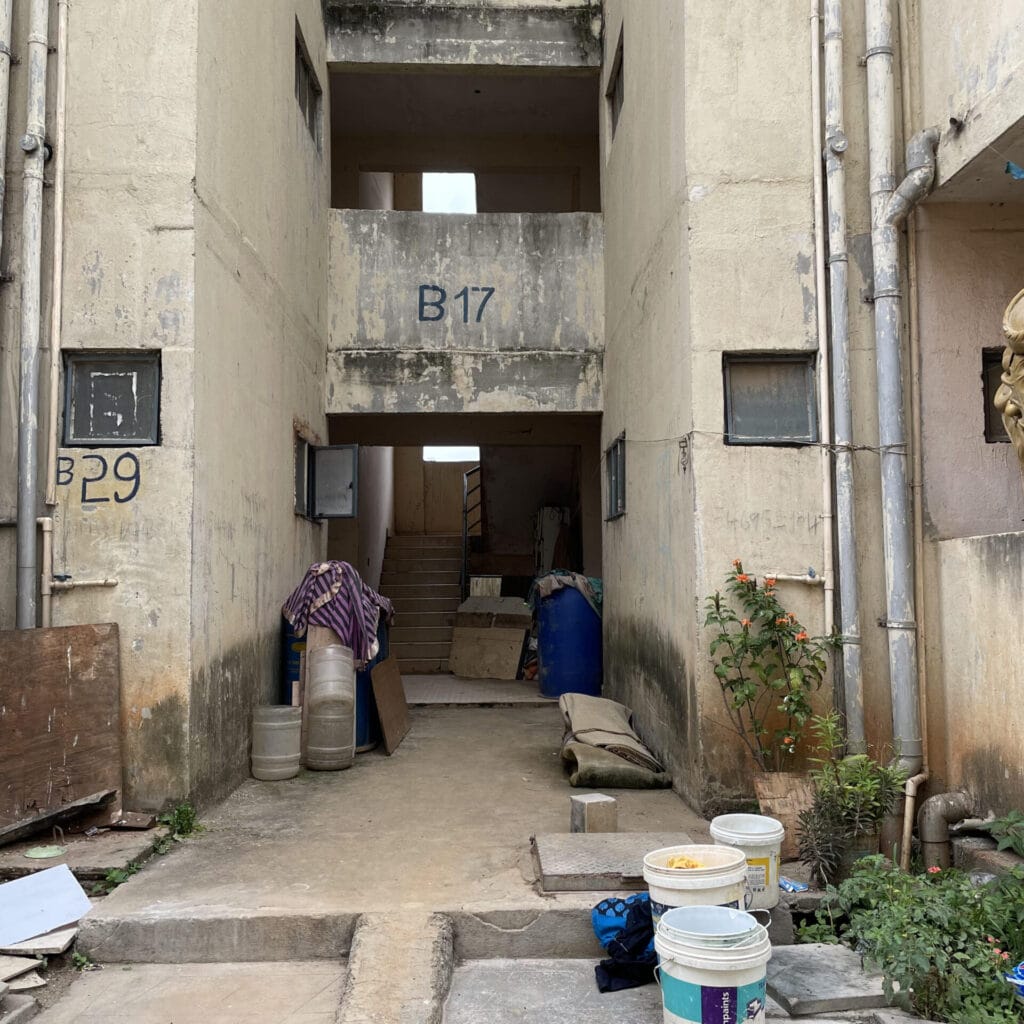
A tanker arrives to fill ground-level storage units with hard water for washing and cooking. Each building pays Rs 550 for a supply that lasts just one day, when all 20 apartments are occupied.
Drinking water arrives in separate 20-litre bottles at Rs 40 each. Residents store water in multiple containers throughout their homes, recreating the survival strategies they picked up in their informal settlements.
Families were moved here since the EWS quarters in Koramangala were “unfit for human occupation” (as per the court order), but even here,the same conditions persist.
Permanent temporariness
The settlement’s design suggests promise. The apartment complex includes a community centre, a designated school building, and rainwater harvesting infrastructure for the monsoons. On paper, it promises a functional neighbourhood.
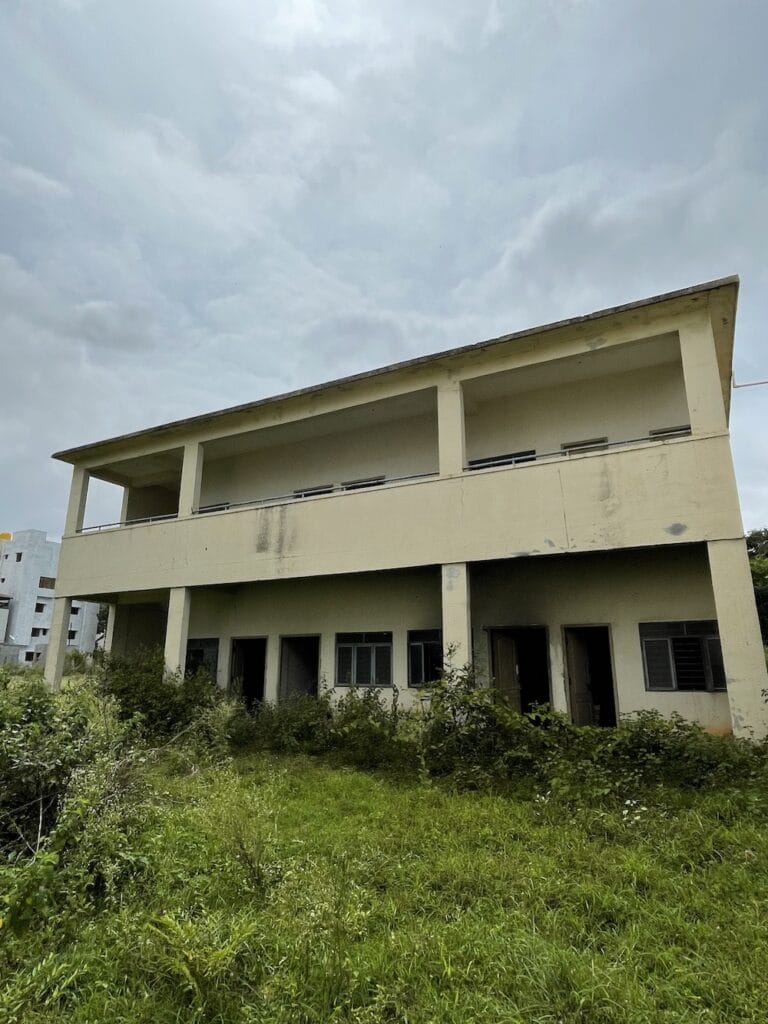
But the children go to school in Dommasandra, about four kilometres from the quarters, as the school building at the location stands abandoned. Walls appear as if they could crumble and the interiors are in a state of complete disrepair.
But it is not just about neglect of structures or provision of amenities; two clear violations of the legal terms of relocation emerge upon a deeper look at realities here.
In September 2014, the Karnataka High Court had documented BBMP’s promise that “the allotment of units is offered to the erstwhile unauthorised occupants, free of cost.” Yet, most families tell me that when they received their units, they were required to submit a demand draft of Rs 15,000/- before their names were processed, directly contradicting the court-endorsed claim.
Second, the court ordered that “the problems of the rehabilitated persons (petitioners and other similarly placed persons) are required to be attended to sympathetically, pro-actively and without any loss of time.” Twelve years of darkness, broken infrastructure and bureaucratic limbo reveal how thoroughly this directive has been ignored.
Read more: Five years after Ejipura eviction, she remains homeless
Effective disenfranchisement
The state has also engineered civic invisibility for residents here, denying them the most basic right as citizens, the right to vote. Anita, a resident, explains, “When we were relocated, all of our voter IDs from the previous place [Koramangala] were cancelled, but we have not been able to make new voter IDs.” Every attempt to register hits the same wall. Officials demand proof of proper allotment before processing any civic documentation.
A local activist, who wishes to remain anonymous since he is also a resident, informs me that the people have received ‘possession’ documents from KSDB. He describes the path to voting IDs as follows: First, the KSDB and BBMP have to issue ‘ownership’ documents to the residents, following which an official list of the residents must be sent to the local panchayat of Sulikunte, which will then incorporate the list into the electoral roll.
Even after repeated protests, the authorities are yet to finalise the allotment and issue ownership documents for the residents. The local government at Sulikunte, responsible for the enrollment process into electoral roll, has its own stake in this site, with reports of the local MLA demanding flats for the local people in the village.
Meanwhile, this disenfranchisement leaves no scope for political accountability from the local representatives and bureaucracy. These violations point to intentional, systematic neglect. The state has weaponised the bureaucratic delay to keep families in ‘permanent temporariness’.
The caste factor
This systematic neglect cannot be understood without acknowledging its targets. These are predominantly Dalit (and some Muslim) households, and their treatment reflects centuries of exclusion dressed in modern bureaucratic language. The state relocated them not to improve their lives, but to remove them from valuable urban land. Their continued marginalisation in Sulikunte serves to keep them invisible while ensuring they remain powerless.
Interactions with a local activist and residents — especially those involved in the petition in the High Court (Writ petition no. 42743/2012) which originally contested the eviction — revealed that among the 363 petitioners, about 40-45% belong to Scheduled Castes. Until this caste-based abandonment is named and challenged, technical solutions and directives will remain empty gestures.
How to socially respond to this disenfranchisement? By creating spaces that give people a sense of dignity, maintain community bonds, and honour their histories. Right now, Sulikunte offers none of these. It remains a place stripped of memory. Years add up and very little changes.
What needs to be done
- Connect the existing electrical infrastructure that has been unused for over a decade. The poles, panels, and cables are already in place. A simple authorisation could end the years of darkness. The KSDB and Karnataka Housing Board must ensure that the directive of rehabilitation by the High Court is followed.
- Establish a functioning grievance redressal committee with real authority to address resident complaints. This was suggested by the Karnataka High Court as well, stating that ‘the Government and the BBMP shall consider setting up the Grievance Redressal Cells in Sulikunte Village for attending to the problems of the rehabilitated persons.’
- Bureaucrats deflect responsibility while families suffer in silence. A transparent mechanism for accountability would force officials to respond to basic service failures.
- Finalise the allotment process immediately. Residents need legal proof of ownership, not just possession. These documents would unlock access to government schemes, bank services, and civic registration.
- Enable voter ID registration. Democracy requires enfranchisement, not endless bureaucratic circles. Once residents can vote, their concerns will start to matter.