As per Census 2011, one out of every six city dwellers — that is, 17.4% of the total urban population in India — lives in slums. While union and different state governments have made several efforts to address the challenges of housing and to improve the dismal living conditions in slums, a unique model has emerged in Odisha in recent years.
The Odisha model has not only been successful in addressing the challenges that are integral to slum upgradation, but it also shows the way to collaborative problem solving in our cities, which are faced with systemic challenges that are seemingly impossible to overcome.
A compact settlement of at least twenty households with a collection of poorly built tenements, mostly of temporary nature, usually with inadequate sanitary and drinking water facilities in unhygienic conditions, which may be on the State Government land in an urban area is identified as a ‘slum’ according to the Odisha Land Rights to Slum Dwellers Act, 2017.
Any landless person in occupation within the limits of a slum area is identified as a ‘slum dweller’ under the Act.
About 1.7 million people, constituting nearly 25% of Odisha’s urban population, lived in slums before the Government of Odisha introduced the Odisha Land Rights to Slum Dwellers Ac. This Act aimed to provide in-situ land rights to slum dwellers, to enable them to build their own houses and live with dignity in the cities they serve.
Further, the Odisha Liveable Habitat Mission or the Jaga Mission was introduced in 2018 as a special purpose vehicle, to transform and delist nearly 3,000 slums spread across 115 cities and make Odisha a slum-free state in mission mode.
Read more: Six million in Mumbai’s slums are on the frontline of climate risk
Hyperlocal community participation in action
The significance of the Jaga Mission, however, is not just its impressive accomplishments in transforming the quality of life in slum neighbourhoods. The Mission has succeeded in providing basic amenities such as water supply, electricity connection and toilets at the household level, and civic infrastructure such as paved roads, street lights, parks and community centres. But what is more striking is the manner in which all this has been realised and institutionalised.
The Jaga Mission has progressed far in establishing a model of decentralised participatory governance in underdeveloped urban poor habitats. This, at a time when citizen participation in the management of India’s cities through formal forums such as ward committees and area sabhas is, at best, in a theoretical stage, despite constitutional mandates and relentless campaigns by civil society.
The exemplary partnership between state government agencies, city government officials, and elected councillors, as well as the slum communities may be understood through the following steps of engagement:
Santosh Nargund
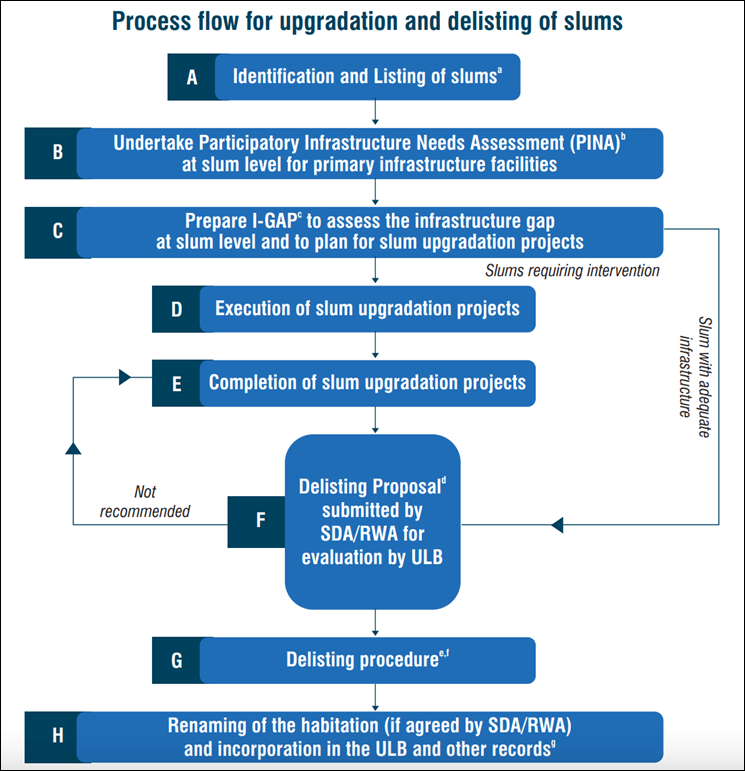
Design: The Jaga Mission chose to make community the centre of every action in the programme design and execution. The slum dwellers were co-opted as partners instead of mere beneficiaries. The entire process of identifying the gaps in infrastructure and services that needed to be bridged was codified in a standard operating procedure, named ‘Participatory Slum Upgradation and Delisting’.
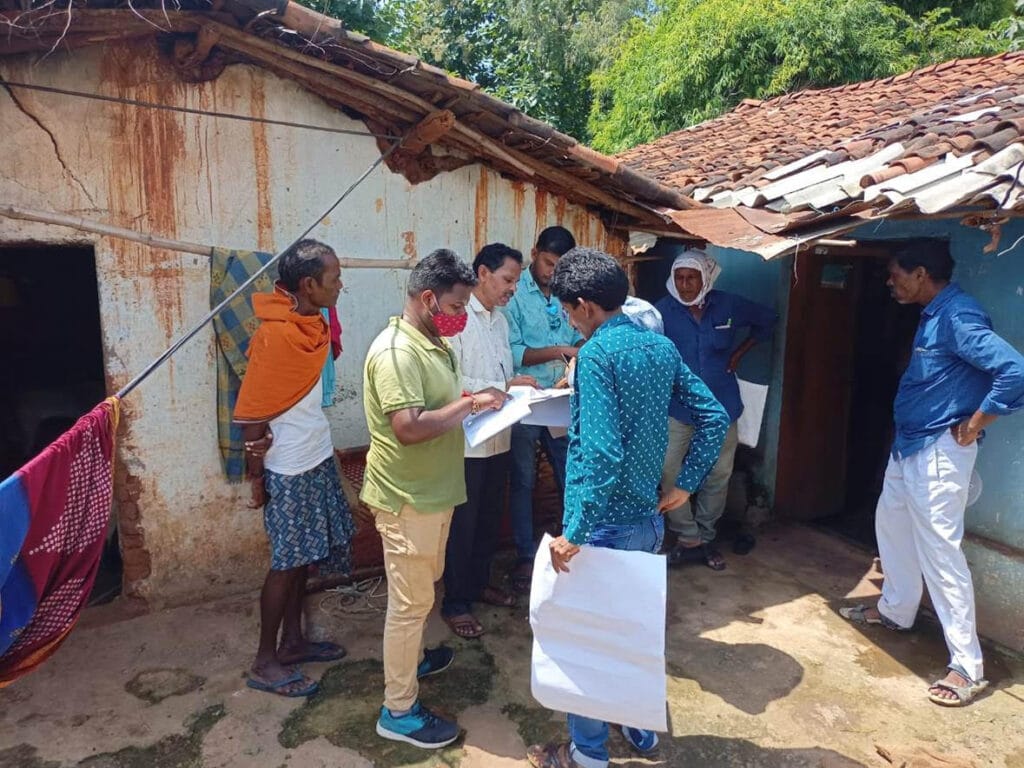
Planning: The community in every slum was entrusted with the responsibility of undertaking Participatory Infrastructure Needs Assessment (PINA) surveys in collaboration with city officials. The participation was neither limited to the headline level nor symbolic.
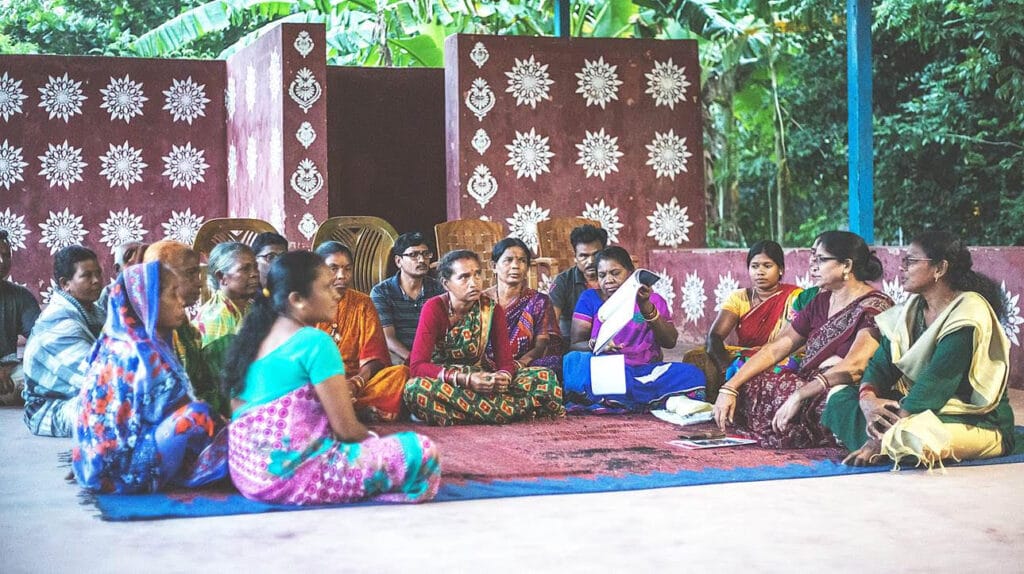
A Slum Dwellers Association (SDA) was constituted in each of the 2,919 slum neighbourhoods. Every household of the slum community was made a part of the SDA. At least half of the executive committee (EC) members of the SDAs were mandated to be women. An analysis undertaken by Janaagraha across 1,810 neighbourhoods in 106 cities suggests that, as of July 2024, 52% of the 18,000+ EC members of SDAs are women.
Santosh Nargund
The PINA surveys assessed gaps in infrastructure and services, both at the community and the household levels, in a transparent and consensual manner. In the same manner, SDAs identified individuals eligible to receive support from the government under different convergence schemes.
Implementation: The beneficiaries were guided by SDAs and city officials to complete the necessary documentation to claim monetary assistance for relevant schemes, such as for the construction of toilets.
Further, the SDAs were responsible for ensuring that every single household was covered when it came to the provision of each of the infrastructure services such as tap and electricity connections, individual toilets, roads, drains, etc. 100% coverage was a necessary condition for moving to the delisting phase.
SDAs were mandated to supervise the implementation of infrastructure and service in the slums and were even compensated with supervisory charges for their efforts, thus adding to their community corpus.
Delisting and destigmatisation: Only the SDA is authorised to send a proposal to the city government to delist their slum, after the community is satisfied with all parameters of slum upgradation as per the defined process. The city government passes an order to delist the slum, after the approval of the proposal by the city council and the competent authority headed by the district collector.
Thereafter, the slum is renamed an Adarsh Colony (or a model community), and the SDA is identified as a Resident Welfare Association (RWA), similar to associations of other neighbourhoods in the city. The RWAs can also resolve to change the name of their neighbourhood (in cases where it may have been named based on the caste or profession of the original residents). This is then approved by the city government and gazetted by the state government.
So far, 1,680 slums have been thus upgraded and delisted, with 28 cities declared slum-free. That this was achieved without any major challenges is a testament to the faith shown, and investments made, in inclusive, collaborative problem-solving at every step of the programme. Odisha’s Jaga model thus leaves clear footsteps for public programmes to follow, particularly those in the complex ecosystem of our burgeoning cities.