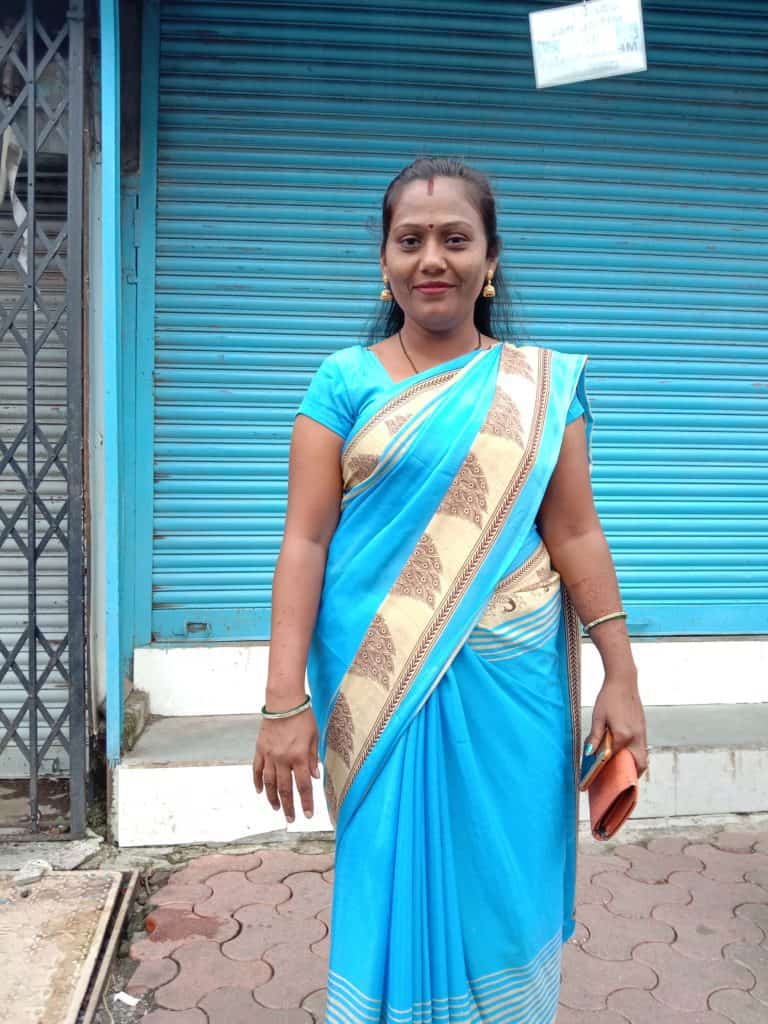
A few days after the nation-wide Lockdown began on 24 March, 33-year-old Anita Salve, heard a knock on her door.
Authorities from Jana Small Finance Bank arrived in Chembur’s P. L. Lokhande Marg, where Anita lives, demanding that she repay her personal loan of Rs. 40,000.
She called Yogini Pagare to seek advice.
Yogini, another resident of the P L mohalla, fields about ten calls a week from women like Salve. She is associated with Nirdhar, a grassroots group that tackles various issues faced by women who live in the slums of Chembur and Govandi.
Yogini asked Anita to put her on the phone with the bank employees who had arrived at her doorstep. “Phir toh woh bhaag gaye. Unko pata tha main RBI ke instructions bataoongi,” said Anita. They ran away, as they realised the Reserve Bank of India rules would be cited.
The RBI issued a circular on May 23rd stating that non-repayment of loans can be extended until August 31st. Despite this, creditors had been making weekly rounds in different bastis across Mumbai.
Pandemic-induced income crunch
Many women in the P L Lokhande Marg basti are precariously employed as domestic workers. To supplement their income they usually undertake tailoring or other work that can be done from home. The pandemic has put a stoppage on most of their extra income.
Before the pandemic, Anita ran a small tea-coffee stall at the Kurla Terminus. Her husband has abandoned her, making her the sole earner of the house and caregiver of their two children. No longer permitted to continue her business, she worries about the cash crunch she faces. To support daily expenses she has been forced to borrow meagre amounts from various neighbours.
“If we get a hundred rupees somehow should we feed our children first, pay rent first, or deal with loans?”
Maharashtra State Housing Department issued directives on April 17th which stated that landlords cannot evict tenants and must defer rent until July 16th. In spite of this, Anita says her landlord did not stop harassing her for money. Monsoon has made it even harder since along with looking for income Anita now has to spend nights emptying her home of flood water. Negligence of poor drainage systems have caused significant damage to their homes. Blocked pathways have also made it harder for them to move around.
Under the Prime Minister’s Garib Kalyan Package, the third and last installment of Rs. 500 was supposed to be transferred to Jan Dhan account holders on June 6th. But Yogini says that the majority of women in her neighbourhood have yet to receive the first installment due in April.
A few weeks ago Anita began showing cold and fever symptoms. Turned away from the local government hospital, she went to a small private clinic and was prescribed medication. Her cumulative debt to the clinic’s doctor has reached over Rs. 3000 till date.
“Where can I get money from?” she asks.
With no commuter services being provided, Anita doesn’t see how she would be able to work even if operations restarted.
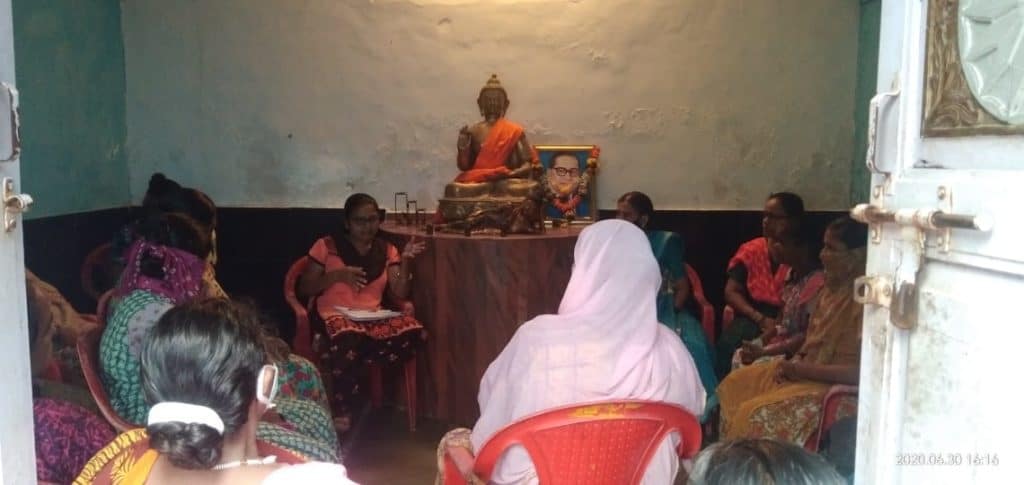
Demands for loan repayments against government orders
Under microfinance loan regulations, loans are given out to groups of women where each woman takes on the risk and surety of completing repayments on behalf of the rest. Yogini explains that since many, especially migrant families, have returned to their villages in different parts of the country the burden of repayment has fallen on the women who have not been able to leave.
On 26th June, along with five other women Yogini and Anita assembled at the Office of the District Collector at Bandra. They presented their grievances and were assured that if found guilty, microfinance companies threatening debtors will have their licenses cancelled. But the fight hasn’t stopped.
“Recovery officers threaten that they will fine women who haven’t repaid loans and seal their houses,” claims Yogini.
Anita, too, attests to this and elaborates on the tactics employed by Jana Bank, “At one point they sent a company worker claiming that he’s a lawyer and could file charges against me. I told them they can do whatever they want but I have no money for them. Since then I have been blacklisted and cannot get a loan from any bank.”
Jana Small Finance Bank, formerly known as Janalakshmi Financial Services, was one of India’s largest microfinance companies before becoming a bank in 2018.
“Different companies mark out their territories so you’ll find 100-150 families in one section of a mohalla who have loans from the same company,” Yogini explains. Meaning, one’s neighbourhood determines who they can get a loan from. Women have difficulties approaching other loan granting services or banks.
HDFC Chairman Deepak Parekh and former RBI governor Raghuram Rajan advised against extending loan deferrals. HDFC itself nationally operates twelve microfinance branches. The Indian Banks Association, in a letter to the RBI, said that there is no need for another loan extension. On Thursday, August 6th the RBI decided to restructure personal loans while not extending loan moratoriums.
Yogini and Anita have other demands. “We want companies to stop sending representatives to threaten and intimidate us. It’s very harmful to our self-respect,” says Yogini.
Their second demand is that loan moratoriums be extended until January 1st given the deteriorating economic condition of poor families. They also demand that if a woman has repaid 70% of her loan, the rest be forgiven. They want this to extend to all women in their mohalla regardless of whether they have taken loans from banks or microfinance companies.
Yogini and others now travel across M-West ward’s bastis to raise awareness about their demands. They have also been educating women about RBI’s COVID19 rules. They say that company officials consciously chose to not inform women that they did not need to pay microfinance companies until August 31st. So far, Yogini has conducted these meetings in her own mohalla, and in surrounding areas such as Baiganwadi in Govandi and PMGP Marg Colony in Mankhurd. In these meetings, Yogini advises women to refrain from taking micro-loans in the future.
What alternatives are available for women in Mumbai’s slums? With both the eviction and loan moratoriums coming to an end, they have been left even more vulnerable. Looming ahead of them is a critical health and financial crisis. How safely can slum residents dodge the threat of COVID19 if they are rendered homeless? Migrant workers from Bihar who were stuck in Ahmedabad after lockdown began have said that it is not COVID but starvation that will kill them first. Same is true of those in Mumbai.
Anita shifts her gaze to the ground and says, “Companywale poochte hain ki khaane ke paise hain toh loan ke kyun nahi? Lekin humaare paas ab khaane ke bhi paise nahi.”