This is a story of how a 140-family community became waste-sensitive and is continuing to be so. Sobha Quartz is a residential apartment complex in Bellandur, Bengaluru. I live here. ‘KasaMuktha Bellandur’, a citizen initiative for solid waste management, has made all the changes possible here.
Mine is a very responsible community of 140 families, who follow the 2Bin1Bag method of segregation. Door-to-door campaigning have helped us help convince defaulting residents to segregate and monitor the compliance of community members. We send regular emails and updates to keep up their motivation and interest.
Our team consists of passionate and like-minded women and men (many include working professionals) who are trying to make a difference to the world we live in by actively working to improve solid waste management and sustainability. I also interact with e-tailers and other similar new businesses like Amazon, Flipkart, Starbucks and convince them to go plastic-free.
Changing mindsets
We are one of the apartment communities in Bellandur that don’t line their bins with any kind of liners, be it plastic or paper, thus saving the landfill from receiving a soiled bin liner everyday. We see this as a first step to achieving a greener environment, one that makes us proud.
At our apartment complex, the housekeeping staff weigh different categories of waste from each household, that is the organic, wet waste and dry waste collected on a daily basis and note down the quantities so that we can audit our progress. Our goal is to send 5% or less to landfills and we are happy to say that over the last few months our rejects have been going down consistently.
Some of the apartments practice home composting, sending minimal waste outside.
We use storytelling techniques to teach my kids about the importance of being green and friendly to the earth. When the Government of Karnataka banned all single use plastics (Plastic Ban Gazette), we chose a few smart, outspoken girls aged 9-11 from the Quartz community to help with a door-to-door campaign on why we should say no to single-use-cutlery and plastic bags. These young volunteers made their own badges and carried along the samples of the banned products as well as alternatives to show the residents that there are other options.
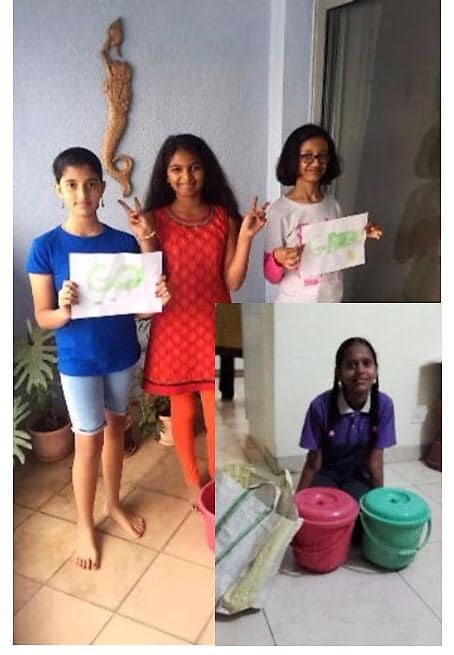
Young green volunteers at Sobha Quartz, Pic courtesy: Anandhi Balaji
From my experience, the key to success in any of these campaigns is to include the children of the community and to find ways to have them actively participate in promoting understanding on waste issues. They were also told to politely remind residents carrying plastic bags to stop using them since they were banned.
Celebrations sans disposables
Over the last one year, there has been a significant awakening amongst the citizens of Bellandur, inspiring many citizen volunteers to support changes that will go towards making the area a plastic-free zone. At Quartz, we believe that one of the ways to do this is to opt out of the more ‘convenient’‘ paper/plastic cups and spoons and exclusively use reusable cutlery. Whenever we have an event in Quartz, we insist that our vendors bring steel/ melamine plates/cups and avoid disposable plastic/styrofoam.
It was nice to see volunteers that organised events during Onam, Diwali, Christmas taking appropriate measures to go plastic-free. At these events, two individuals were asked to monitor the bins and the food vendors were informed about how to manage the food, reject and dry waste. The solid waste management volunteers were tasked to make sure that no mixed waste went out of the complex under any circumstance.
During the Navarathri festival, which is celebrated with a lot of zest and enthusiasm at Quartz, all of the homes that we visited had ‘gone green’ and had rejected the disposable culture, not even using the traditional Donnas (a sturdy leaf cup). Many had only reusable cutleries for offering prasadam to their guest, and only paper or cloth bags were offered for Thaambulam.
We have a music club in Quartz that got together for a party recently and all participants brought their own melamine cutlery. They did so on their own without having to be requested or prompted. This was an example of the impact we have achieved. Many passionate residents have switched over to reusable ware for home/club-house events, conducting ‘Zero-Waste’ birthday parties by saying good-bye to the paper/plastic cups and plates. They have gone so far as to wrap gifts in newspaper, thus avoiding the plastic shiny wrapping that cannot be recycled.
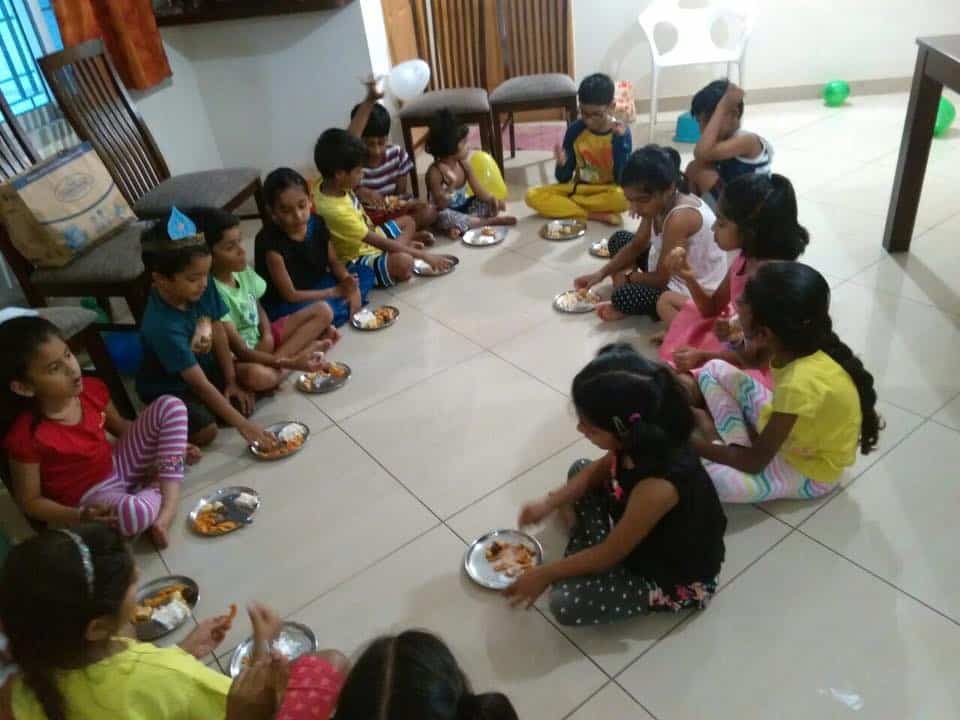
Zero-waste birthday parties are the norm in Sobha Quartz now. Pic: Anandhi Balaji
All-round efforts
We send our e-waste to the approved vendor authorized by BBMP. Yard waste, such as grass clippings, leaves are composted in-house and big sticks are reused as fencing. Only 50 percent of garden waste is sent outside – our garden team gets the full credit for this!
Each woman uses 10,000-15,000 sanitary pads/tampons in her lifetime. Multiply that by the number of women and we have a landfill problem! This translates to a few truck loads of non-biodegradable unhygienic toxic waste. New, eco-friendly practices that promote sustainable menstruation, such as menstrual cups and reusable sanitary pads are becoming popular not only because they are sustainable but also because they are economic and very convenient. This initiative was just started at Quartz and there are already 20 passionate ladies, mainly working women, who have come forward to support this cause.
The pride of being changemakers
Once we make a choice to do something, we should try not to think much about how difficult or frustrating or impossible the journey might be; we should just think about how good it would feel to achieve the end and how proud it would make us feel.
Our Quartzians are the change-makers, and we realise that even a small effort from our side can go a long way in relieving our landfills of the burden of plastic waste and help contribute to a greener and healthier environment for future generations. When individuals make small, positive changes in their lifestyles and talk about it to inspire their peers, a community is created whose collective effort has the potential to make a significant difference. Just as Sobha Quartz residents have done. Let’s keep inspiring the naysayers!