Railway Under-Bridge near Bengaluru’s Shivananda Circle is no longer an ugly, stinking, dangerous thoroughfare for pedestrians. It has been transformed in five steps:
Step 1 (June 2016): Railways staff + citizen volunteers de-poster, remove garbage and transform 80% of the RUB over three days.
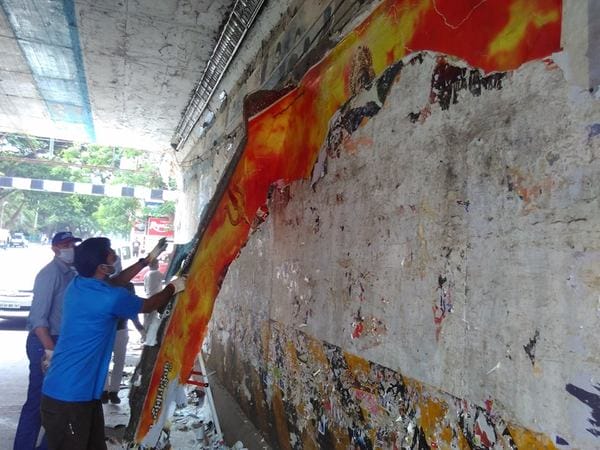
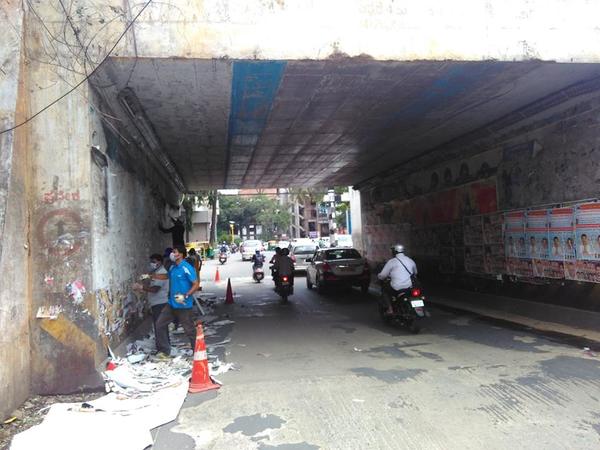
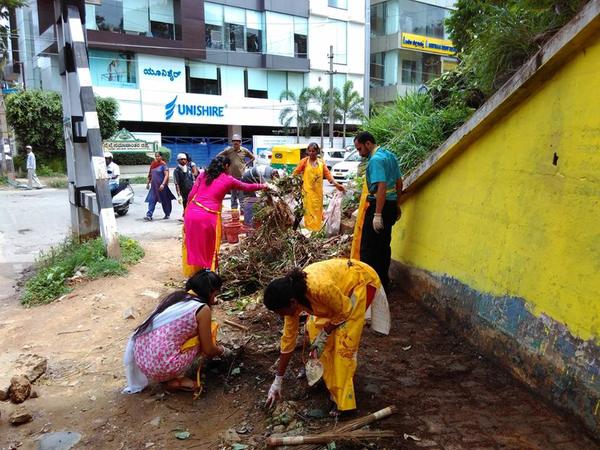
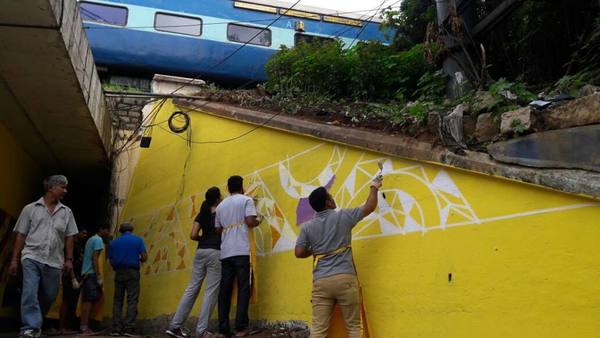
The Ugly Indian poster-repellent design was used, with striking bright colours, to brighten up an otherwise dark and dreary under-bridge place.
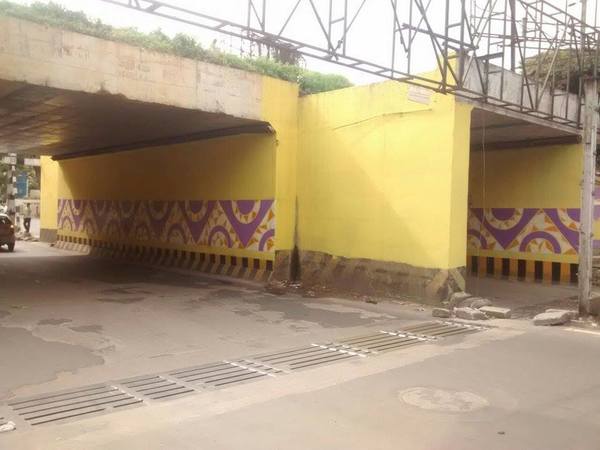
See the album of Spotfix no 1 here: https://www.facebook.com/theugl.yindian/photos/…
Step 2 (July 2016): BBMP fixes the footpath and repairs the pathways, including installing lights
Step 3 (July 2016): Railways fixes the leaking roof and trims the bushes, clears the garbage from its part of the bridge
Step 4: (July-Sept 2016): The under-bridge space was monitored for three months and regular maintenance was ensured.
People who post posters in Bengaluru respect good design. The quality of the design makes it look like tile work from a distance. This trick worked. Only four posters appeared after three months – that too on the front portion of the bridge where there is no poster-repellent design. Pedestrian movement increases as it is now a well-lit clean and safe zone, and ugly/illegal activities are eliminated.
Step 5: Final Spotfix: to paint the balance 20% and beautify the vicinity.
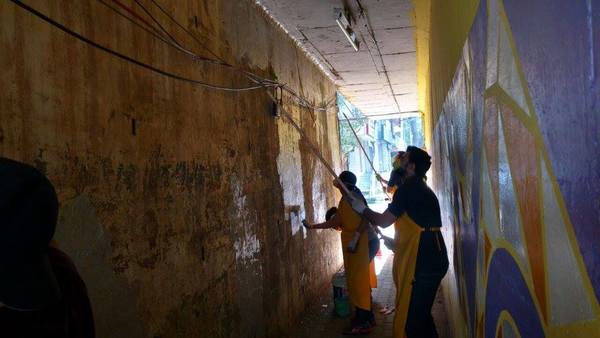
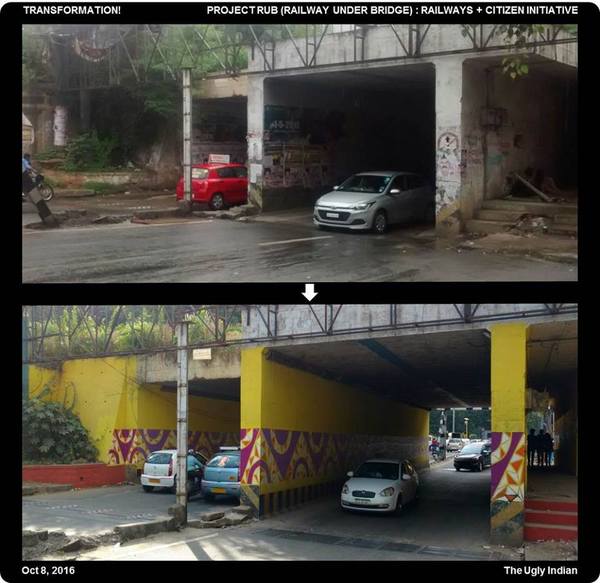
Pics: The Ugly Indian
See the full album of this Spotfix here.
This spotfix is a great example of positive partnership between citizens, city government (BBMP) and Indian Railways – to fix a public asset that lies in a no-man’s land, with shared, but undefined responsibilities between multiple entities.
Great work by all volunteers! Kaam Chalu Mooh Bandh!
Related Articles
Being The Ugly Indian: It’s all about fixing whatever we can
All it took was Rs 850/- to fix the ugly spot in Church Street
It is great to learn that ugly place was turned into beautiful & useful underpass with the cooperation and coordinated effort of all concerned agencies. Perhaps somebody has to coordinate these activities and without such coordination hings will not move in the riight direction. Thanks for Ugly Indian for that effort.
Sri Vivekananda Sevashrama under sacha Bharat Abhayan helps some government schools to keep their premises clean by supplying brooms, Plastic buckets Etc. and supplies some saplings to be -planted after cleaning..
Thank you for your efforts. May your tribe increase
It is action that is required and not loose talk.
Venkatesha Murthy