A few weeks back, while writing about Vibhutipura lake, I spoke with Shubha Priya of VIKAS, a citizens’ group associated with the Vibhutipura lake. She pointed out a few interesting facts about the lake, which I missed out on during my previous visits. The idea for composing this essay originated from my interaction with her.
As I had observed in my previous essay, Vibhutipura Lake is a fascinating case-study. On various tracts of the land around the lake, one can find people residing in high-rise apartments. A section of society that is not socio-economically fortunate, lives on some other parts of the land. Certain tracts of land around the lake belong to sarkari agencies as well.
But the diversity of people who live around the lake is not limited to mortal beings… Even gods and spirits have made the lake their home!
For instance, consider the fact that a few local residents sometimes perform Chhath Puja, on the banks of the lake.
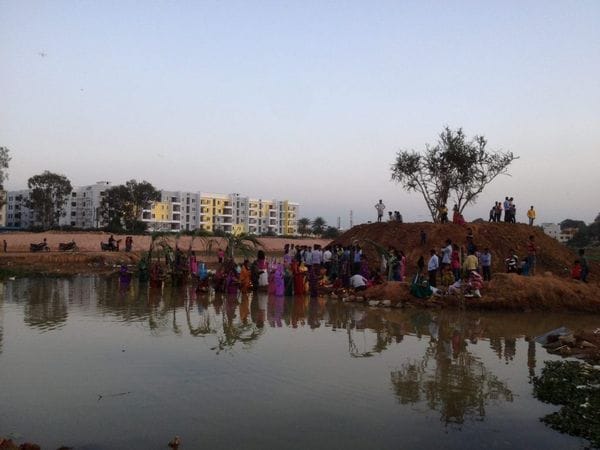
Pic: Subha Priya
A few metres away from one of the entrances to the lake, there is a War Memorial dedicated to an Indian warrior from the Second World War.
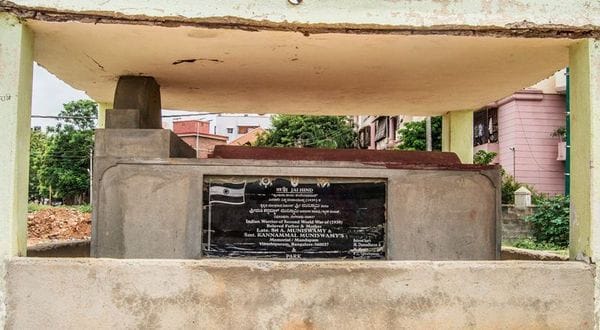
Pic: Sanchayan Nath
A few meters away from the War Memorial, near one of the fuzzy border areas of the lake, there is a series of graves, of known and unknown origin.

Pic: Sanchayan Nath
It is not just Vibhutipura lake, which is home to gods and spirits; lakes across Bengaluru have welcomed them with open hands. And it is not just Hindu gods and goddesses who love living by the lakes. Lakes are secular in nature – they don’t exhibit any signs of discrimination based on religious beliefs.
For instance, consider Munnekolala Lake. I had the good fortune of visiting the lake in 2012 before the lake rejuvenation processes had begun; and I keep visiting it once in a while even now. The lake rejuvenation process has not displeased the god (van devatha). He continues to live at exactly the same place. The sacred grove has survived too.
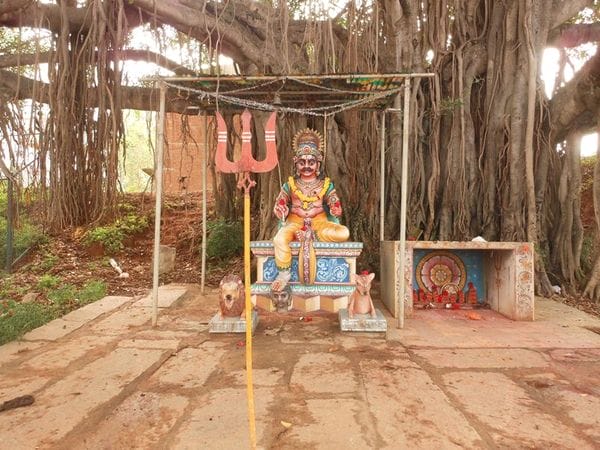
Pic: Sanchayan Nath
Or consider Arekere Lake—one will find a church, as well as a temple, very close to each other—again near one of the fuzzy border areas of the lake.

Pic: Sanchayan Nath
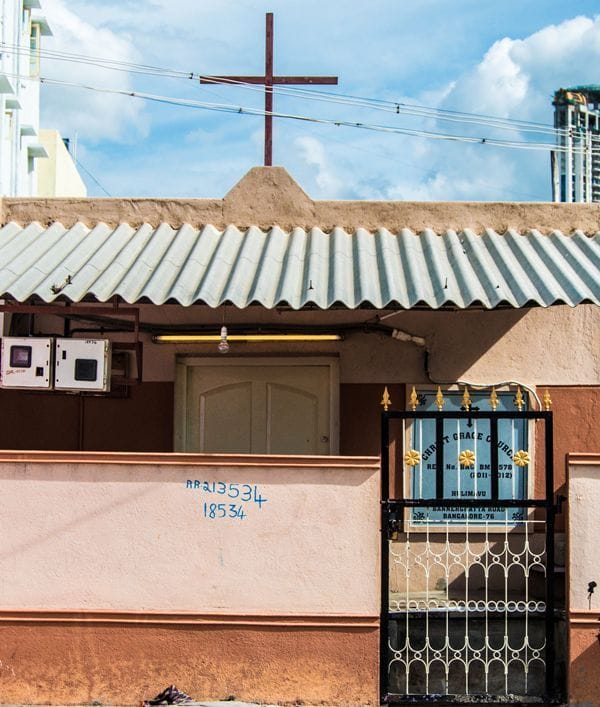
Pic: Sanchayan Nath
Halagevaderahalli Lake is interesting too. There appears to be a structure resembling a mosque(?) near one of the fuzzy border areas of the lake.
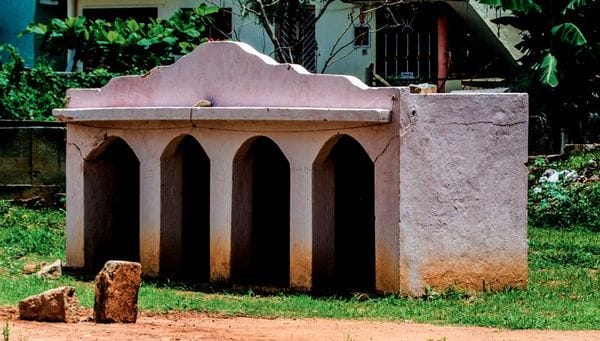
Pic: Sanchayan Nath
There are also a number of temples, dedicated to different gods and goddesses (goddess Annamma among others), located outside the lake boundaries, across the road on the other side.

Pic: Sanchayan Nath

Pic: Sanchayan Nath

Pic: Sanchayan Nath
The advent of new residents however continues unabated, and the lakes of Bengaluru have no heart to turn them away. I noticed a new unmarked grave this week, just outside the Vibhutipura lake boundary.
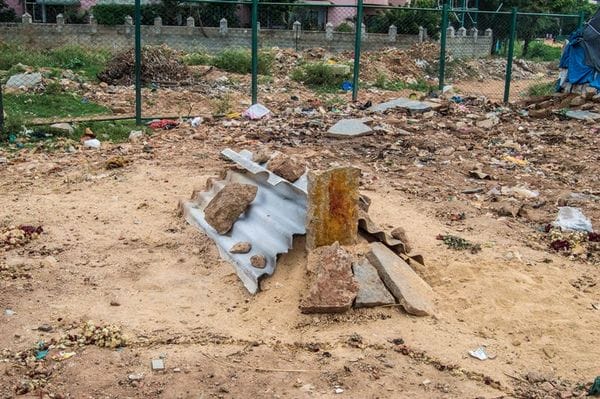
Pic: Sanchayan Nath
The lakes of Bengaluru are thus great equalisers. The rich and the poor; humans and animals; gods, goddesses and spirits – all live in the lake premises and near the lake premises, as one big, complicated family!
(with inputs from Shubha Priya)
Related Articles
In pictures: Madiwala Kere Habba
In pictures: Bellandur lake’s fire and snow
The things people do around Vibhutipura lake
Occupation of lakes is a serious matter. You made it a humorous reading that removes the seriousness. Even for your thesis it may not be a good idea to make it the way it reads.
Your efforts are appreciated, anyway.