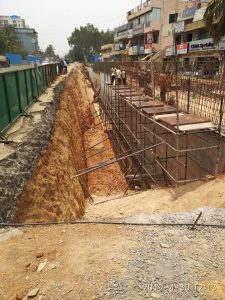
The Kundanahalli junction is “the” gateway for lakhs of commuters going in and out of Whitefield. People from across the city come in for work in the area as this is a tech hub while school children traverse in their buses to head to the multitude of schools in the Whitefield/Varthur area. Across Bangalore and in fact outside too, people know how bad the traffic is this side of town. We have therefore engaged in the Traffic warden program for years to contribute our time and effort to help manage the traffic.
An underpass was to come at the junction 5 years ago. It is finally being built now. Given that we all want improvement in traffic, people are patiently putting up with further delays due to the construction of the underpass which is apparently going to ease traffic.
However, we deeply object to the manner in which closures are being done to the junction. No public consultations, alternate routes or advance communications from the authorities is putting an undue and unnecessary stress on commuters. When the work commenced earlier this year, and one lane was closed without prior notification or alternate arrangements, it created chaos and an unending misery for residents and commuters. The situation was only salvaged when residents took it up on themselves to bring all parties – BTP, BBMP, BMTC and RNS the contractor in charge of the underpass work – together on a platform to address the traffic concerns.
Now we learn from the media that the junction will be CLOSED for 3 months.
We have requested BTP in partnership with BBMP-TEC, RNS, BMTC to organize a citizen communication for how residents are supposed to come in and out of the Greater Whitefield area during the time the junction will be closed. Citizen expectations include:
1. Speed up the work on the junction in multiple shifts so as to reduce the impact to commuters as much as possible. Once schedule is published, stick to the schedule!
2. Determine alternate routes for buses, 4 wheelers, 2 wheelers. All the alternative roads should be in commutable conditions – that is, no potholes and all debris, if any, should be cleared
3. Employ significantly extra BTP staff for strict enforcement and regulation of traffic
4. Communicate these plans with the public. Schedule public consultation, as necessary.
5. The completed work on the underpass & the junction above should have the capacity to accommodate future increases in traffic. At this moment, concerns have been raised about the width of the road and the ability for Volvo/BMTC buses to navigate the left turn from Marathahalli side towards Brookfield at the Kundalahalli Junction.
Here are some links highlighting the chaos of before:
KG Junction to be closed for over 3 months