With consumerism at its peak and humans wasting more than utilising, it’s time to relook, to reflect, to repair. Repair Café is based on the very idea of sustainable living, to promote the judicious use of natural and personal resources in a bid to save this planet.
Thanks to Whitefield Rising, the concept came alive recently near Hope Farm, set in the lap of the serene The Ant’s Store– a perfect venue bathed in natural charm.
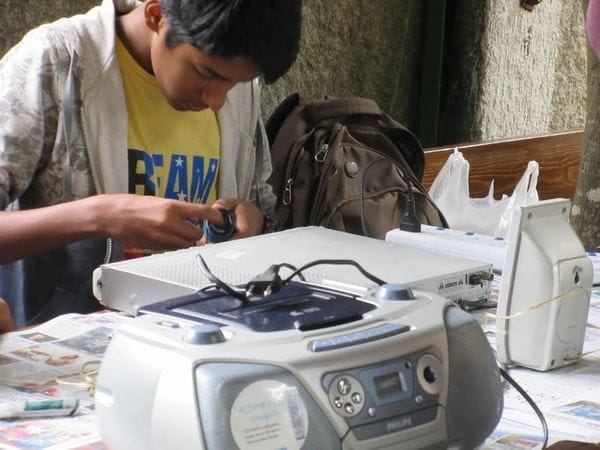
People learning to repair electronic equipment at Repair Cafe event in Whitefield.
A team of volunteers comprising a teenager, a banker, a techie, a homemaker, a cobbler, a professional mechanic, and many more, put up the Repair Café. Electronics, kitchen appliances, clothes, bags, shoes—such were the placards on the little wooden tables that were abuzz with activity. People thronged the venue with broken items (so very close to their hearts). “I wish this umbrella of mine gets repaired,” remarked a woman holding a lemon yellow umbrella. “I was called little Miss Sunshine whenever I took it out,” she quipped, her eyes filled with joy.
In another corner, two school boys busied themselves testing used batteries and collecting eWaste for handover to Saahas and BinBag, which in turn would hand them over to authorized recyclers.
As the day picked up, the hustle and bustle increased. In no time, things were getting mended. The joy of achievement on the faces of the self-appointed mechanics was higher than that of the owners. What a hands on workshop! No better way to teach fine motor skills to kids and to value their belongings as well. They were thoroughly enjoying it. This mini-fair had a strong message to give and an even bigger mission to achieve.
So if you have some stuff that is damaged, don’t just throw it away. Reflect, relook, reduce, reuse, recycle—repair.
This has been written by Anshuma Singh, who works at an MNC and a Whitefield Rising volunteer.
For more information about Whitefield Rising, please contact: hello@whitefieldrising.org
This is wonderful!… It should be required in every country of the world..