Madiwala Kere Habba with a photo contest

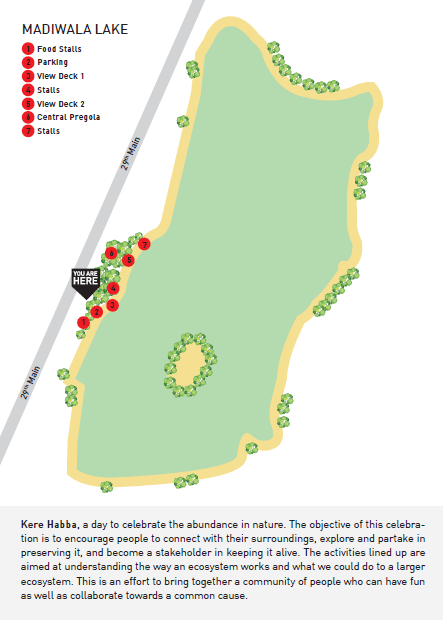
The third Kere Habba (Lake Festival) of 2015 is all set to take place at Madiwala Lake on Saturday, 11th April 2015. The event has been planned in two sessions – morning 6:30 a.m. to 10.00 a.m. and evening 4:00 p.m. to 7:00 p.m.

Kere Habba is an initiative of The Namma Bengaluru Foundation. Reports of the previous two Kere Habbas can be seen on these links – Kere Habba at Kaikondrahalli LakePuttenahalli Kere Habba.  

Visitors to Madiwala Kere Habba can expect lots of fun activities for both children and adults. The schedule includes bird watching, sketching, cycling, craft, dance, music, story telling, gardening and more. The Chief Engineer of the Lake Development Authority will talk about the plans to make Madiwala Lake a model “bio-diversity lake”. There will be an interactive session on the problems faced by lakes and how Madiwala Lake in particular can be made the pride of Bangalore. There will be food stalls to add to the festive atmosphere. 
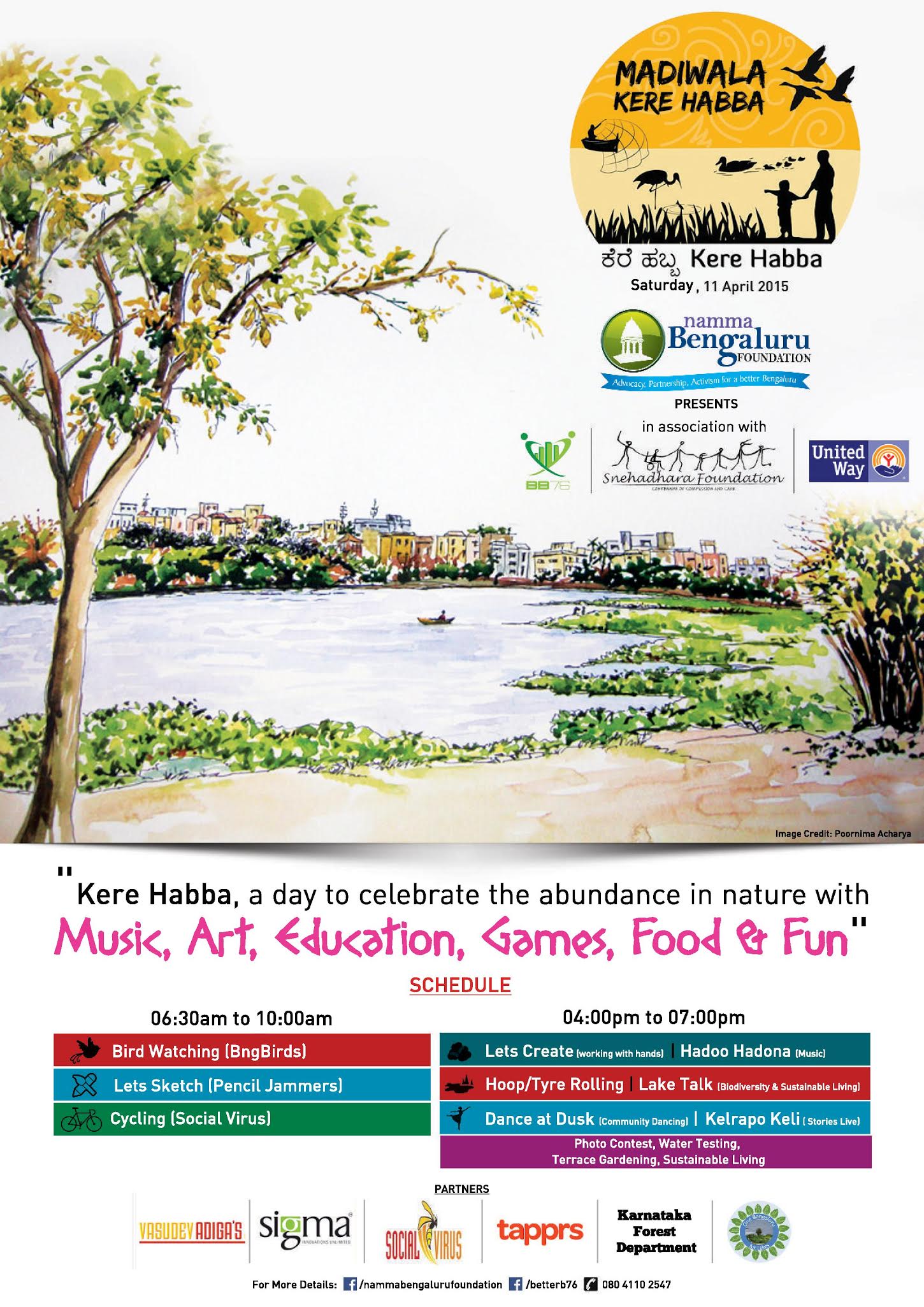
Shutterbugs should not miss out on the photography contest that has been organised. The theme of the photography contest is “Lakes and their role in our city”. Entries should be submitted online by 11th Apr 2015 and results will be announced on 15th Apr. Entries will be judged on the basis of (a) quality of the picture (b) connection with the theme (c) caption submitted with the photograph. Three best entries will be chosen by an expert panel of judges. Prizes are sponsored by Tapprs. For more details, and to submit your entry please go here.
 
Details of the habba are below. For any more information, please contact Arbind-9845193233 or Ramesh-9886051931, from the Madiwala Kere Habba team.

Leave a Reply

Your email address will not be published. Required fields are marked *

Similar Story

Where are the pollinators in Bengaluru?

Despite the volumes of citizen-generated data on the city's biodiversity, pollinators who sustain the urban ecosystem do not seem to be getting their due attention.

Urban biodiversity is often discussed in terms of tree cover, lakes, or flagship species, but far less attention is paid to pollinators—the insects and birds that quietly sustain urban ecosystems. In Bengaluru, a rapidly urbanising city with a strong culture of citizen science, large volumes of biodiversity data are now being generated by the public. But what does this data tell us about pollinators in the city? This article draws from a data jam hosted by OpenCity in Bengaluru that explored pollinator observations using publicly available, citizen-generated datasets. By analysing long-term observation records and spatial data on land use and…

Similar Story

Beyond the parks and gardens, Bengaluru’s ‘wasteland’ ecosystems call for protection

Open Natural Ecosystems in Bengaluru harbour rich biodiversity. Take a look at what they hold and what we risk losing to unchecked development.

When we discuss urban nature, we often forget about real natural habitats. In Bengaluru, widely called the Garden City, most talks about urban nature focus on landscaped parks, roadside trees, and manicured gardens; in other words, artificial ecosystems designed for looks and human comfort. As lay citizens, we usually notice only such nature as we see around our homes, workplaces or other areas we generally pass by. While these places do have some ecological value, they mostly support a few highly adaptable species. This has strong negative implications for native flora and fauna that depend on open scrublands, grasslands, rocky…